Fakhruddin-1.jpg

October 10, 2025 foasummit0

Developer Fakhruddin Properties has announced the success of its 90:90 Waste Management initiative. The model diverts 90% of building waste from landfills within just 90 days, which is said to be the first in the United Arab Emirates.

The 90:90 Waste Management initiative empowers residents to become active sustainability advocates by providing them with their own dedicated in-building waste segregation system. This program aligns with the UAE’s Net Zero 2050 agenda, Dubai Municipality’s plan to close landfills by 2027, the Circular Economy Policy 2021–2031, and Federal Decree Law No. 11, said the developer.

Earlier this year, Fakhruddin Properties embarked on a pilot program at its Trafalgar Central project in Dubai International City, and it has now achieved its waste reduction objectives, the developer said. As the inaugural residential development in the UAE to feature in-building composting and waste-sorting facilities, this initiative holds immense significance as a pivotal milestone in the nation’s sustainability journey, it added.

Fakhruddin Properties hosted a special event that was spearheaded by Yousuf Fakhruddin, CEO of Fakhruddin Properties, and featured a keynote address by Mohammed Alrayees, Head of Strategy, Waste Management at Dubai Municipality. A panel of regional sustainability thought leaders and innovators also gathered to engage in a discussion on “Waste Management and its Impact on Reducing Climate Change”.

“Our 90:90 Waste Management initiative truly represents the power of collaboration between government, developer, community, residents, academia and industry. Its successful implementation in an existing residential development proves this model is scalable, offering a clear pathway to significantly reducing landfill waste across the UAE and globally. Our immediate next step is to extend this innovative approach to include the recycling of black and grey water, further solidifying our commitment to a sustainable future,” said Fakhruddin.

The 90:90 Waste Management initiative is said to be one of many of Fakhruddin Properties’ sustainability led programmes, and is set to be rolled out across its entire portfolio. Driven by an incentive system, and brought to life through active community engagement, behavioural change and infrastructure, the initiative reduces waste sent to landfills by segregation of wet, dry, e-waste, recyclables and more at no additional costs to residents, the statement concluded.

The post Fakhruddin Properties announces success of its 90:90 Waste Management initiative appeared first on Middle East Construction News.


Source: ME Construction News


Diriyah-Grand-Msoque-1.jpg

October 10, 2025 foasummit0

Diriyah Company has entered into a joint venture contract worth US $244mn with Al-Majal El-Arabi Group and MAN Enterprise AlSaudia. This partnership aims to develop the Grand Mosque in Diriyah’s second phase. The mosque, designed by the firm X Architects, will have a gross floor area of 12,320sqm and can accommodate 11,400 worshipers.

The Grand Mosque in the second phase of Diriyah’s masterplan will serve as a symbol of urban development. It will have the capacity to accommodate up to 5,240 worshipers indoors and 6,160 worshipers outdoors. The mosque’s plaza will host community prayers during significant occasions like Eid and Ramadan.

The project will serve as a gathering space for various community events, including book fairs, cultural activities, and local produce markets on Fridays and weekends. The mosque will feature separate male and female prayer halls, ablution areas, a library overlooking Wadi Hanifah, and facility management offices, said the statement.

The Grand Mosque will boast an architectural style that fits modern engineering with Najdi-inspired design. This style is evident in its distinctive façades, iconic architecture, and elegant interior design. It will be one of 31 mosques planned for Diriyah. Together, these mosques will contribute to 74,300sqm of dedicated religious space, it added.

In line with the sustainability goals of the Diriyah development area, the Grand Mosque in Diriyah’s second phase is designed to achieve LEED Gold and Mostadam Gold green building certification. This is achieved through the use of a 3D mesh that allows ample natural sunlight to enter the building, while minimising heat impact, ensuring a comfortable environment for prayer.

In addition, the mosque will be integrated into Diriyah’s smart city infrastructure. This integration includes water supply, irrigation, power consumption, LEED and Mostadam monitoring, Fire and Life Safety (FLS), and security systems, all connected to the central Diriyah Operations Centre.

Jerry Inzerillo, Diriyah Company Group CEO commented, “The Grand Mosque in Diriyah’s second phase will be a landmark place of worship through its serene Najdi-inspired design, and is a beautiful monument that will further enrich The City of Earth’s spiritual and cultural landscape, as we build one of the world’s greatest gathering places. We look forward to seeing it come to life.”

Located on the outskirts of Riyadh, Diriyah is one of Saudi Arabia’s five giga-projects. This initiative is backed by the Public Investment Fund (PIF). The Diriyah masterplan aims to create an integrated urban development project that will build homes for an estimated 100,000 people. It also seeks to generate over 180,000 jobs and attract 50m visitors annually by 2030. These goals are expected to have a significant impact on Saudi Arabia’s economy, contributing nearly $18.6bn directly to the country’s GDP.

The post Diriyah Company awards $244mn contract for Grand Mosque in Diriyah’s Second Phase appeared first on Middle East Construction News.


Source: ME Construction News


Nemetschek-Group-1.jpg

October 10, 2025 foasummit0

The Nemetschek Group has forged a strategic partnership with WakeCap Technologies to accelerate digital transformation across the Gulf Cooperation Council’s (GCC) construction ecosystem.

Nemetschek’s portfolio of software solutions is said to complement WakeCap’s sensor-powered project control platform. WakeCap’s platform is said to be deployed across US $100bn in giga-projects, utilising the region’s workforce database that tracks over 150m worker hours. The GCC construction market, valued at over $120bn annually with several trillion-dollar national transformation programs underway, represents the ideal proving ground for these advanced technologies, said a statement.

This scale sets WakeCap apart as the only platform operating at this level in the Middle East. WakeCap’s safety solutions have delivered transformative results, driving behavioral change on construction sites and achieving notable reductions in safety violations, increased productivity, and faster incident response. WakeCap safety solutions are now mandated across Aramco, Neom, and Qiddiya, it added.

Marc Nezet, Group Chief Strategy Officer and Chief Division Officer of the Nemetschek Group said, “WakeCap is one of the most innovative front-runners in the global construction tech landscape. Their ability to deliver real-time visibility and actionable insights at scale is reshaping how major infrastructure projects are built and managed. By combining Nemetschek’s world-class software capabilities with WakeCap’s cutting-edge solutions and regional strength, we are excited to unlock transformative outcomes for the GCC’s construction sector.”

Muayad Simbawa, Managing Director of Nemetschek Arabia added, “This collaboration marks a significant milestone in our mission to accelerate digital innovation in construction across the Gulf region. Together with WakeCap, we aim to deliver more connected, intelligent, and efficient project delivery models that align with the region’s national development agendas and sustainability goals.”

“This partnership validates our vision of transforming construction through real-time intelligence,” stated Dr. Hassan Albalawi, CEO and Founder of WakeCap. “We’ve proven our technology can fundamentally change how giga-projects are delivered, reducing risk, and driving efficiency. Now, by combining our field-proven platform with Nemetschek’s global reach and software ecosystem, we’re not just expanding our market, we’re defining the future of construction technology. Our joint solutions will become the global benchmark for intelligent project delivery, starting here in the GCC where the world’s most ambitious projects are already relying on WakeCap.”

The agreement outlines a comprehensive framework for both companies to collaborate on business opportunities and initiatives within the GCC. WakeCap’s regional knowledge and established relationships with the Middle East’s owners and contractors will accelerate Nemetschek Arabia and its affiliates’ market entry and expansion, the statement noted.

This collaboration will involve the development of joint go-to-market strategies aimed at stakeholders in construction and real estate. Additionally, there’s potential for the integration of WakeCap’s technologies with Nemetschek’s software platforms, such as Bluebeam, dTwin, and GoCanvas.

In addition, the two organisations plan to collaborate on knowledge exchange and co-creating thought leadership content, including whitepapers and digital construction initiatives. They will also participate in regional industry events together. The partnership aims to explore new synergies within the infrastructure and natural resource sectors, where both parties recognise the growing demand for intelligent, data-driven project delivery solutions.

The post Nemetschek and WakeCap collaborate to advance construction technology in the GCC appeared first on Middle East Construction News.


Source: ME Construction News


Elar-Rise-1.jpg

October 10, 2025 foasummit0

Developer Object 1 has launched two new projects in Dubai – ELAR1S Sky and ELAR1S Rise. Both towers will take shape in District 3 of Jumeirah Village Triangle (JVT).

Object 1 holds a strong position among the top three developers in JVT. The flowing architecture of these projects integrates living, working, and gathering spaces, reflecting Object 1’s commitment to creating environments where residents can thrive, connect, and enjoy a fulfilling life, said a statement from the developer.

The launch of ELAR1S Sky and ELAR1S Rise reflects Object 1’s vision to redefine modern living in JVT. The projects aim to strike a balance between community living, elegant design, convenient lifestyle amenities, and long-term investor appeal. Inspired by the elements of air, light, and life, these towers embody a sanctuary of tranquility and natural harmony, it added.

Tatiana Tonu, CEO of Object 1 said, “The launch of ELAR1S Sky and ELAR1S Rise is a proud moment for us, as it represents our vision of creating communities where design, lifestyle, and investment potential meet. We believe JVT is one of Dubai’s most promising residential hubs, and these projects are designed to deliver long-term value for both residents and investors. The overwhelming response at our launch event reflects the trust and confidence the market places in Object 1.”

ELAR1S Sky will be a 43-storey building and will offer 402 residences ranging from studios to two-bedroom units. ELAR1S Rise will add 198 residences, retail spaces, and office spaces across 24 floors. Together, these projects form a ecosystem within the community, providing amenities such as infinity pools, gardens, clubhouses, gyms, outdoor fitness areas, kids’ play spaces, outdoor lounges, and integrated smart home systems, the developer stated.

As JVT continues to thrive, the district has experienced significant growth in rental prices, with yields averaging six to eight percent per year. Transaction volumes have also risen by 62% in early 2025 compared to the same period last year. This success is attributed to the backing of Dubai Holding and the upcoming Purple Metro Line, which is part of RTA’s infrastructure upgrades and the addition of ELAR1S Sky and ELAR1S Rise further strengthens this momentum, the statement pointed out.

Both projects are expected to be completed in 2028 and will add to Object 1’s expanding portfolio of investor-focused and family-oriented developments across the city. This expansion aligns with the Dubai 2040 Urban Master Plan.

The post Object 1 launches two new projects in JVT appeared first on Middle East Construction News.


Source: ME Construction News


Burj-Capital1_1000x600-1.jpg

October 10, 2025 foasummit0

Developer Centurion Properties was launched in 2013 with a commitment to ‘transforming Dubai’s skyline with exceptional architecture and by elevating the essence of urban luxury living’. Since it began operations, the developer has delivered over 10 projects, and is said to have a development pipeline comprising 15 projects.

In late September, the developer launched a new commercial tower – Burj Capital Business Bay – and said that the tower will be built in close proximity to the Burj Khalifa, The Dubai Mall, Dubai Design District and DIFC. The developer said the tower reflects the spirit of Dubai as a global hub of innovation and enterprise.

The project’s lead architect and consultant are HKS and Datum Engineering Consultants respectively, and the tower is expected to be completed in March 2029, the developer said.

Here, Big Project Middle East sat down with Moksh Garg, Managing Director of Centurion Properties to discuss the vision behind the tower and the developer’s push into commercial real estate.

  • What was the inspiration to launch Burj Capital Business Bay, and what is your vision for the commercial tower?

The inspiration behind Burj Capital Business Bay comes from our belief that Dubai is entering a new era of business growth that demands world-class, future-ready workspaces. We envisioned creating more than just an office tower – we wanted to build a landmark that reflects ambition, innovation, and sustainability at the very core of Dubai’s business hub.

Designed with sleek lines, bold architecture, and a modern, minimalist aesthetic, Burj Capital embodies a straight-forward, growth-driven mindset that aligns with the aspirations of today’s leaders.

Its name itself – Burj – signifies stature, presence, and the next level of distinction, reinforced by its iconic views of Burj Khalifa and the Dubai Canal, and its location just steps away from the upcoming urban park.

Beyond its Grade A+ commercial standing, the tower integrates residential-like amenities – from wellness facilities to lifestyle spaces – to create an environment where individuals can achieve balance, blending productivity and success with comfort and well-being.

  • What does the launch of Burj Capital mean to Centurion Properties and its leadership?

For Centurion Properties, the launch of Burj Capital is a defining milestone that underscores our commitment to excellence and innovation in commercial real estate. It represents not only our further expansion of our portfolio into Grade A+ commercial spaces but also our role in shaping Dubai’s future business landscape.

For our leadership, this project reflects our vision of creating landmarks that stand for growth, sustainability, and progress – and reinforces our dedication to delivering value for all stakeholders, from investors to end-users.

  • What sets Burj Capital apart from other grade A commercial offerings in Dubai? What is the tower’s USP?

Burj Capital is defined by three distinct factors: its prime location in Business Bay (an address that matters), its scale and flexibility, and its amenities designed for modern professionals. With more than 238 office units, five curated retail spaces, a rooftop viewing lounge, wellness facilities, and lifestyle-driven offerings, the tower provides an integrated ecosystem where business, health, and networking coexist seamlessly.

The tower’s USP lies in its distinctive design, sustainability integrations, and the introduction of luxury lifestyle amenities within a commercial setting – a rare proposition in Dubai’s office landscape. Moreover, most office units have balconies, offering an elevated sense of openness and a sophisticated indoor-outdoor ambiance that enhances the prestige of the workspace.

Featuring extensive layouts with flexible floor plates ranging from 750sqft to 14,100sqft, every space has been thoughtfully designed to be well-lit, open, and conducive to collaboration and productivity. This architectural approach fosters a growth-driven, success-oriented mindset for businesses of all scales, from SMEs to multinational corporations. Burj Capital is not only an efficient workplace but also a statement of prestige, innovation, and forward-thinking design that sets a new benchmark for Grade A+ towers in the region.

  • Residential real estate has been booming in the UAE for the last couple of years, what prompted Centurion Properties’ focus on commercial real estate, with the launch of Burj Capital, and Capital One Motor City earlier in the year?

While the residential market has seen remarkable growth, we recognise that a thriving residential sector must be complemented by high-quality commercial infrastructure. Dubai is evolving into a global business hub, and the demand for premium, sustainable, and well-positioned office spaces continues to grow.

By launching Burj Capital and Capital One Motor City, we are strategically addressing this demand, while diversifying our portfolio to ensure that Centurion Properties plays a key role in shaping both the living and working environments of tomorrow.

  • With all the development currently underway in the UAE, what are some of the challenges you anticipate in the delivery of Burj Capital? What is your strategy to address these challenges, ensure quality is top notch and your delivery schedule is achieved?

Large-scale projects naturally face challenges such as supply chain dependencies, labor availability, and regulatory compliance. At Centurion Properties, our approach is proactive, and solutions driven. We have engaged with experienced contractors and consultants who share our commitment to quality and timely delivery. Through stringent project management systems, sustainable construction practices, and transparent communication with stakeholders, we are confident in our ability to meet deadlines while upholding the highest standards of quality and safety.

  • How did you choose construction partners to support the delivery of this project?

We carefully evaluated partners based on their proven track record, alignment with our vision, and ability to deliver on complex, large-scale developments. Our selection process prioritised innovation, sustainability expertise, and operational excellence. By working with top-tier architects, engineers, and contractors, we have assembled a team that can translate our vision into reality, while ensuring durability, functionality, and timeless appeal for Burj Capital as well as our other projects.

  • How do you see the commercial real estate segment developing in the UAE in the next two-to-three years?

The commercial real estate sector in the UAE is poised for strong growth as Dubai continues to attract multinational corporations, entrepreneurs, and investors. Over the past five years, the market has seen consistent growth in sales and transaction volumes, underscoring rising investor confidence. With the influx of people and businesses, demand for office spaces that support productivity, collaboration, and networking is only set to increase. Yet, the market faces a supply crunch, especially in the Grade A segment, where limited high-quality space has created fierce competition.

Much of this demand is driven by expanding financial services firms and global businesses that are  choosing Dubai for its strategic location and resilient economy. This is where Burj Capital comes into play – designed with foresight to meet these very needs. By offering modern layouts, flexible floor plates, sustainability features, and lifestyle-driven amenities within a Grade A+ commercial tower, Burj Capital not only addresses current market gaps but also positions itself as a benchmark for the next generation of business hubs in Dubai.

The post Eyeing new growth opportunities appeared first on Middle East Construction News.


Source: ME Construction News


Timothy-Whealy_1000x600-1.jpg

October 9, 2025 foasummit0

As Saudi Arabia constructs a new economy, the country must recast its construction and engineering market to deliver an unprecedented pipeline of major projects. And the early signs of this essential transformation, formally known as Vision 2030, are highly encouraging.

As evidence for this positive assessment, consider the significant legal reforms that have taken place, the growing desire to embrace technology, a drive for sustainability, increasing early involvement of contractors in projects, and the steady shift towards more equitable contractual agreements we are witnessing.

As claims experts and strategic advisors, HKA is familiar with past chequered performance on projects. The huge volume of work planned across Saudi Arabia necessitates a whole new approach.

We have seen massive changes in the Kingdom during the past 13 years, and a marked shift over the last five. There has been recognition at the highest levels that radical change is essential if Vision 2030 and other major developments are to be delivered. It is truly incredible to see the pace at which the Kingdom is building world-class infrastructure, and in the process, how it is creating a whole new and fully diversified economy.

In reality, only Europe’s post-war reconstruction or China’s modernisation bear comparison to the scale of the Saudi plans. The timeline is also daunting. As well as delivering what must be the world’s largest transformation programme, there are the event-driven deadlines of the 2029 Asian Winter Games, 2030 World Expo and 2034 World Cup. Associated infrastructure, stadia and facilities must be built alongside giga-project cities still in their embryonic stages.

Analysis by the MEED business intelligence consultancy shows a sharp spike in the value of contract awards in Gulf Cooperation Council states to more than $209 billion in 2023. The UAE market is also booming, accounting for $85 billion. But Saudi Arabia’s $95 billion share will continue expanding, driven by a $1.53 trillion pipeline of known projects. Of the planned giga-project contracts, valued at $880 billion, only $80 billion have so far been awarded.

Avoiding past conflicts and overruns will be crucial. HKA has first-hand knowledge of the factors that shape the successes and failures of projects in the region and globally. We distil and share the lessons through the CRUX integrated research programme. Last year, the Sixth Annual CRUX Insight Report analysed more than 1,800 projects in 106 countries with a combined CAPEX of $2.247 trillion. CRUX showed that overruns in the Middle East were among the longest of the world’s regions, averaging 82% of planned schedules (and nearly 100% in Saudi Arabia). On average, the costs claimed on these 401 projects exceeded 35% of budgets.

The most dominant causes of project claims and disputes were change in scope (54%) and the often-related problems of design information being issued late (34.9%) or incomplete (30.5%). Conflicts over contract interpretation (28.8%) and late approvals (27.1%) were the other ‘top five’ causes.

Within the Kingdom, scope change (54%) and late designs (34.5%) again came top, with restricted or late access to sites (also 34.5%), followed by late approvals (31.9%) and cashflow and payment issues (23.6%).

Early contractor involvement (ECI) is absolutely critical to pre-empt these recurrent factors – especially, design-centric failures – and thus to delivering Vision 2030. Many projects start with incomplete or flawed designs. Contract periods are misused to rectify these design problems, so contractors overrun schedules and budgets. Contractors need to be incentivised and have an input early on to ensure designs are buildable and schedules are achievable.

While the risks of delay and cost overruns mount over the project lifecycle, the opportunities to minimise those risks are greatest in pre-construction – during inception, design and procurement. Risk allocation needs to be realistic and reasonable. In a super-heated market, there is a re-balancing of power and contractors are in a more equitable position. They can push back on onerous terms. So, we are beginning to see a more sensible view of risk sharing and changes in the way that employers and contractors are procuring, such as collaborative contracting and public-private partnerships (PPPs).

Based on recent experience in the Kingdom and other regions, the benefits of ECI and collaborative approaches to contracting are evident in increased certainty around projects’ cost, time, value for money, and safety performance, as well as market appetite. But changes in the market need to go further. We need to plan to succeed, rather than repeat past mistakes. As well as ECI, this new delivery model should involve open-book accounting and incentivising target costs and key outcomes, with sharing of gains and pain. High performance must be encouraged and rewarded to achieve what’s most important to the client and allow any claims to be resolved before developing. This innovative approach benefits all parties.

Having advised many lenders on construction risk, as well as acting as a quantum expert in disputes, we are also heartened by other trends, such as offsite prefabrication, increasing commitment to ESG (environment, social and governance) since COP28, and – not least – legal reforms.

Adversarial contracts, an opaque legal system and heavy losses sustained on past projects have made many contractors reluctant to enter the market. The Civil Transaction Law promises fair dealings in contracts, while the Saudi Centre for Commercial Arbitration (SCCA) is a truly credible forum for administering international disputes. These are massive changes that can build confidence among foreign contractors.

The world’s best constructors will be needed along with capacity-building in the region. Again, the Kingdom is taking a strategic approach, by developing ports, roads and rail, and through reverse integration of the supply chain: from buying stakes in the country’s top contractors to incentivising major producers to set up locally and investing in cement production capacity. MEED’s analysis indicates that Public Investment Fund (PIF) projects alone will require almost a billion tonnes of cement (970 million) between now and 2030. That is just one commodity. Think of the demand over the next decade for steel, rebar, aggregates, plasterboard, and other materials.

Caution is required, however, given that the construction market is still in the early stages of transition, and the capacity, supply chain and cost escalation risks will be colossal. But the opportunities created by Saudi Arabia’s epoch-making vision are hugely exciting. It is a privilege to be here and to be able to contribute to a national transformation that will embrace every sector from construction and power to transportation, tourism and housing.

The post Why the Saudi Vision 2030 demands a new delivery model appeared first on Middle East Construction News.


Source: ME Construction News

TEC-KAFD-1.jpg

October 9, 2025 foasummit0

King Abdullah Financial District (KAFD) has announced the opening of The Executive Centre (TEC). TEC is a premium flexible workspace provider and the opening marks the company’s inaugural venture in the Saudi market.

With the opening of TEC, KAFD now offers world-class workspaces that serve not only multinational companies but also freelancers, entrepreneurs, and professionals seeking flexible co-working solutions, further strengthening the district’s position as a hub for business and talent across the Kingdom and the wider region, said a statement from KAFD.

The expansion further solidifies KAFD’s position as a hub for business and talent across the Kingdom and beyond. TEC Group’s portfolio (which includes their operations) have 215 operational centres across 35 cities in 14 markets, it added.

The opening is said to highlight KAFD’s growing stature as a dynamic business hub in the region and a leading destination for entrepreneurs and professionals. Spanning 36,500sqft, TEC’s co-working space at KAFD represents the future of flexible work environments in the Kingdom, as well as demonstrating TEC’s long-term commitment to Saudi Arabia and its support for the Kingdom’s economic transformation under Vision 2030.

Located within a Grade A building at KAFD, the centre features private offices, co-working lounges, meeting and event spaces, private phone booths, and a full-service food and beverage offering, all designed within a tech-enabled environment. TEC’s modular design philosophy allows each office to be tailored to a client’s specific business requirements, combining the structure of a traditional office with the agility of a new-age workspace.

Sultan Alobaida, Chief Commercial Officer at KAFD DMC said, “The global co-working spaces market is undergoing remarkable growth, and is predicted to reach approximately $48bn by 2030, as businesses increasingly seek flexible workspace solutions that support collaboration and agility. This growth is mirrored in Saudi Arabia, where the number of co-working spaces has grown from approximately 40 in 2018 to 251 by December 2024, with the highest concentration in Riyadh.”

He continued, “We are excited to welcome TEC to KAFD. Its innovative workspaces will complement our vibrant community of over 140 companies by offering flexible options for entrepreneurs and independent professionals. It also underscores our commitment to supporting Vision 2030 by driving economic diversification, fostering innovation, and creating the conditions for businesses of all sizes to thrive.”

The post KAFD announces opening of The Executive Centre in Saudi Arabia appeared first on Middle East Construction News.


Source: ME Construction News


CSG-1.jpg

October 9, 2025 foasummit0

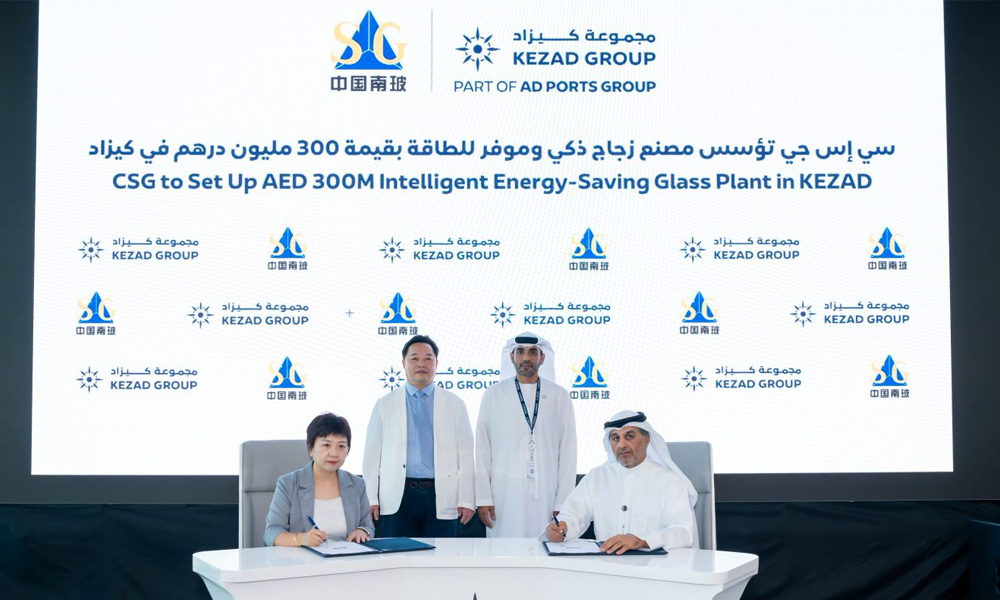
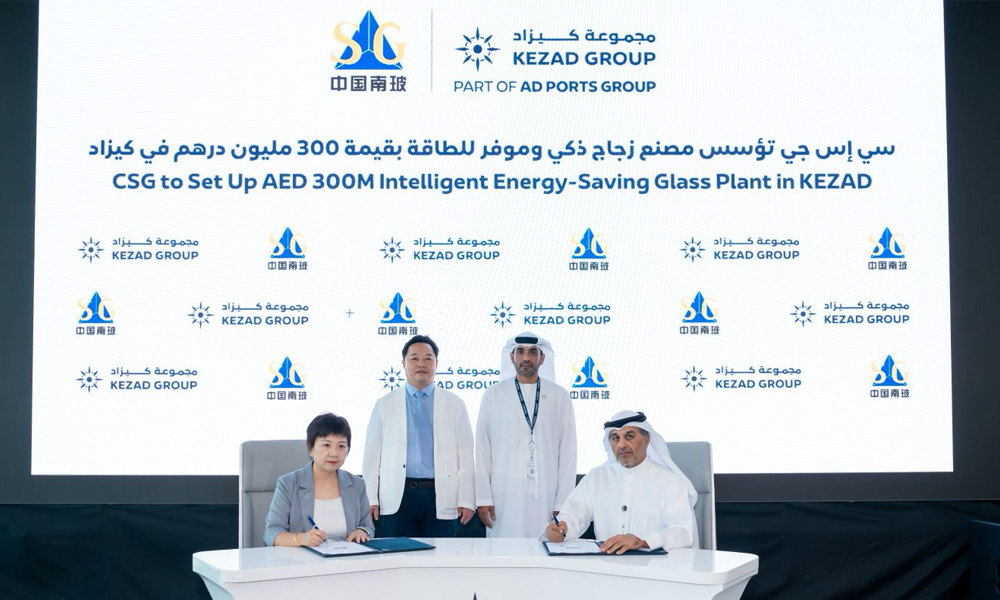
Khalifa Economic Zones Abu Dhabi (KEZAD) Group has announced China Southern Glass (CSG), a company in energy-saving glass and advanced materials, will establish its inaugural overseas intelligent manufacturing facility in the United Arab Emirates.

This project, which involves an investment of US $81.7mn, will be located in ICAD 1, Musaffah. CSG aims to create 400 specialised and technical jobs, contributing to the emirate’s goals of fostering industrial growth and economic diversification.

The facility, situated on a 95,000sqm plot will serve as CSG’s regional headquarters for the production of high-performance energy-saving glass. Once operational, it will generate over 5m sq metres of coated, laminated, and insulating glass annually. This production capacity will enable CSG to supply construction and infrastructure projects across the UAE, the wider Gulf, Europe, Africa, and the United States.

Abdullah Al Hameli, CEO, Economic Cities & Free Zones, AD Ports Group said, “This investment by CSG is a strong vote of confidence in Abu Dhabi’s industrial strategy and KEZAD Group’s role as a hub for advanced manufacturing. By creating hundreds of jobs and localising the production of high-quality glass products, the project will strengthen Abu Dhabi’s industrial base, reduce reliance on imports, and open new opportunities across the value chain.”

“Leading sustainable international and regional businesses are choosing KEZAD to expand their presence in the Middle East, Africa and Asia region. CSG’s operations in Abu Dhabi will advance energy-efficient glass manufacturing, supporting the construction industry needs in the region, in alignment with the UAE’s green building and clean energy agenda.” he added

Wenxin Wang, Vice President & CFO, CSG Group added “Abu Dhabi offers the ideal platform for CSG’s first manufacturing venture in the Middle East. Through KEZAD Group, we gain access to world-class infrastructure, advanced logistics, and proximity to key regional and global markets. With world-leading products and technologies, CSG’s energy-saving glass has already been widely applied in some of the most iconic landmarks worldwide.”

“Our new factory will be equipped with fully intelligent, digitalised production lines and world-leading coating technologies, representing the forefront of the global glass manufacturing industry. Our new facility will not only deliver premium energy-saving glass for the UAE and Gulf but also contribute to the long-term development of the local industrial economy,” he added.

The new facility is expected to begin operations in late 2026, and will supply UAE developers with reliable, locally manufactured glass and reducing the region’s dependence on imports, the statement concluded.

The post CSG to set up intelligent energy saving glass plant in KEZAD appeared first on Middle East Construction News.


Source: ME Construction News


Siemens-Riyadh-1.jpg

October 8, 2025 foasummit0

Siemens Mobility has opened its new office in Riyadh in a bid to solidify its long-term commitment to shaping the future of smart and sustainable mobility in Saudi Arabia and the broader region. The move is said to align with Saudi Arabia’s ambitious Vision 2030 and the Saudi Green Initiative (SGI), which aim to build a more resilient and climate-friendly transportation system.

This new office is said to mark a significant step in Siemens Mobility’s strategic expansion in the region. It follows the appointment of Frank Hagemeier as the CEO of Siemens Mobility for Saudi Arabia last year. By strengthening its presence in Saudi Arabia, Siemens Mobility aims to create substantial in-country value, generate new employment opportunities, and leverage its extensive expertise to nurture local talent.

“At Siemens Mobility, we are building on years of transformative contributions globally and since our first contract in Saudi Arabia in 2005 till today in Saudi Arabia’s transportation infrastructure to make mobility in Saudi Arabia faster, safer, and more efficient. The opening of our new office in Riyadh will bring us closer to our customers and strategic partners in Saudi Arabia, while making us ideally positioned to expand our operations in Saudi Arabia and support key mega projects. It will also enable us to fast-track our growth and reaffirm our position as a crucial player on the region’s mobility landscape,” said Hagemeier.

Siemens Mobility has made significant strides in the GCC, implementing the first European Train Control System (ETCS) on the East-West Rail Line, connecting Riyadh and Dammam. This project, along with its involvement in the Haramain High-Speed Railway (HHR) project, which connects Mecca and Medina, showcases the company’s commitment to pioneering high-speed rail solutions in the region. Siemens Mobility also played a crucial role in electrifying and expanding the Al Mashaaer Al Mugaddassah Metro Line, which transports Muslim pilgrims between Mecca’s holy sites, said the firm.

Siemens Mobility recently delivered the Riyadh Metro, the largest greenfield metro project in the region and the longest driverless metro system globally. As part of the BACS consortium, the company provided the Red and Blue Lines as a turnkey solution, equipping them with 67 Inspiro trains and the latest version of its Communications-based Train Control System (CBTC). The metro, operational since December 2024, achieved a remarkable milestone in August 2025 by transporting 100m passengers. Siemens Mobility continues to maintain all its components, systems, and track infrastructure under a service contract, it added.

Beyond its operational responsibilities, Siemens Mobility actively participates in the development and localisation of mobility expertise through partnerships with local partners like the Saudi Railway Polytechnic (SRP). This partnership involves a dual education program that integrates classroom instruction with hands-on training in key areas such as rail signaling, electrification, and communication systems. This approach prepares students for the maintenance of digital rail infrastructure, the statement concluded.

The post Siemens Mobility opens new office in Saudi Arabia appeared first on Middle East Construction News.


Source: ME Construction News


DAR-1-1.jpg

October 8, 2025 foasummit0

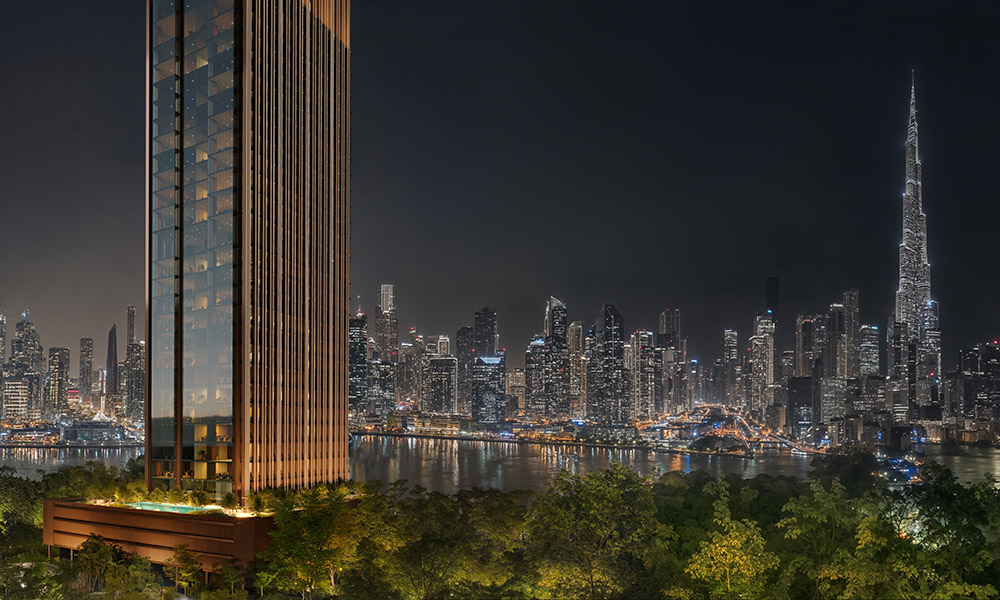
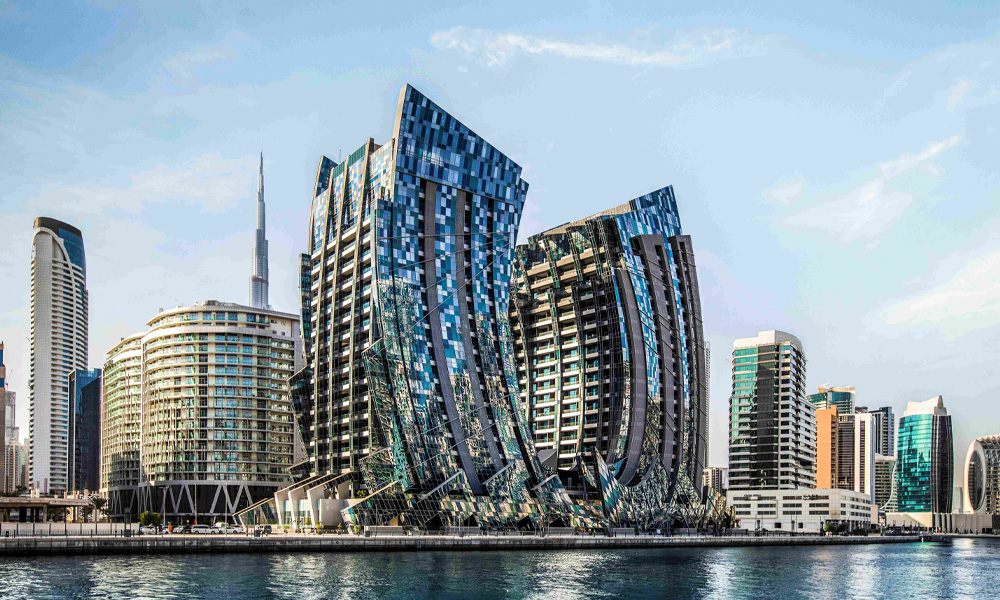
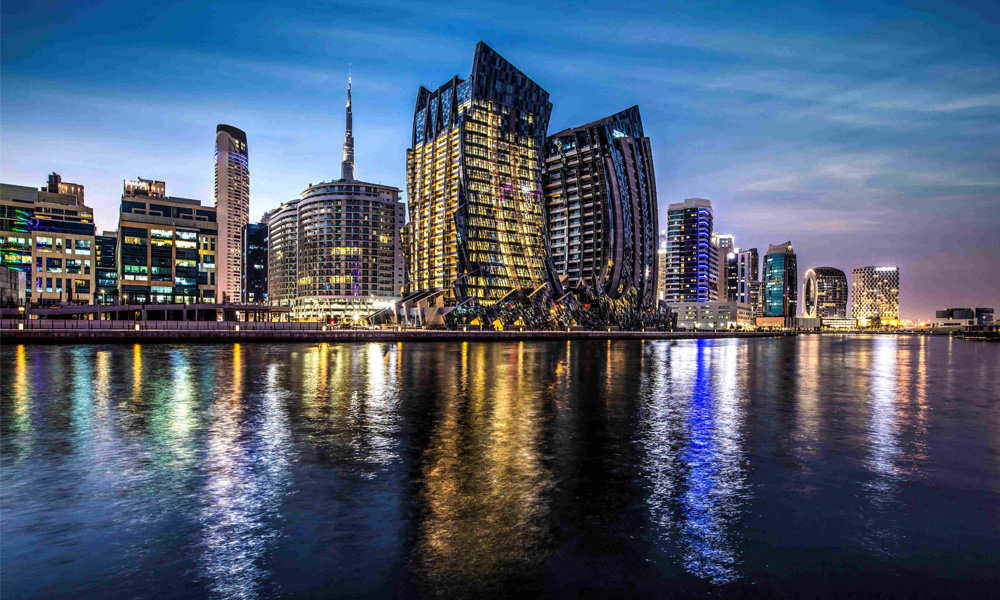
Developer Dar Global has announced the commencement of the handover of DaVinci Tower, which is billed as the world’s inaugural residential development to be branded by Pagani Automobili. Nestled along the Dubai Water Canal, DaVinci Tower offers views of the Burj Khalifa and the Downtown skyline. Each of the 80 exclusive residences is crafted with the design philosophy and signature detailing that epitomise Pagani’s aesthetic, the developer said.

DaVinci Tower redefines high-end living by blending architecture, art, and automotive-inspired luxury. With only 80 units across its sculptural structure, each residence is designed to provide a unique sensory experience. Custom interiors, advanced smart systems, and premium finishes combine to create an unparalleled living environment, the developer explained.

Ziad El Chaar, CEO of Dar Global said, “Today marks a defining moment for Dar Global and in the evolution of luxury living. The handover of DaVinci Tower is the realisation of a bold vision – to bring the soul of Pagani’s design identity into residential architecture. We are delivering not only homes, we are delivering a legacy of creativity, performance, and emotional connection. With DaVinci, we are not just handing over keys; we are handing over an experience that will stand as a benchmark for branded residences worldwide.”

This handover is a landmark achievement that emphasises Dar Global’s role in bringing the exclusive luxury brands into real estate, continuing to elevate Dubai and the region as a global destination for design driven living, the developer concluded.

The post Dar Global announces handover of DaVinci Tower in Dubai appeared first on Middle East Construction News.


Source: ME Construction News