

The post Keynote Address | Future of Water Summit 2023 appeared first on Middle East Construction News.
Source: ME Construction News
The post Keynote Address | Future of Water Summit 2023 appeared first on Middle East Construction News.
Source: ME Construction News
The post Welcome Address | Future of Water Summit 2023 appeared first on Middle East Construction News.
Source: ME Construction News
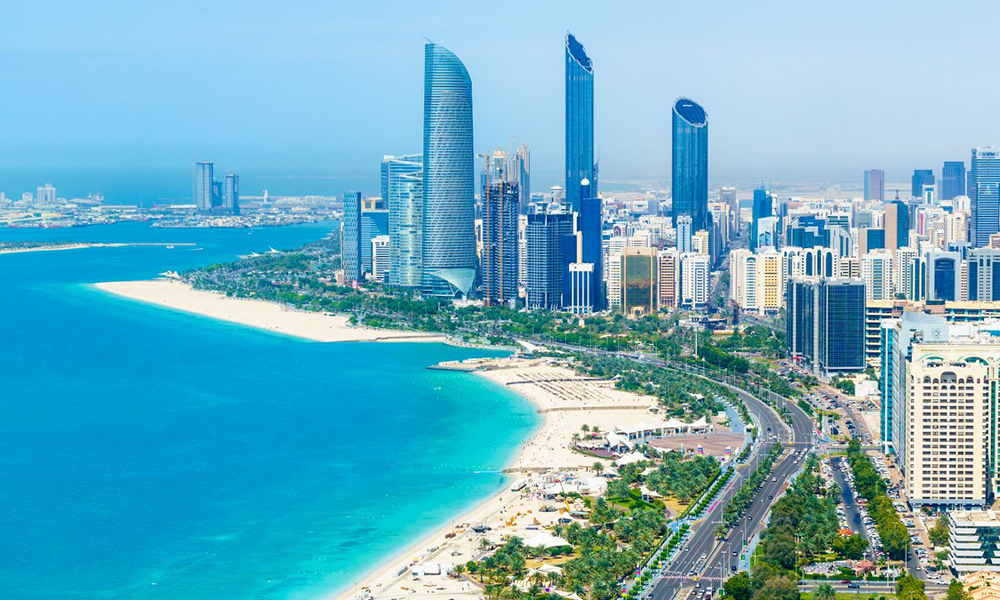

In Q2 2023, Abu Dhabi saw exceptional growth in the construction sector’s contribution to non-oil GDP. During this period, the growth rate reached 19.1% year-on-year, making the highest quarterly value-addition since 2014, at US $6.89bn. This was in no small part thanks to the sector’s projects being able to achieve high completion rates, according to statistical estimates published by the Abu Dhabi Statistics Centre.
Moreover, the construction sector’s overall contribution to Abu Dhabi’s GDP amounted to 8.8% during Q2 2023, the centre noted.
Abu Dhabi’s non-oil economy showed a substantial 12.3% growth in the second quarter of this year, helping the overall GDP to post a 3.5% increase compared to the same period in 2022.
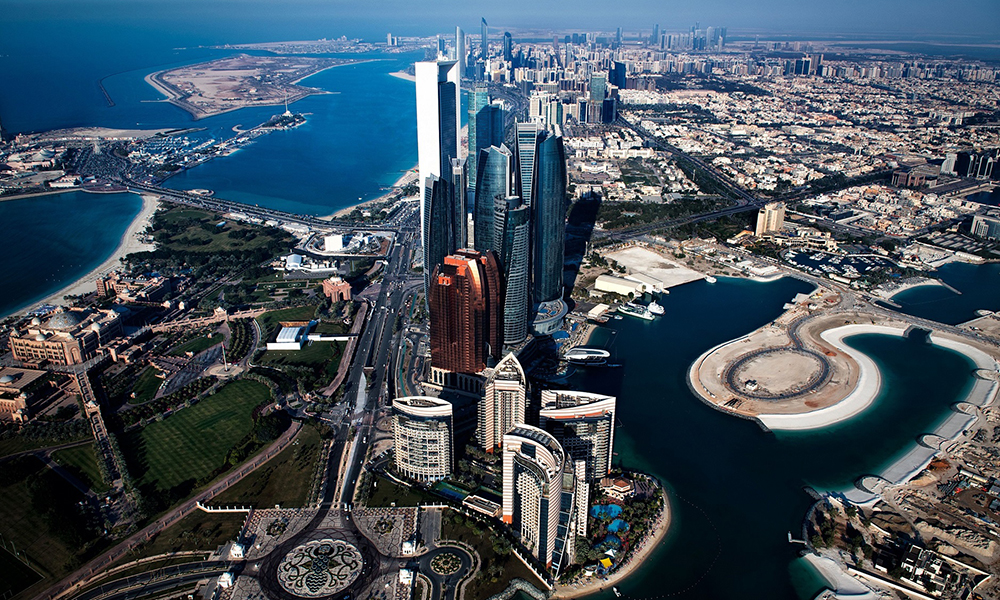
The value of the emirate’s real non-oil GDP increased to $42bn, the highest since 2014 – and breaking a record set in the first quarter of current year, where it surpassed $40bn.
According to preliminary estimates, the value of Abu Dhabi’s real GDP in the second quarter of 2023 reached its highest level at $78.1bn, driven by the growth of all non-oil activities, and continuing the increase of its contribution to the GDP to 53.7%. This boosted the growth of the emirate’s non-oil GDP by 9.2% in the first half of 2023 compared to the same period last year.
The post Successful Q2 for Abu Dhabi’s construction sector says authorities appeared first on Middle East Construction News.
Source: ME Construction News


The real estate development sector is a key driver of economic diversification and growth in the Middle East (MENA). Despite global economic uncertainties, countries such as the Kingdom of Saudi Arabia, the United Arab Emirates and Egypt are seeing unprecedented growth in mega- and giga-projects.
The spotlight has been on the Saudi Arabian construction sector since the announcement of Vision 2030 in 2016 – one of the world’s most ambitious projects. According to JLL’s recent KSA Construction Market Intelligence report, 2022 saw a record-high value of project awards estimated at $57bn. Meanwhile, MEED Projects forecast the total value of projects awarded in KSA between 2021 and 2025 to reach $569bn, more than 35% of the entire MENA region.
However, the construction sector continues to face pressure of inflated prices and capacities attributed to headwinds led by global economic volatility. Supply chain disruptions and shipping freight price hikes appear to have settled over the last year. Yet, skilled labour demand and price fluctuations remain a global concern within the construction sector.
Now more than ever, embracing new ways to manage projects is crucial to maximising delivery efficiencies for successful outcomes. While clients and projects may vary, they generally share a common goal – to complete the task on time, within budget and to the required quality as a minimum.
Here are six project management trends I see for project success in today’s ever more complex environment:
The construction industry has remained largely unchanged for centuries, with few productivity enhancements since the invention of the crane. However, the need for improvement has been dramatically realised and accelerated during the COVID-19 pandemic. This has brought the industry to an inflection point, resulting in a rapid increase in the adoption of AI and automation solutions for project management.

With the increased use of robotics and automation, there is a greater focus on sustainability and safety, improved collaboration and communication, as well as the use of predictive analytics, are also becoming more prevalent. As a result, project managers in the construction industry will need to adapt to stay ahead of the curve.
In JLL’s ‘The State of Construction Tech 2020′ report, four categories were identified as having a “high impact” on construction technology: digital collaboration, scanning, safety/wearables, and Building Information Modelling/Computer-Aided Design (BIM/CAD).
In the Middle East, technology adoption within the real estate development industry has significantly increased post-pandemic. Scanning technologies and digital surveying tools are being used to feed back into digital models for real-time tracking of construction progress. Integrated Integrated Facility Management (IFM), Building Management Systems (BMS), and Internet of Things (IoT) solutions, as well as understanding the data from intelligent building systems, are also becoming commonplace.
The adoption of technology to plan, execute, and control all aspects of a project enhances communication with team members, clients, and stakeholders. It helps keep track of the project budget and schedule, and provides more accurate and reliable data. This enables project managers to make quicker and better-informed decisions, minimizing risks and ensuring successful delivery.
With ongoing global macroeconomic challenges affecting organisations everywhere, it is becoming increasingly important for project managers to proactively adapt to changes and rapidly modify strategies in the face of disruption to deliver projects successfully. This requires real-time data to make swift and more accurate decisions, feedback from team members and regular review and assessment of the change management performance to identify gaps or areas of improvement.
As no two projects are alike, there is no ‘one size fits all’ approach to project management. This has resulted in a growing adoption of hybrid project management combining different methodologies – typically the combination of traditional critical path or waterfall and agile methods – for increased flexibility in driving project success.

The hybrid approach can also include the combination of different project management strategies. Team members from multiple backgrounds, different views and working styles can drive more stability, engagement and efficiency.
It is no longer about sticking to one methodology but bringing specific attributes together and finding an optimal combination of methods for each project to better respond to changing market conditions at different stages of the project lifecycle.
As project management involves managing people, emotional intelligence is essential to lead projects to success.
Traditionally, emphasis was on analytical and technical skills, but the rise in project management software has increasingly replaced it. Project managers’ focus is now shifting more towards the ability to connect and empathise with others to manage project teams and stakeholders effectively. Soft skills such as good communication, conflict resolution, negotiation, team building, time management, and the ability to make optimal decisions play a central role within a project team.
With increasing costs and supply chains facing increased pressure, hybrid procurement, such as client/delivery partnerships, is being implemented to maintain and control the cost of giga projects. Hybrid procurement combines nimble and decentralised purchasing with centralised compliance and oversight, aiming to optimise value and efficiency in a transaction.
There are other procurement routes that should be explored, such as the Early Contractor Involvement (ECI) procurement method. ECI allows for a better assessment of constructability and provides a higher opportunity to select innovative methods for project delivery at an early stage, before final decisions are made. Additionally, routes like Public-Private Partnerships (PPP) should be carefully reviewed, assessed, and considered on a case-by-case basis. However, all of the above approaches demand a high level of trust among all parties involved.

Project Management Office (PMO) is critical in complex market conditions and times of uncertainty. It can help organisations navigate turbulent situations where fast-paced decision-making is crucial.
In addition to supporting, monitoring and controlling project management, one of PMO’s critical functions is to ensure that a project aligns with the organisation’s long-term goals and that the organisation’s activities always add value.
The trend over the fast couple of years was for many organisations to adopt an interim PMO, while building their in-house capabilities, which can be successful if we make sure we capture and share lessons learned and best practice tools, while we continue evolving our systems and embrace technology.
In summary, the combination of higher levels of construction, technological advancements and new ways to manage projects provides the opportunity to transform the project management industry globally and especially in KSA as it delivers a range of giga projects underpinning the Kingdom’s 2030 Vision.
Saudi Arabia is emerging as a global leader and shaping its future through the construction industry and transformative projects, with the potential to export local learning overseas to an extent never seen before. The next few years will be an exciting time for project managers willing to adapt and embrace the rapid pace of change.
The post Six trends transforming project management for Saudi’s construction sector appeared first on Middle East Construction News.
Source: ME Construction News
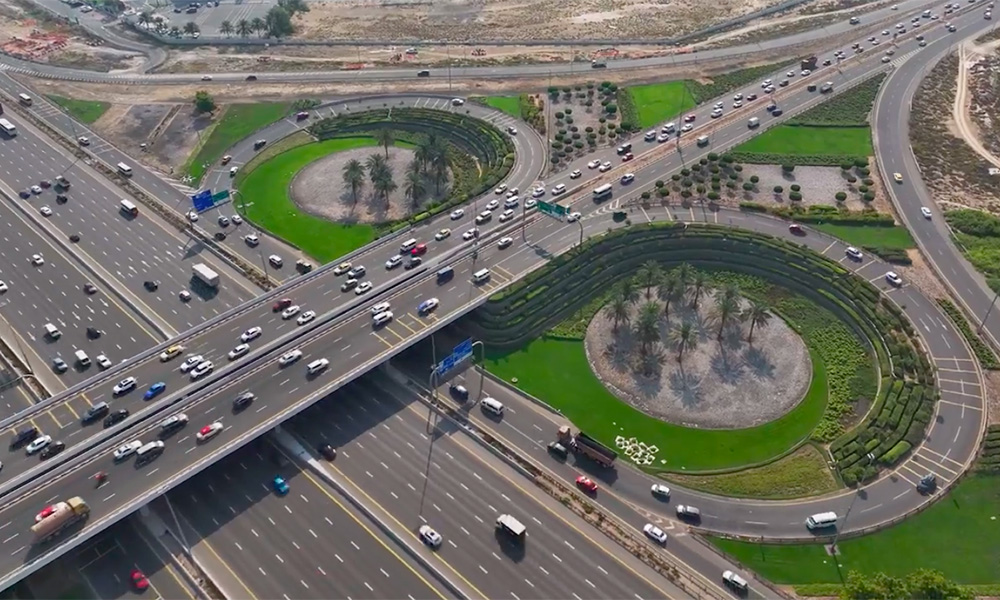
A $187.6mn contract has been awarded by Dubai’s Roads and Transport Authority (RTA) to double the number of lanes on Hessa Street from two to four in each direction. The upgrade will boost the road’s capacity by 100% to allow 8,000 vehicles per hour.
According to the RTA, the Hessa Street Improvement Project is 4.5km long, from the intersection with Sheikh Zayed Road to the intersection with Al Khail Road. The project involves the revamping of four main intersections along Hessa Street, including Sheikh Zayed Road, First Al Khail Street, Al Asayel Street, and Al Khail Road. Works also include constructing a 13.5km cycling track.
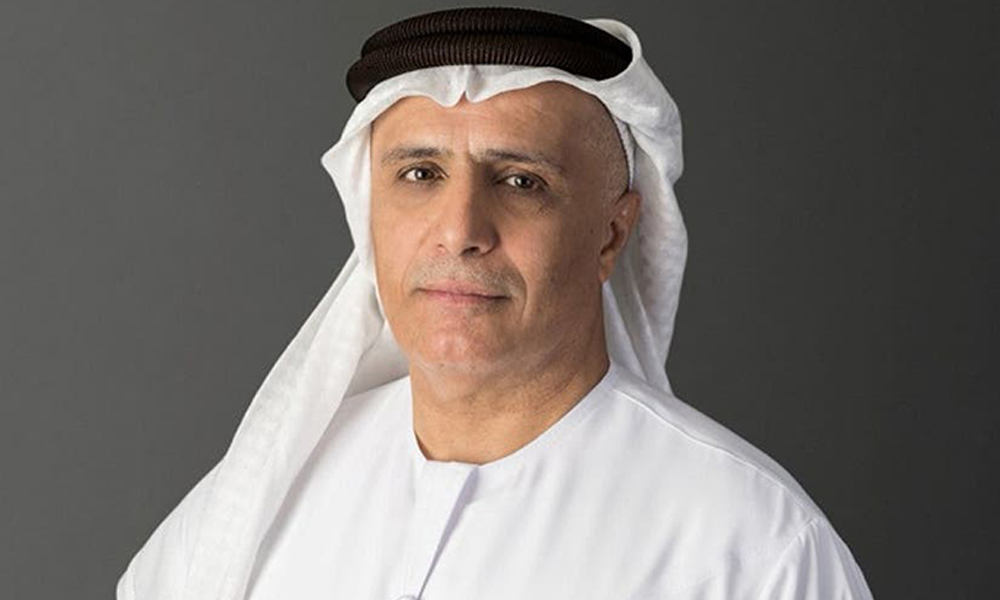
“Hessa Street Improvement Project is an important project for developing the infrastructure of the roads network. The project serves several residential and development communities, such as Al Sufouh 2, Al Barsha residential area, and Jumeirah Village Circle. The population of areas served by the project is expected to reach more than 640,000 individuals by 2030. The project will double the capacity of Hessa Street from 8,000 vehicles to 16,000 vehicles per hour in both directions,” stated Mattar Al Tayer, Director General, Chairman of the Board of Executive Directors of the RTA.
He added, “The project includes the improvement of four main intersections. The first is the intersection of Hessa Street with Sheikh Zayed Road, which will have a two-lane directional ramp passing over the route of the Dubai Metro Red Line to serve traffic heading rightward from Sheikh Zayed Road to Hessa Street Eastwards to the Emirates Road. The second entails upgrading the intersection of Hessa Street with First Al Khail Street by increasing the number of lanes on the existing bridge of Hessa Street from three to four lanes in each direction, along with traffic improvements to the surface signalised junction.”
“The third covers improving the intersection of Hessa Street and Al Asayel Street by increasing the number of lanes from two to four in each direction along Hessa Street, in addition to traffic improvements to the surface signalised junction. The fourth is the intersection of Hessa Street with Al Khail Road and includes constructing a two-lane directional ramp to serve the traffic bound Northwards to Al Khail Road in the direction of Sharjah,” explained Al Tayer.
The project is said to be in response to the directives of His Highness Sheikh Mohammed bin Rashid Al Maktoum, Vice-President, Prime Minister of the UAE, Ruler of Dubai, and the follow-up of His Highness Sheikh Hamdan bin Mohammed bin Rashid Al Maktoum, Crown Prince of Dubai, Chairman of the Executive Council to continue with the development of roads infrastructure to keep pace with the fast development seen by Dubai.
Discussing the cycling track, Al Tayer remarked, “The project also encompasses constructing a 13.5km track for bicycles and e-scooters measuring 4.5m in width, 2.5m for bicycle and e-scooters, and 2m for pedestrians. The track connects Al Sufouh to Dubai Hills via Hessa Street, serving residential areas like Al Sufouh, Al Barsha, and Barsha Heights. It improves first and last-mile connectivity by linking with the Dubai Internet City Metro Station along with commercial and service destinations in the vicinity.”
The new cycling track will feature two bridges: the first bridge crosses Sheikh Zayed Road, and the second crosses Al Khail Road and measures 5m in width (3m for bicycles and e-scooters), and the remaining 2m for pedestrians. The design of Al Khail Road bridge has a unique geometric inspiration from the surrounding environment.

The RTA said it also constructed a ramp passing above Al Houdh Intersection linking Al Yalayis Street inbound from Jebel Ali to Sheikh Mohammed bin Zayed Road. It extends 2.5km and encompasses five lanes: three lanes in the direction of Dubai and two lanes in the direction of Abu Dhabi.
The post RTA announces US $187.6mn Hessa Street upgrade appeared first on Middle East Construction News.
Source: ME Construction News
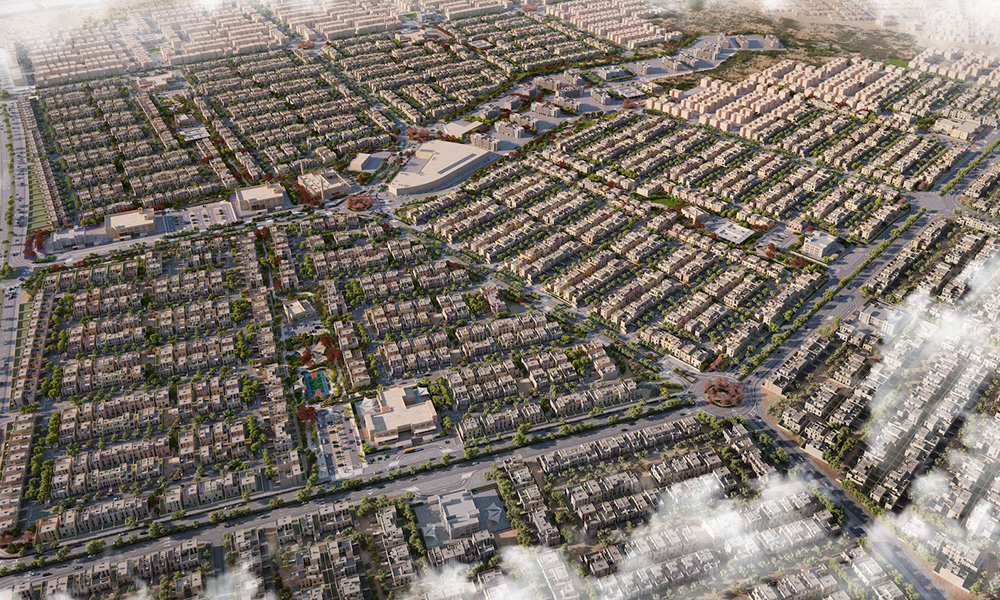
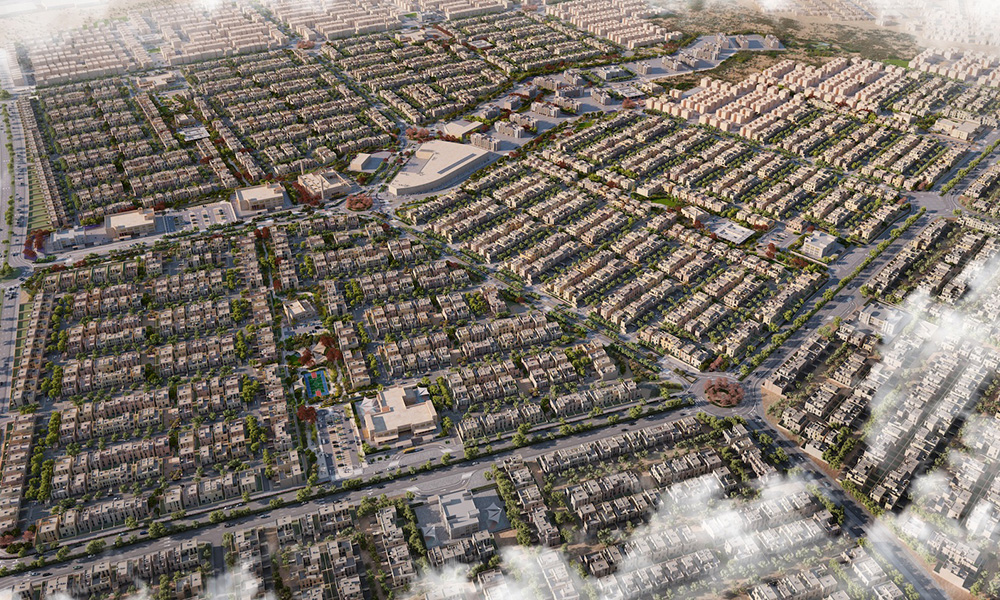
Roshn Group has launched the sales of the latest phase of Sedra, the group’s flagship, integrated community development in Riyadh. Sedra Phase 3 will add 3,438 more homes to Roshn’s first integrated development, with 1,904 units for sale in this initial sales tranche.
David Grover, GCEO of Roshn Group commented: “It fills us with immense pride to witness the pace, precision, and profound societal impact we are achieving as we introduce our innovative living standards to Saudi Arabia. Launching sales for Sedra 3 builds on the momentum established by the trailblazing success of delivering Sedra’s inaugural phase a remarkable two years ahead of the projected timeline.
“This significant milestone reaffirms our unwavering dedication to elevate living standards across the Kingdom, aligning seamlessly with the objectives of Saudi Vision 2030. Recognising the soaring demand for Sedra, we are thrilled to expand our offerings, inviting more citizens to enrich their lives within the vibrant Roshn community.”

Prospective residents in Sedra 3 will be able to choose between eight floorplans and eleven facades, available in single- or multi-family configurations and ranging from charming three- and four-bedroom townhouses and duplexes to spacious four- and five-bedroom villas, meaning there is a perfect home for every family.
Roshn’s key principle of sustainability permeates across its developments. So, Sedra features Roshn’s state-of-the-art insulation, solar-powered water heaters, and efficient air-conditioning systems that allow energy savings, with advanced plumbing fixtures and techniques to also enable significant water usage savings. With 12% of Sedra’s total area dedicated to open and green spaces, residents can enjoy Sedra’s natural features including a wadi and acacia forest.
The post Latest phase of Sedra launched in Riyadh appeared first on Middle East Construction News.
Source: ME Construction News


Samana Developers has launched its US $68.1mn ‘Samana Portofino’ residential project in Dubai Production City. The project is the developer’s ninth project launch out of the 12 projects it has planned for 2023.
The B+G+11-storey project will feature 226 apartments, and will epitomise ‘commune-style’ Italian architecture, which blends water features, a town centre, and pedestrian-focused, luxurious living. Every unit in ‘Portofino’ will feature a built-in private pool, the developer said.
Imran Farooq, Chief Executive Officer, Samana Developers said, “Samana Developers is moving forward with the right speed of developments and in the right areas across Dubai. I thank our investors for their trust in Samana projects, which yield better returns for them as compared to current market rates. That is one reason that our projects sell quickly and we move on to the new launch.”

“In return for this trust, Samana is committed to new offerings, such as helping investors to sublet apartments to tourists and visitors to Dubai, which adds more returns on their investments. For this, we launched Samana Holidays to help units convert to holiday homes. In addition, Samana property assets guarantee competitive 24% returns,” he stated.
The Dubai Production City free zone (formerly known as The International Media Production Zone) is master-developed by Tecom Group, and is a mix of residential freehold and commercial areas. The residential freehold offers 100% foreign ownership.
The post Samana launches prestige ‘Portofino’ development appeared first on Middle East Construction News.
Source: ME Construction News


Two major contracts totalling US $160mn have been awarded by Damac Properties for its master development, Damac Hills. The contracts were awarded to Engineering Construction and Reconstruction Company.
According to the developer, the first contract valued at $93mn is for the main works of the Gems Estates cluster within Damac Hills. The second contract is designated for the main works, as part of Cavalli Estates, also located within the prestigious Damac Hills community, and is valued at $67mn.
The developer said it is dedicated to the highest standards of quality, craftsmanship, and innovation. It added that these contracts reflect the company’s ongoing efforts to push boundaries and redefine luxury living in the Middle East and beyond.
“We are delighted to announce the awarding of these two significant contracts for Damac Hills. These contracts underscore our unwavering commitment to delivering on our promises of excellence and luxury. We believe that Gems Estates and Cavalli Estates clusters will set new standards in upscale living, offering our customers unparalleled value and quality,” stated Mohammed Tahaineh, General Manager of Projects, Damac Properties.

The developer said that Gems Estates is an ultra-luxurious collection of high-end mansions branded by Swiss jeweller de Grisogono, with home interiors branded by famed Italian fashion house Roberto Cavalli, making it the first co-branded real estate project in the world. The contract includes the construction of a range of high-end villas and amenities that will elevate the lifestyle of residents to new heights. From lush green spaces to cutting-edge recreational facilities, Gems Estates cluster promises to be a haven for those seeking luxury, comfort, and convenience, the developer explained.
Cavalli Estates is said to embody the essence of sophistication and elegance. Damac is set to create a distinctive enclave of villas that blend modern aesthetics with timeless charm. Residents of Cavalli Estates will enjoy a harmonious blend of privacy, security, and community living, all set against the backdrop of Damac Hills’ picturesque landscapes, it noted.
The commencement of construction on Gems Estates Cluster and Cavalli Estates marks the beginning of a new chapter in Damac Properties’ legacy. The company is determined to continue its tradition of creating iconic developments that contribute to the growth and prosperity of the region.
Damac Properties has consistently demonstrated its dedication to creating world-class, sustainable communities that redefine modern living standards. The awarding of these contracts signifies another milestone in Damac’s mission to deliver luxurious and aspirational living experiences to its customers, the statement noted.
The post Damac awards contracts to Engineering Construction and Reconstruction Company appeared first on Middle East Construction News.
Source: ME Construction News

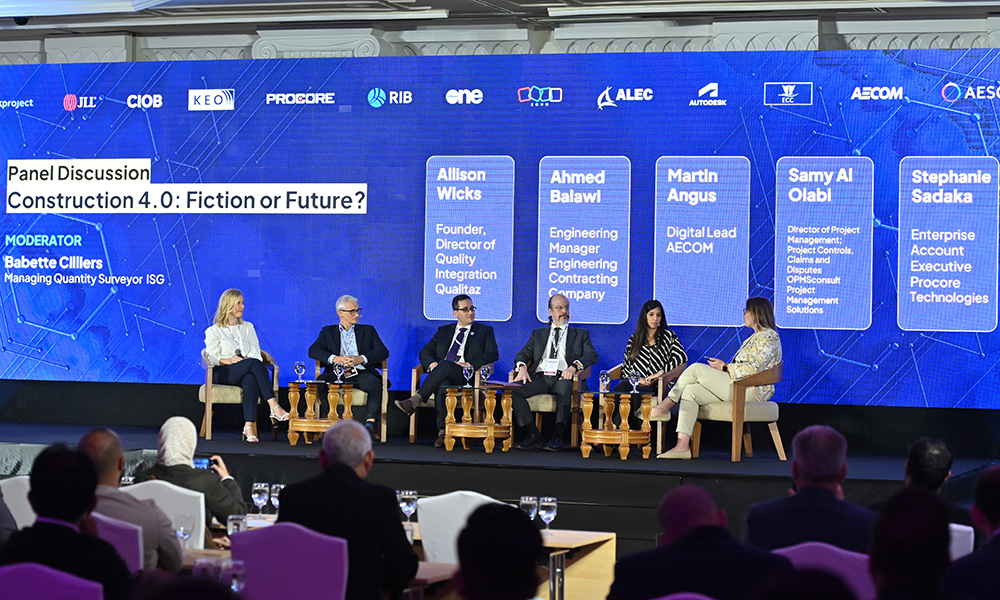
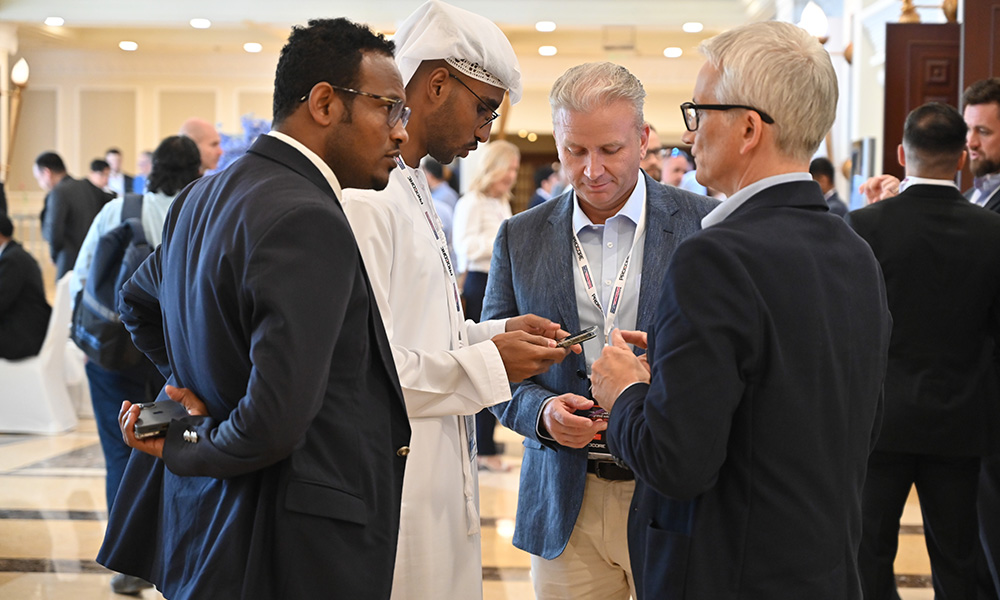
The Big Project Middle East editorial team has announced that the 2023 edition of its Digital Construction Summit (DC Summit) saw attendance from over 210 professionals. The event took place at the Habtoor Grand Resort, JBR, Dubai on the 26th of September and was extremely well received by attendees, the team revealed.
The event, formerly the Middle East BIM Summit, comprised three panel discussions that put project delivery, operational efficiency and health and safety (during construction and post construction) in focus. The event opened with a keynote address by Juan Tena Florez, Digital Services Director at KEO International Consultants who discussed why data management is critical through all the phases of the lifecycle, and how data becomes important as it advances and changes its nature.
The first panel discussion ‘Construction 4.0: Fiction or Future?’ was moderated by Babette Cilliers, Managing Quantity Surveyor, ISG, and comprised several speakers, including: Ahmed Balawi, Engineering Manager, Engineering Contracting Company; Allison Wicks, Founder, Director of Quality Integration, Qualitaz; Martin Angus, Digital Lead, AECOM; Samy Al Olabi, Director of Project Management; Project Controls, Claims and Disputes, OPMSconsult Project Management Solutions and Stephanie Sadaka, Enterprise Account Executive, Procore Technologies.
The second panel session – Enhancing Operational Efficiency with Technology – was hosted by John Shenton, Chair of Dubai Hub, CIOB with speakers, including: Debasish Roy, Associate Vice President, Pinnacle Infotech Solutions; Premanand Velumani, Solution Consulting Manager, Zoho Corporation; Rohan Chandavarkar, Associate Digital Delivery, AESG; Waleed Ishreim, Principal Sustainability Engineer, Project & Delivery Services, JLL, and Yasser Ahmed, Director of Digital Buildings and Software, Schneider Electric Middle East & Africa.
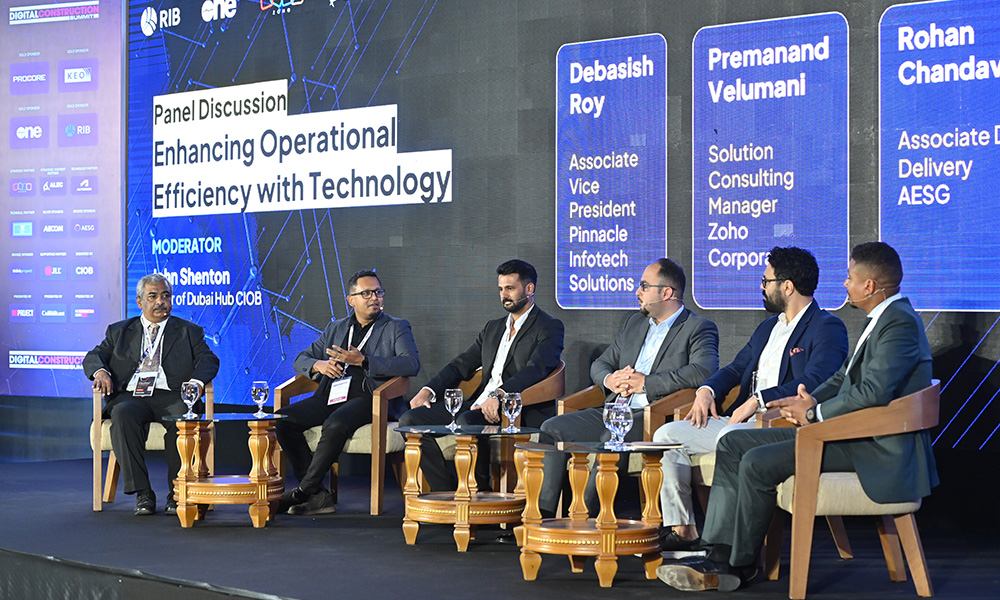
The final panel – Elevating Safety in the Built Environment – was moderated by Cristina Savian, Founder and Managing Director, BE-WISE, and comprised several speakers: Iain Taber, Senior Director, Health & Safety GDC+P, Equinix; Imad Itani, Innovation Manager, ALEC Engineering & Contracting; Lucynda Jensen, Project Lead, Project & Development Services UAE, JLL; Matthew Lloyd, Project Quantity Surveyor, Omnium International; Philip Rawlinson, Head of HSSEQ, Emrill, and Ross Hopwood, HSQE Manager, ISG.
The day also saw presentations from SoftwareOne (Ineffective information management in the Construction industry: Hype or Reality?) and Thinkproject (From Blueprint to Long-Life Value: Construction to Asset Lifecycle Management). The session were delivered by Walid Abdelaziz, Business Development Manager, SoftwareOne and Atif Rehman, Regional Manager Middle East, Thinkproject respectively.
Ahead of the presentations, Toufic Riman, Country Manager – Gulf at Autodesk sat down with Jason Saundalkar, Head of Content at Big Project Middle East to discuss digital transformation, the adoption and usage of technology in the built environment, and what the future of construction may look like.
“It’s always gratifying to see months of hard work translate into a successful summit. The content at the 2023 edition of the DC Summit has been very well received, with conversations on social media continuing beyond the event’s planned runtime. As the event also recorded over 210 attendees on the day, Big Project Middle East has solidified the summit’s standing as a key event for construction professionals in the Middle East, and is primed to expand its scope in 2024,” said Jason Saundalkar, Head of Content at Big Project Middle East.
The 2023 Digital Construction Summit is supported by:
Gold sponsor: KEO International Consultants, Procore, RIB Software, SoftwareOne
Strategic Partner: Zoho
Strategic Content Partner: ALEC
Technology Partner: Autodesk
Silver Sponsor: AECOM
Bronze sponsor: AESG, Thinkproject
Supporting Partner: JLL
Endorsements: Chartered Institute of Building
To learn more about the 2023 DC Summit, please click here.
The post 2023 edition of Digital Construction Summit records over 210 in attendance appeared first on Middle East Construction News.
Source: ME Construction News
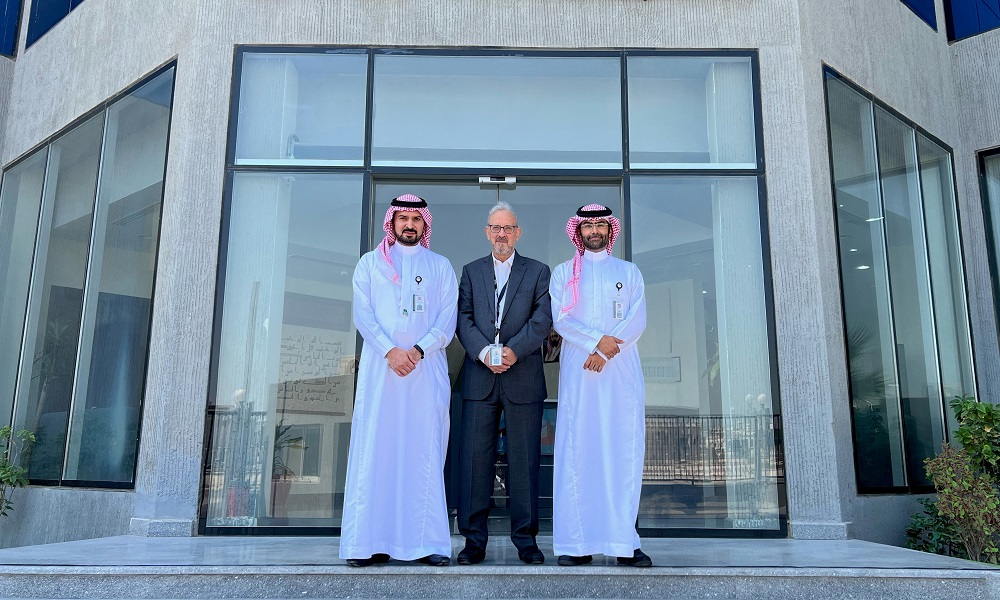
General Trading & Equipment CJSC, known as GTE, has taken a significant step toward expanding its market share in the Middle East by becoming the exclusive importer of Keestrack mobile crushing and screening equipment in Saudi Arabia.
Founded in 1976, GTE has emerged as a prominent provider of Construction Equipment and Construction Systems solutions, earning a reputation for its exceptional after-sales service and customer support. The company has played a pivotal role in the growth of Saudi Arabia’s infrastructure and industries.
Dr. Mohamed Shams Elramly, general manager at GTE, outlined the company’s mission, stating, “The mission of GTE is to have strong relationships with its customers by providing best-in-class solutions, products, and service and support. This is why GTE is happy to add Keestrack state-of-the-art crushing and screening equipment to our product portfolio.”
Keestrack CEO Frederik Hoogendoorn and Giovanni Bartoli, area sales manager at Keestrack, expressed their enthusiasm for collaborating with GTE to expand their presence in the Saudi Arabian market. Hoogendoorn noted, “GTE is a very professional and experienced company in the construction business with excellent staff, and they have the same customer focus as Keestrack: solution-oriented.”
Headquartered in Damman, GTE operates through nine branches, each equipped with its own sales and after-sales support, alongside five service centers with workshops. The company comprises three divisions: Construction Equipment, Cleaning & Industrial Equipment, and Construction Systems, serving diverse sectors, including construction, agriculture, infrastructure, mining, warehousing, facility management, utilities, industrial factories, and oil & gas. Giovanni Bartoli pointed out that, for Keestrack equipment, the initial focus in Saudi Arabia will be on quarrying and mining, with potential expansion into recycling businesses.
One standout reason for GTE’s decision to become a Keestrack dealer is the ability to offer fully electric-powered mobile crushing and screening equipment. Keestrack’s cutting-edge machinery is designed to reduce the cost of ownership while providing flexibility in drive systems and electric interconnectivity. This introduction of mobile crushing and screening technology will offer GTE a significant opportunity in Saudi Arabia, where stationary applications are more prevalent. Bartoli expressed confidence in GTE’s ability to convey the advantages of high-capacity mobile crushers and screens to their clients.
Keestrack, a global specialist in mobile crushing and screening equipment for the mining & quarrying, recycling, and aggregates industry, has been a pioneer in electric drives since 2012. The company introduced electric plug-in systems with onboard diesel/gen-sets for situations where electric plug-ins were unavailable. In 2021, Keestrack took a giant leap with the ZERO-drive machines, which eliminate the need for any onboard combustion engine. Electric motors power most of Keestrack’s mobile equipment, enhancing efficiency and sustainability. Additionally, a tracked engine/generator unit, introduced in 2022, serves as a backup power source for the ZERO-drive machines, ensuring continuous operation even in areas without grid connections.
With GTE’s extensive experience and Keestrack’s innovative technology, the partnership is poised to revolutionize the construction and mining equipment landscape in Saudi Arabia, offering customers cutting-edge solutions and exceptional service
The post GTE secures Keestrack distribution deal for Saudi Arabia appeared first on Middle East Construction News.
Source: ME Construction News