GTR8100_1_1000x600-1.jpg

October 28, 2022 foasummit0

Manitowoc has launched its latest rough-terrain crane, the Grove GRT8100-1, which is said to be an upgrade of the GRT8100. The new model will be available from 2023, the company confirmed.

According to the manufacturer, many of the improvements in the latest model, which is being presented at Bauma 2022, stem from a new chassis that shares commonality with the chassis from the 120t capacity GRT8120. There’s also an updated engine and transmission package, and a new, wider cab with enhanced operating features.

“The GRT8100 has been a popular choice with customers worldwide. With the GRT8100-1, we have taken a great crane and made it even better,” said Federico Lovera, Product Manager for rough-terrain, industrial, and lattice boom crawler cranes at Manitowoc.

In August 2022, Manitowoc confirmed Jennifer Peterson as its General Counsel and, in September 2022, Grove introduced a heavy-duty jib option for its GRT9165 rough-terrain crane.

“The new Grove GRT8100-1 will go into production at our US and Italian factories simultaneously, allowing deliveries to customers around the world to begin in early Q2 next year,” he added.

The 100t capacity GRT8100-1 features the same 360-degree load charts as its predecessor and maintains its overall dimensions, counterweight, and five-section, 12-47m full-power MEGAFORM boom. However, with the new chassis on the GRT8100-1, there is an option to integrate the flexible MAXbase variable position outrigger system, which the company says offers up to 15% capacity improvements in certain configurations.

MAXbase also said to simplify setup on congested jobsites, with each of the four hydraulically telescoping outriggers extended over a range of symmetric and asymmetric positions. Also new to the outrigger design is an auto-level feature for easy jobsite set-up, as well as Manitowoc’s smart, length-sensing Outrigger Monitoring System (OMS).

In late September 2022, Manitowoc said it had modernised its MLC250 lattice-boom crawler crane.

The post Manitowoc launches upgraded Grove GRT8100-1 rough-terrain crane appeared first on Middle East Construction News.


Source: ME Construction News


Alstom-Office_1000x600-1.jpg

October 28, 2022 foasummit0

Alstom has announced the opening of its new regional office in Riyadh, Saudi Arabia. The firm said the new office will serve as a hub for the development of Alstom’s operations across the Gulf and the wider region, providing marketing, tax and finance services to the region, in addition to railway maintenance services, supplier quality development and monitoring.

According to a statement, the new office will also serve to further leverage Saudi Vision 2030 to encourage regional talent development, and actively build localised capability in the Kingdom, in alignment with Alstom’s growth. Within the new regional office, Alstom will bring its condition-based and predictive maintenance solution, HealthHub to Riyadh to support the railway infrastructure innovations in Saudi Arabia.

The Kingdom’s HealthHub digital centre will start monitoring a fleet of 748 cars in real-time for Riyadh Metro, Jeddah Airport People Mover, and Haramain High-Speed Train. It will be operated by a team of rail mobility engineers and data scientists with an opportunity to provide advanced expertise and digital services to both Alstom and non-Alstom rolling stock, infrastructure and signalling in and outside of the Kingdom.

In early September 2021, Alstom delivered the first two trains for the Cairo Monorail project.

Launched in 2014, HealthHub is Alstom’s proven solution for condition-based and predictive maintenance, continuously monitoring the health of railway assets, maximising availability and reliability, while optimising lifecycle costs.

The technology anticipates faults before they occur, avoiding over-maintenance, reducing the need for physical inspection, and decreasing train downtime by up to 30%. It currently monitors over 18,000 cars from 90 different fleets around the world including in the UAE, Morocco, and Algeria.

By establishing the HealthHub digital centre and a new regional office in Riyadh, Alstom said it will be able to access high-echelon talent and contribute to the next chapter of the Kingdom’s development.

Later in September 2021, the firm appointed new members to its AMECA leadership team.

Alstom first arrived in Saudi Arabia in the 1950s. Since then, the company has been a key contributor to the advancement of the region’s transport infrastructure, it notes. Some of the recent projects in the Kingdom include the supply of an integrated Metro System for Lines 4, 5 and 6 as part of the FAST Consortium and line 3 within the ArRiyadh New Mobility Consortium (ANM).

As a Member of FLOW, Alstom also provides operation and maintenance services for Lines 3, 4, 5 and 6 of the Riyadh Metro. For the Haramain high-speed rail line between Mecca and Medina, Alstom supplied Talgo with the Mitrac TC 3300 propulsion equipment and Flexifloat high speed bogies for the powerheads of the 35 very high-speed trains, as well as the VIP train for the 450km line and is contracted with the maintenance.

Additionally, Alstom is responsible for the construction of King Abdullah Financial District’s monorail transit system. Finally, Alstom is the supplier and operation and maintenance provide of the turnkey Innovia APM 300 automated people mover system at the King Abdulaziz International Airport in Jeddah.

In October 2022, Alstom signed a five-year $53mn O&M contract with Jeddah Airports Company.

The post Alstom opens new regional office in Riyadh appeared first on Middle East Construction News.


Source: ME Construction News

Smart-Cities-AECOM_1000x600-1.jpg

October 27, 2022 foasummit0

The concepts of smart cities and sustainability are often intertwined, as it is impossible to consider one without the other. By their very nature, smart cities involve the implementation of eco-friendly projects that improve the quality of life for residents and communities, while still respecting the environment.

By using information and communication technology to collect data, optimise activities, and improve the management of resources and assets, cities can be enabled to react and offer solutions to specific problems. Whether it’s recycling garbage to form compost, treating sewage water for construction or using it to maintain public spaces, there are many ways that smart technologies can be deployed in a city.

Eco-friendly or sustainable cities stand out for their ability to marry smart management, mobility, green housing and smart economies. Therefore, a smart city can claim that it is sustainable when its overall goal is to improve urban services and utilise technology to answer the economic, social and ecological challenges cities face, while still reducing costs.

Given this overlap, Farah Naz, Head of Innovation and ESG, Middle East and Africa, and Martin Angus, Digital Design Lead – Middle East from AECOM Middle East, say that the real estate and construction industries must start looking at ESG as a way of thinking and doing business, rather than just as a product.

Speaking exclusively to Gavin Davids for Big Project Middle East’s Smart Cities Report, Naz and Angus point out that technology is often seen as a driver for change, when it should be the other way around.

“I’ve been working with sustainability for 20 years and innovation for 10 years, and what I’ve realised is that, for me, a smart city is actually an ESG city, and that is sustainable. I know that there is currently a conversation happening around ESG – Environmental, Social and Governance – and I think as an industry, we’re boxing it up, because it’s very new for us. But if we take a step back, then we’re already doing a lot of things related to environmental sustainability, which relates to a city,” Naz says.

Farah Naz, Head of Innovation and ESG, Middle East and Africa at AECOM Middle East

“When we talk about energy transition, nature-based solutions and all of these things, the social aspect is really interesting. When we talk about sustainability, social innovation or smart cities, it’s always about people. The social part is not just about the people, but also about creating the mechanisms for social innovation and social sustainability that comes together to celebrate people,” she adds.

“But, in order to make a city sustainable or viable, we need governance. Everyone talks about regulations, but governance, I think, is not just about regulation of a city. It’s also about having governance about social entrepreneurship, having governance around how we enable digital tools and capabilities to give us more insights into a city.”

Together, Naz and Angus look at innovation at AECOM and how it can be applied externally to projects. By collaborating, Naz believes that they can utilise digital tools to enable better decision making and to create a feedback loop that will allow the consultancy’s teams to learn from the past and make better decisions in the future.

She adds that clients the GCC are starting to realise that they need to update their existing guidelines and regulations, and that digital tools need to be used to track these changes for future proofing.

“Looking at smart cities, it’s not only about people centric cities only, it’s about ESG cities and right now, no one is talking about it, but in a few years’ time, that’s all anybody will be talking about. Currently, we’re doing it in different ways, but it’s very fragmented. We’re not actually coming together and saying that a smart city is an ESG city, but if we take a step back, the layers of information created are multidimensional, and sustainability is extremely multidimensional.”

Chiming in, Angus says that he believes that as digitalisation becomes more commonplace, a number of tools will begin to be married to ESG principles. “What we’re going to see is more conversions. If you think about something as simple as phones and taxis, we first had phones and we had taxis. Then through conversions, you start to see something like Uber appear. So, we’re going to start seeing completely new systems emerging – things that just weren’t there before technology came along. We need to be able to act instantly, and to be able to get information to the right people at the right time. At this moment it doesn’t happen because we’re completely siloed, and you don’t get innovation if you’re completely siloed.”

Martin Angus, Digital Design Lead – Middle East at AECOM Middle East

“Because there’s not a wealth of open information, we’re not seeing new start-ups, we’re not seeing new ideas. But we’ll start to see that coming online very quickly (if we share information),” he points out.

As data and technology continue to inform and change the way that society thinks and operates, both Angus and Naz state that this progression will lead to a shift in mindsets in both the public and business sectors. This will lead to more challenging questions being asked about how we design and build our cities they say.

Citing the rise of the electric vehicle and an increased focus on ride sharing as potential examples of how people’s mindsets are changing towards transportation, they say that city planners and developers will be forced to reconsider the very infrastructure that underpins our cities today.

“Do we need as many car parking spaces as before?” Angus asks. “Do we need to build so many carparks anymore? Will people even need to own cars? When those conversations come online as technology happens, we who work in the built environment will have to completely change how we look at answering those types of questions.”

“There needs to be two shifts, essentially,” Naz says. “It’s not just the mindset, but also the business model, and it’s also about acceptance. Now, we’re not just talking about people centric cities. We’re talking about values and access to things and the speed of things. This will completely redefine how a child will experience a smart city in 10 years’ time, as compared to someone who grew up 10 years ago.”

This process will only accelerate, they point out, highlighting how the pandemic has had a significant impact on the way people work and live. This shift has been completely enabled by technology and the needs of people during the pandemic. Now that it has happened, there’s no going back, they assert.

“What we need to start doing is learn how smart technologies will affect everybody’s lives. That will then make people start looking at trends around us now. How do we start to understand what the future of work looks like – that’s still getting worked out, if I’m completely honest,” Angus says.

“I don’t think there are any rules at the moment. There are some guidelines – but I think that will shift as we mature into living in digitally mature cities,” he adds.

A consequence of this will be that at the governance level, there will be a lot of change happening in the near future, Naz says.

“There’s a lot of things happening around the Metaverse, smart cities, artificial intelligence and all that, but at some point, there needs to be guidance and planning regulations from a government level, so as to manage and enhance the process. It’s not about constricting it, but to let it evolve in a way that there’s some level of governance about it. I really think that these future, transformative cities and mindsets are a layering of these technologies and innovations. It’s a very multi-layered way of thinking about how the future of life could be. The question is, do we wait for another pandemic to make another big shift? Or do we bring that shift to ourselves and move forward?,” she asks.

In order to achieve this, Angus emphasises that the industry needs to come together and to stop working in silos. Technology has already significantly altered the way work is carried out and how people think about working, but he points that there needs to be more done to break down the walls between industries and sectors – even within companies.

“There is a need to bring industries together and I find that super interesting. Lots of building designers are now completely focused on what’s happening in manufacturing, or what the filmmaking industry is doing, and they’re all trying to take technology from each other and work together to create more solutions that bring benefit, as opposed to that single project/single mindset,” he says.

“That’s just not going to work moving forward. People are moving from projects to programs, so that we can start to look at more efficient ways of working, and from that you’ll get more recyclable information. This is where you start to see people throwing up ideas of using past project learning, what an actual digital twin would start to do and so on.”

He concludes, “We don’t live in smart environments at the moment – we have some elements, but it’s not commonplace. We’re going to start looking at whether we’re actually designing our houses correctly, and we’ll see a quantum shift in design, which will come from having products that you can now put in your house that will deal with smart objects that are not actually built in-situ at the time of construction.”

Read more:

The post A quantum shift in city design thinking is on the horizon appeared first on Middle East Construction News.


Source: ME Construction News

TheParks1_1000x600-1.jpg

October 27, 2022 foasummit0

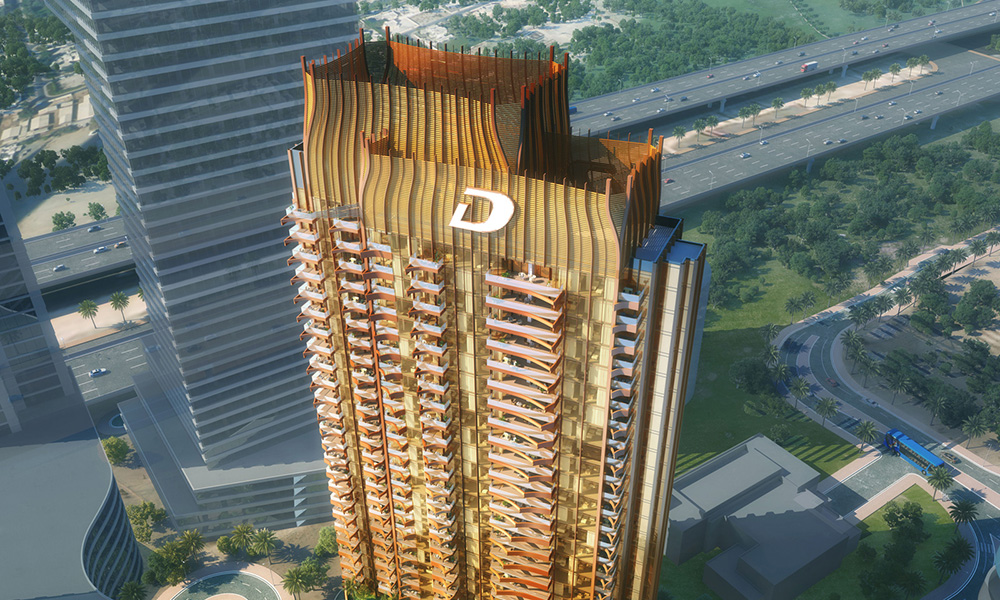
Dubai-based developer, URB, has announced plans for Africa’s largest sustainable city. THE PARKS, which is said to have a development value of $20bn and will occupy an area of 17sqkm, aims to provide the world’s highest standard for sustainable living for an expected 150,000 residents.

The smart and sustainable city is being planned for the eastern region of South Africa; it is expected to be car- and waste-free, feature 40,000 homes across 12 residential districts and boast a mix of residential, medical, tourism, entertainment, retail & education elements. The city aims to promote a Net Zero lifestyle and is expected to produce 100% of its energy, water and food on site to become a self-sufficient destination, the developer said.

According to the developer, the city’s economy will be automated and digital, with the majority of jobs expected to be related to green technology. More than 40,000 jobs will be created in the short and long term during the planning, construction and operation of the city, the developer noted.

In June 2022, Big Project Middle East met with Diamond Developers to exclusively discuss progress at Sharjah Sustainable City.

“THE PARKS is innovatively planned with the highest standards of sustainability to create a car-free community & a unique zero carbon destination. It is designed from a landscape to provide the happiest and healthiest ecosystem,” stated URB CEO Baharash Bagherian.

The city will become a benchmark of economical, viable sustainable living and a positive contribution to the green economic growth of the country, the statement highlighted.

Bagherian is said to have masterminded the designs of various sustainable cities including Xzero, AlNama and Nexgen. He added, “The landscape is designed to promote social sustainability and an active lifestyle, which permeates throughout the public realm of the city. Some of these features include outdoor fitness stations, community farming plots, outdoor sports courts, dedicated jogging and cycling tracks, waste to art public realm and outdoor concerts.”

In early October 2022, CPS said the 96m tall Burj Zanzibar would be built in Africa using hybrid timber technology.

For Bagherian, green spaces are the heart and arteries of the entire development. He remarked, “At the centre of the development there is a unique 5km long multifunctional green spine, which has various branches of vibrant community parks that link all the buildings together.”

This resilient landscape will connect residents to all hubs within the development in minutes by walking, cycling or electric buggies, URB said.

Bagherian continued, “With over 32km of dedicated running, cycling and equestrian tracks, THE PARKS will also provide the greenest and safest modes of active transport.”

In October 2022, Sharjah Sustainable City launched its third phase.

The city is expected to integrate Information Communication Technology (ICT) and Internet of Things (IoT) into its hard and soft infrastructure. The developer noted that these technologies will transform the city’s networks and services into a more efficient, intelligent and collaborative ecosystem.

The city will also boast ‘the most connected mobility strategy’, which will be autonomous, shared, and electric. EV incentives for all residents & smart EV infrastructure will help accelerate the transition towards widespread EV use, the developer explained.

Additionally, THE PARKS will promote ecotourism, with the goal of bringing many benefits to the community, while enhancing travelers’ experiences. As an edge-less city surrounded by a buffer of nature reserve and with hospitality components such as a five-star eco resort and eco lodges, as well as a nature conversation centre, and an ecotourism visitor centre, THE PARKS will become a unique destination for travellers, the developer concluded.

The post URB to develop $20bn smart and sustainable city in South Africa appeared first on Middle East Construction News.


Source: ME Construction News

Falcon-Island-South1_1000x600-1.jpg

October 27, 2022 foasummit0

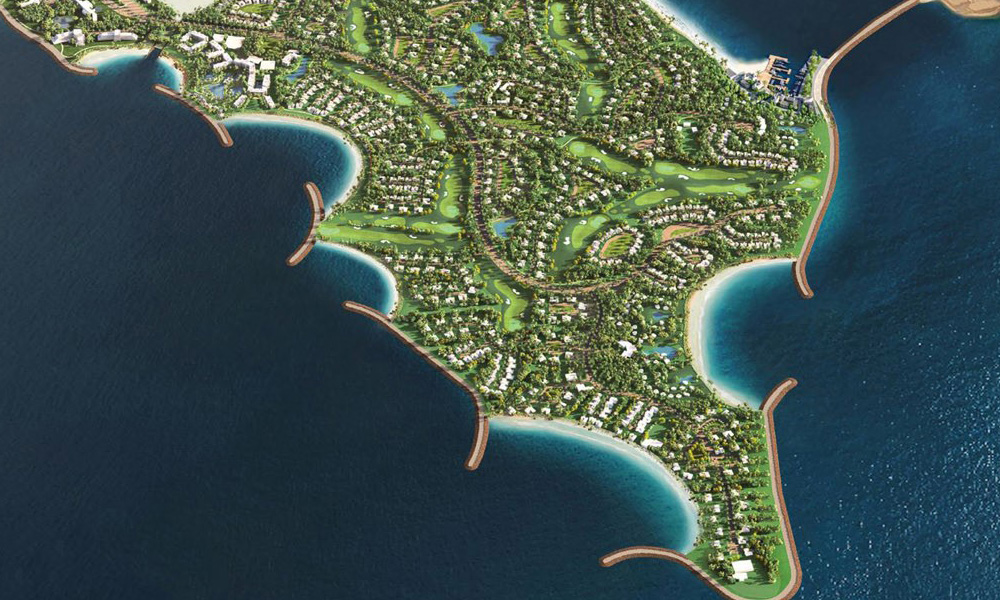
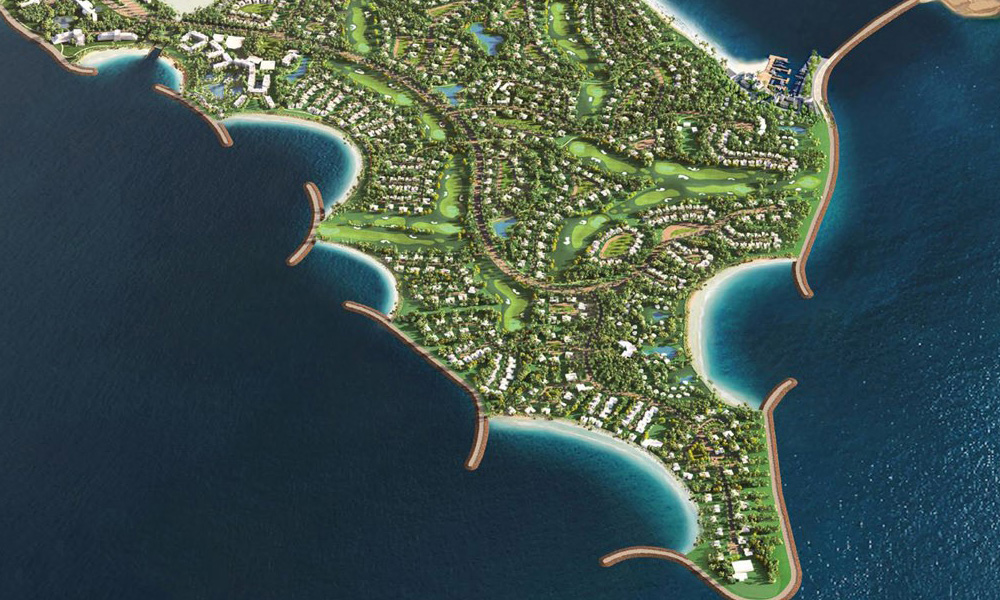
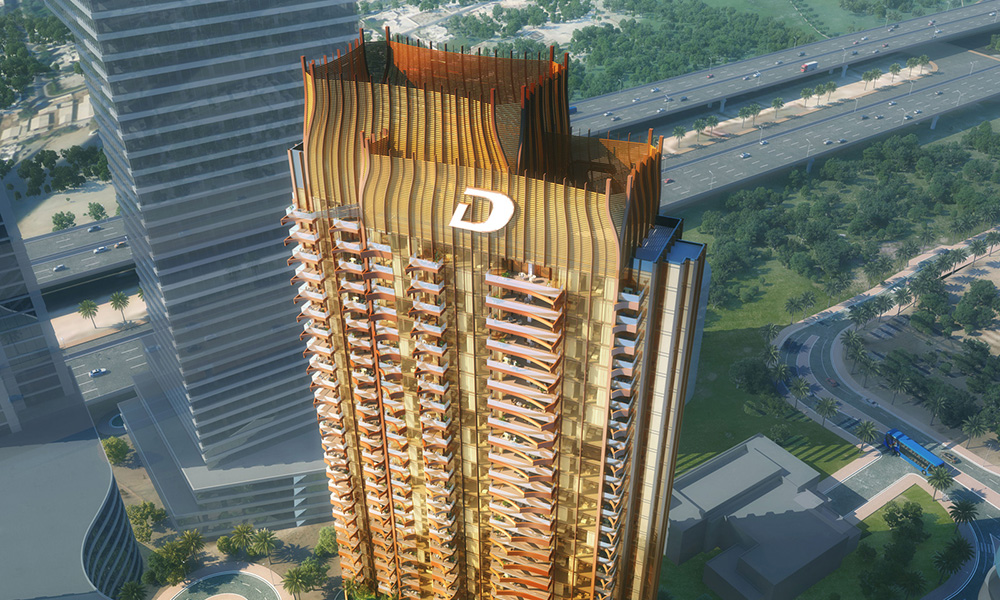
Lifestyle developer Al Hamra has launched Falcon Island – South, the second of its twin-island residential projects. During the launch event, the developer released Phase One of South Island, consisting of two-and-three-bedroom canal, sea and garden view townhouses, as well as the remaining inventory for the North Island.

Said to be designed with a human-centric approach, South Island comprises a collection of 262 townhouses with a broad spectrum of configurations. Options include villas of two-, three-, four-, five-, and seven-bedroom units.

There are also an array of well-appointed facilities such as a gymnasium, swimming pools, a community centre, EV charging stations, walking tracks, and a tennis court, said the developer.

In March 2022, Al Hamra announced a five-year roadmap to boost investment, business, residency and tourism in Ras Al Khaimah. Later in the month, the developer announced the $272mn Falcon Island project. Phase 2 of the development was rolled out in July 2022.

Al Hamra CEO Benoy Kurien said: “Falcon Island is a ground-breaking residential offering that surpasses all previous developments in Ras Al Khaimah. If I have to define Falcon Island in two words, it would be affordable exclusivity. This project makes exclusive living reachable to aspirational individuals. We are thrilled to have received such a positive investor response for Falcon Island, which reinforces the growing confidence in Ras Al Khaimah’s value proposition.”

Located within the residential community of Al Hamra Village, Falcon Island is an exclusive upscale freehold residential neighbourhood built across twin islands, the developer noted.

The gated community gives access to many amenities, with leisure and entertainment options such as a championship golf club surrounded by lagoons, a marina & yacht club, luxury resorts and hotels, an array of food & beverage outlets, and a shopping mall, the statement concluded.

In early October 2022, the RAK Energy Summit concluded after two days of dialogue.

The post Al Hamra launches Falcon Island – South residential project appeared first on Middle East Construction News.


Source: ME Construction News

Expo-Village1_1000x600-1.jpg

October 27, 2022 foasummit0

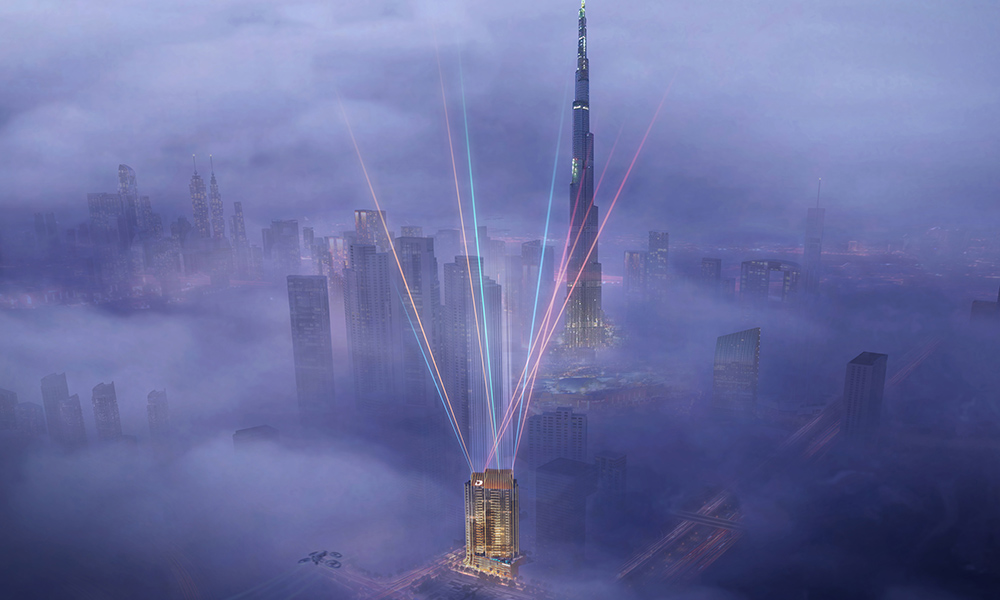
Savills Dubai has confirmed that it has been appointed as the master agent for leasing apartments and retail units at Expo Village.

The residential units with Savills include studios, one-, two- and three-bedroom apartments in various layouts and can be leased as furnished or unfurnished units. The apartments provide views of the community, Expo Park and Expo City Dubai, including the Al Wasl Dome, Savills said.

The apartments are said to be finished with premium materials and top-grade fittings, and maintained to the highest standard, with on-site security and maintenance. Allocated parking is provided with every apartment and there are plenty of visitor car parking areas, a statement from Savills noted.

In early October 2022, Savills revealed its top second home locations with an emphasis on wellness and, later in the month, the firm said it had made key appointments in its Saudi office.

“It is an absolute honour to be able to represent Dubai World Trade Centre and the landmark Expo Village development, which serves as the next chapter in the growth of the historic Expo site. Expo Village is a testament to the legacy of EXPO 2020 – a flourishing community designed with amenities that enrich the lives of residents, with everything located within walking distance so that people can spend more time doing what they love. The project will surely become an example for the world to witness, just as the event itself was,” said Katie Burnell, Associate Director – Head of Residential Agency for Abu Dhabi and Exclusive Leasing Dubai.

According to Savills, Expo Village is set to welcome its new residents as Expo City Dubai officially re-opened its doors to visitors earlier this month. The residential community was originally developed by the Dubai World Trade Centre as the official residential community of EXPO 2020 Dubai.

Located minutes away from the EXPO 2020 Metro Station and the Dubai Exhibition Centre, Expo Village comprises 2,273 residential apartments all located within four residential community clusters. As the only ready-to-move residential apartments directly connected to the Expo City Dubai site, Expo Village is a pedestrian-friendly community with the 37,000sqm Expo Park at its heart, Savills explained.

Mukesh Ambani purchased Dubai’s most expensive villa for $163mn in mid-October 2022.

Designed to accommodate up to 5,000 residents, Expo Village also features 42 leasable retail units to serve the growing demand for the community’s daily lifestyle and convenience amenities. The Expo Village’s onsite retail offering currently includes a community supermarket, pharmacy, medical clinic and several food and beverage outlets.

Expo Village is the third major exclusive leasing instruction Savills Middle East has won in as many months. It comes on the heels of premium residential buildings Capital Views and Ajwan Towers in Abu Dhabi, the statement concluded.

The post Leasing of residential and retail units at Expo Village to be handled by Savills appeared first on Middle East Construction News.


Source: ME Construction News


Natural-History-Museum-Abu-Dhabi1_1000x600-1.jpg

October 27, 2022 foasummit0

The Department of Culture and Tourism – Abu Dhabi (DCT Abu Dhabi) and Miral have said that steady progress is being made on the Natural History Museum Abu Dhabi project. ALEC is the main contractor for the project, which is currently 25% complete.

Located in the Saadiyat Cultural District, the museum is anticipated to be the largest of its kind in the region, allowing visitors to travel on a 14b-year journey through time and space, from the earliest origins of the universe to a thought-provoking perspective into Earth’s future.

Due to be completed at the end of 2025, it will be a scientific research and teaching institution, as well as an educational resource for learning about the evolving story of our planet, a statement noted.

In early September 2022, Miral said that SeaWorld Abu Dhabi will open in 2023 and, later in the month, it was announced that the UAE’s hotel development pipeline to grow to 48,000 keys by 2030.

Saood Abdulaziz Al Hosani, the Under-Secretary at DCT Abu Dhabi, said: “The museum will bring a new dimension of educational discovery to the Abu Dhabi community, as an entirely unique cultural attraction that offers visitors and residents endless inspiration.”

Miral CEO Mohamed Abdalla Al Zaabi continued, “Through our partnership with DCT Abu Dhabi, we have been able to make strong progress on the development of this iconic cultural landmark. The museum will provide visitors with an enriching cultural experience to help position Saadiyat as the destination of choice, and Abu Dhabi as a centre for culture, arts, and creativity.

“It also supports the achievement of Saadiyat Vision 2025, which aims to grow domestic, regional, and global visitor numbers, supporting the development of Abu Dhabi’s tourism ecosystem.”

In late October 2022, Aldar announced its lagoons-themed villa community on Saadiyat Island.

The museum will join the diverse cultural institutions and museums located in the Saadiyat Cultural District, which features the Louvre Abu Dhabi.

The post Natural History Museum Abu Dhabi set for 2025 completion appeared first on Middle East Construction News.


Source: ME Construction News

MYCRANE-Founder_1000x600-1.jpg

October 27, 2022 foasummit0

Dubai-based MYCRANE has used Bauma 2022 to announce its forthcoming launch in the United States, and has appointed Scott Wilkes to lead the new operation.

Wilkes studied Mechanical Engineering at Louisiana State University before working at Mammoet as a Project Engineer. Whilst at Mammoet, he was also involved in market and business intelligence.

As part of the expansion, a new MYCRANE office – located in Houston, Texas – will open on 1 December 2022, while Wilkes’ role as Director of Business Development begins on 1 November 2022.

In August 2022, MYCRANE added new crane types to service the short-term rental market and, in September 2022, it said that it was servicing global lifting projects through its platform.

In addition to its online crane rental service, MYCRANE offers digital tools such as a free crane selector and an online marketplace, where new and used lifting equipment can be bought and sold.

Further complementing its Dubai headquarters, MYCRANE has a network of offices and franchise locations spanning Europe, Asia and the Middle East, the firm noted.

Earlier this year MYCRANE announced three more franchise agreements for Qatar, UK and Ireland. It also recently announced a partnership with PV-E Cranes of the Netherlands, allowing the company to offer zero-emissions cranes for sale and rent on its digital platform.

The post MYCRANE announces US launch, led by Scott Wilkes appeared first on Middle East Construction News.


Source: ME Construction News

John-Pagano-new-CEO-of-AMAALA_1000x600-1.jpg

October 26, 2022 foasummit0

The developer behind two ambitious regenerative tourism projects in Saudi Arabia has confirmed its transformation into Red Sea Global (RSG) at the Future Investment Initiative in Riyadh.

In a statement, the developer formerly known as The Red Sea Development Company (TRSDC), said that it is currently overseeing the development of two luxury tourism destinations in the Kingdom – The Red Sea Project and AMAALA. These projects prioritise delivering a positive impact for people and planet and are on track to place Saudi Arabia firmly on the global tourism map, it added.

“With The Red Sea Project and AMAALA, we’ve proven our ability to realise mega-scale responsible developments that positively shape the futures of both the people who we welcome and employ, and the places in which we operate,” said John Pagano, Group CEO of Red Sea Global.

In August 2022, Ian Williamson, Group Chief Projects Delivery Officer at RSG shared his thoughts on the project’s numerous achievements over the past five years exclusively with Middle East Construction News (MECN).

“The announcement today marks the start of our evolution into a truly global developer that can lead the category towards a new archetype for development. We are powered by extraordinary people from the Kingdom and beyond, and have the skills, knowledge, and experience required to succeed on the world stage. We are not only expanding our footprint to help create massive economic opportunities – valued at hundreds of billions worth of riyals – for the people of Saudi Arabia. We also want to set new global standards in development and inspire the industry to do better.”

Following the successful delivery of critical milestones, and with The Red Sea destination on track to welcome its first visitors in early 2023, RSG’s mandate has expanded to oversee upwards of a dozen projects stretching the length of the Red Sea coast of Saudi Arabia, with the potential to expand beyond the Kingdom in the future, he added.

RSG has a growing portfolio of projects stretching along the Red Sea coast of Saudi Arabia, with more than five additional projects already under feasibility study, entering masterplan competition phase, or at which construction has already started, Pagano said.

In early September 2022, RSG said contracts worth $1.7bn had been signed for AMAALA to date.

The expanded mandate also includes the establishment of a series of subsidiary businesses to drive an uplift in the Saudi tourism sector and associated industries. Such RSG-owned businesses allow the organisation to maintain its stringent sustainability standards in development and operational phases, and span the creation of a seaplane company, through to hospitality and guest experience brands.

The global multi-project developer’s existing two giga projects under delivery are projected to contribute some US $8.77bn annually to the Kingdom’s economy on completion. RSG’s projects also focus on enhancing the wellbeing of communities, including comprehensive training programs for the next generation of Saudi talent, the company said.

To date, across the two live projects, the company has awarded more than 1,300 contracts worth nearly $8.5bn, with some 70% of the total value awarded to Saudi companies – which is reflective of the organisation’s ambition to positively impact the local economy.

Late in September 2022, RSG unveiled the design for the Red Sea Marine Life Institute at AMAALA.

Over the last five years, the company has successfully launched programs geared towards the up-skill and training of young Saudis. Such efforts support the creation of a pool of talent, which will power the delivery of the Groups portfolio of projects and the wider growth of the tourism sector in the Kingdom, the firm noted.

Other initiatives include the Elite Graduate Program which has brought in more than 120 fresh graduates to the organisation for on-the-job training over the last four years, with the next batch of graduates set to join in early 2023. An additional 1,500 vocational training places have also been provided and students who successfully complete the program will be employed by RSG or one of its partners, the statement pointed out.

A partnership with the University of Prince Mergin provided 220 scholarships so far with 50 more set to be provided in 2023. The undergraduate studies, leading to a Bachelor of Science Degree in International Hospitality Management, which is accredited by the prestigious Ecole hôtelière de Lausanne (EHL).

In early October 2022, RSG confirmed daa International as the operator of the Red Sea International airport.

RSG’s approach toward responsible development has seen the company explore and, in some cases, implement experimental technologies and pilot programs to help solve some of the world’s most complex and pressing challenges, such as off-site manufacturing and modular construction methods at scale, green concrete to limit emissions, destination-wide clean mobility strategies, and even sustainable food production through new farming approaches, it stated.

The rebrand of the organisation also includes a new logo concept and brand inspired by the Red Sea, which is home to the organisation’s flagship projects. It also reflects the global aspirations of the company as it aims to have a positive impact on development worldwide, the statement concluded.

The post Red Sea Global confirms new brand identity and mandate appeared first on Middle East Construction News.


Source: ME Construction News

Streetlighting3_1000x600-1.jpg

October 26, 2022 foasummit0

The UAE’s Ministry of Energy and Infrastructure (MoEI) has announced the pre-qualification requirements for a public-private partnership (PPP) street-lighting project in the country’s Northern Emirates. In a statement exclusive to Middle East Construction News (MECN), the ministry said the project includes the retrofit of the Federal Street-lighting Network in the Northern Emirates.
It explained that the project covers the 850km-long federal roads network in the region and about 30,000 luminaries that will need to be retrofitted into a sustainable smart street-lighting system that is adaptive to environmental and traffic conditions.

The scope of work for the project includes financing, designing, building, operating, maintaining and the transfer of the street-lighting network, it added. The ministry said that once completed, the project will enhance the quality of the federal roads network and improve safety levels.

In October 2021, the UAE’s MOEI said over 11,000 new residential units are under construction across the country and, in November 2021, the MoEI said it was building the UAE’s first 3D printed government facility.

In addition, by converting the network’s lighting systems to a sustainable smart system, the ministry estimates that will reduce the carbon footprint of the roads network significantly.

For the pre-qualification of the project, the MoEI said that it will begin by assessing the technical expertise of the investors and participants, as well as their financial health. Amongst the things considered will be the interested company’s annual turnover, financial performance, and its previous experience in the UAE.

The streetlighting project is planned to take 18 months to complete, followed by eight and a half years of operation, for a total contract period of 10 years, the ministry told MECN.

In September 2022, Abu Dhabi DoE revealed new policies to accelerate the UAE’s move towards Net Zero.

The sustainable street-lighting project is another indication of the UAE’s move towards shifting towards green energy and sustainable solutions to combat global warming and diversified energy sources. The country aims to achieve Net Zero emissions by 2050 via the UAE Net Zero by 2050 Strategic Initiative.

Earlier this month, a memorandum of understanding was signed between the MOEI and Engie Solutions to technically cooperate in generating clean energy projects on ministry assets, and to explore other energy-related CSR initiatives.

The MoU is said to be a recognition of the importance of increasing the share of renewable energy in the UAE’s energy mix, while it also aims to inspire innovation in the sector. The country began financing clean energy projects more than 15 years ago and is said to have invested over US $40bn into the sector to date. Current trends predict clean energy production capacity, including solar and nuclear, to reach 14GW by 2030, up from about 100MW in 2015 and 2.4GW in 2020.

The post Exclusive: MoEI discloses pre-qualification requirements for PPP street-lighting project appeared first on Middle East Construction News.


Source: ME Construction News