ACWA-Power-Senegal_1000x600-1.jpg

October 4, 2022 foasummit0

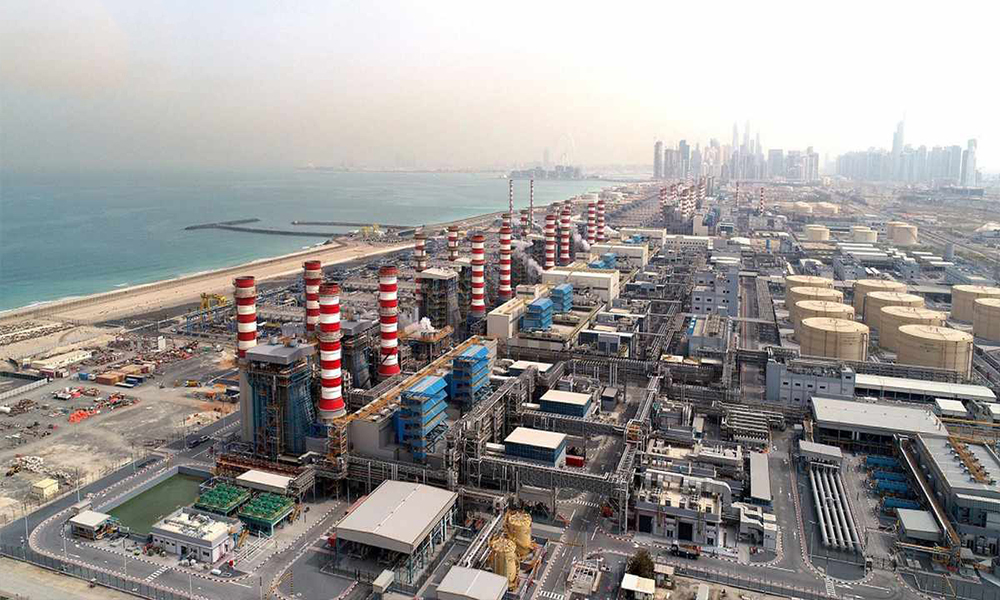
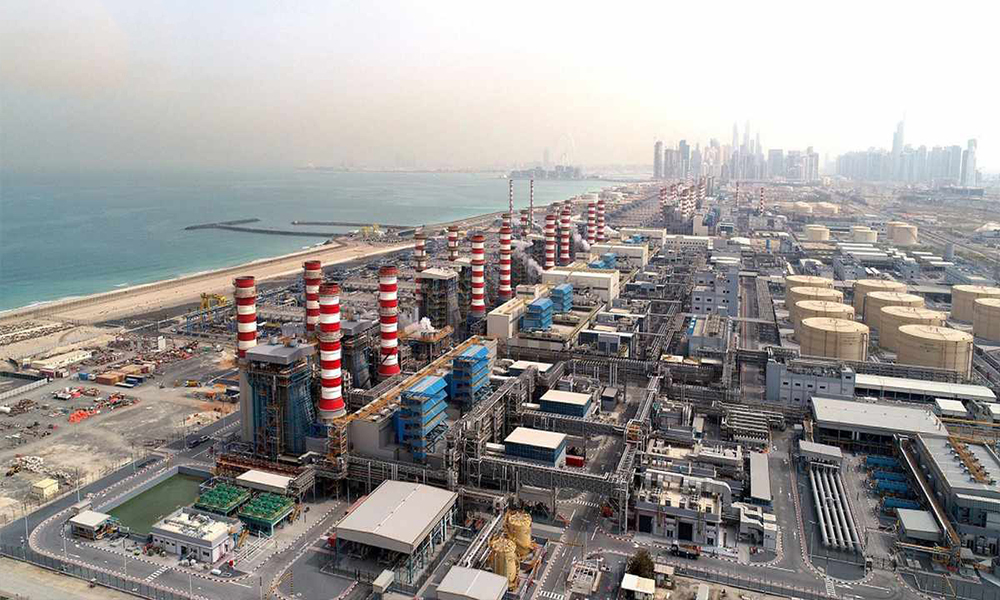
ACWA Power has announced the signing of MoUs with the National Water Company of Senegal (SONES) and the National Electric Company of Senegal (SENELEC).

The first MoU will cover the development of a 300,000cu/m per day seawater reverse osmosis plant (SWRO) in Grande Côte, located approximately 40km north-east of the capital Dakar. In a statement, ACWA Power said that it will work in close collaboration with SONES to oversee the development of the SWRO development.

The project will be the first desalination facility in the country and is being facilitated on a public-private partnership basis. It will also be the largest desalination project of its kind in Sub-Saharan Africa.

In June 2022, Acwa Power inked a PPA with SPPC for a $107mn solar PV plant.

The second MoU announced will see ACWA Power working closely with SENELEC to develop a Combined Cycle Gas-Turbine (CCGT) plant in Cap des Biches, with an initial design capacity of 160MW. In line with Senegal’s Gas-to-Power strategy, which aims to increase the country’s energy independence, reduce the cost of electricity, and provide universal access to electricity, the development of the new facility will furthermore assist the country’s efforts to reduce its GHG emissions by at least 23% by 2030.

“The signing of these agreements between the Saudi Group ACWA Power and the Ministry of Water and Sanitation, on behalf of Senegal is in anticipation of rapid demographic growth and consumer demand in the Dakar-Mbour-Thies triangle, which represents over five million consumers,” said Charles Fall, Managing Director of SONES.

“The agreement we have just signed is above all an essential step taken in response to the demand for drinking water within the framework of the Plan Sénégal Émergent (PSE). Furthermore, this first PPP experience will have no impact on water prices. Last but not least, this partnership framework is a testimony of the strong cooperation ties between Saudi Arabia and Senegal and represents an opportunity for the local private sector through the creation of a Senegalese company operating under Senegalese law,” he added.

Later in June 2022, ACWA Power signed a $1.15bn deal to develop one of the largest windfarms in the world.

As one of the largest private operators of water desalination plants in the world, ACWA Power has a portfolio that collectively produces 6.4m m3 of desalinated water per day. This includes 10 mega-scale SWRO projects, the company stated.

“We are deeply honoured to contribute towards the strengthening ties of Saudi Arabia, our home country, and Senegal via the signing of two landmark MOUs today and we extend our sincerest gratitude to the Senegalese leadership for their trust and confidence in ACWA Power’s abilities to realise these strategic projects for the country,” said Mohammad Abunayyan, Chairman of ACWA Power.

“In line with our mandate to provide reliable delivery of power and desalinated water, ACWA Power is leveraging its global expertise to support the nation’s sustainable and socio-economic development for years to come,” he continued.

In August 2022, Doosan Enerbility won an EPC contract for the $640mn Shuaibah 3 IWP in Saudi Arabia.

ACWA Power’s global power generation portfolio of 42.7GW comprises a mix of conventional power, natural gas, and renewable energy solutions.

“ACWA Power will bring its long-standing experience as a leading developer and operator of desalinated water and power generation facilities to create utility infrastructure essential to Senegal’s future capacity requirements. We are also excited to lead the development of SONES’ 300,000 m3/d SWRO plant, which will be the first desalination project in the country to be conducted on a Public-Private Partnership basis and the largest desalination project of its kind ever created in Sub-Saharan Africa,” concluded Clive Turton, Chief Investment Officer of ACWA Power.

The post ACWA Power signs MoUs to develop SWRO and CCGT plants in Senegal appeared first on Middle East Construction News.


Source: ME Construction News


Qatar_1000x600-1.jpg

October 4, 2022 foasummit0

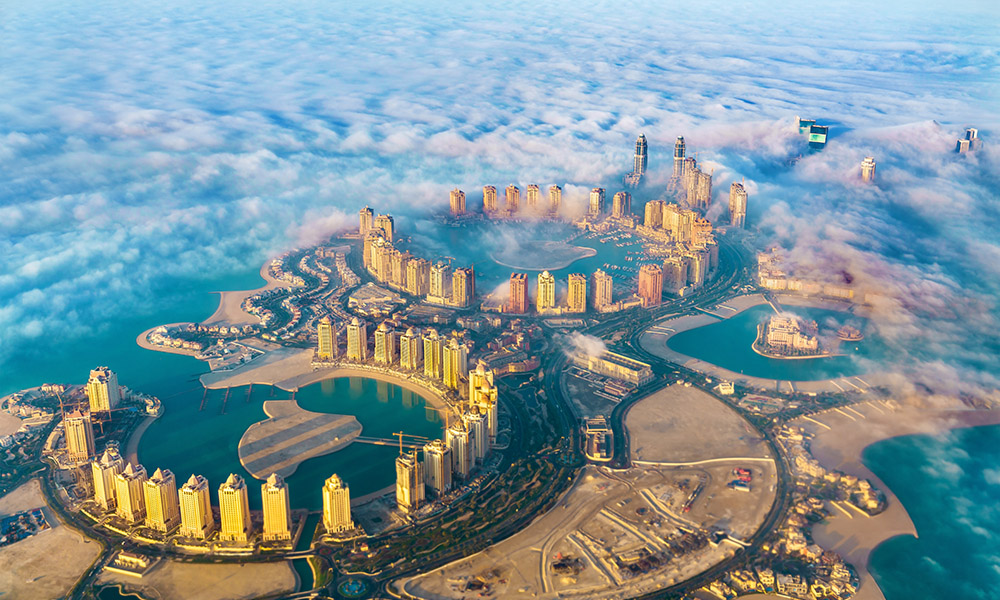
JLL has inked a deal with Qatar-based real estate brokerage NelsonPark Property. The partnership is expected to promote residential property transactions in Qatar, while supporting investments in the UK, Europe, Middle East and Africa.

“On the back of this strategic collaboration, we will be able to leverage JLL’s global expertise and services to better support our customers, while bolstering Qatar’s residential property market,” explained Jeffrey Asselstine, Managing Director at NelsonPark Property.

The firm noted that the weaker sterling has created a window of opportunity for Middle East investors in London.

In August 2022, Saudi Arabia said it had opened the expanded Salwa border crossing facility ahead of the FIFA 2022 World Cup.

He added, “This partnership has come at the right time as Qatar gets ready to host the FIFA 2022 World Cup in a few months. Global events such as the World Cup and other reforms in the Qatar real estate market are expected to generate high demand for both residential and commercial properties in the months ahead.”

In May 2022, the Raffles Doha and Fairmont Doha opened to the public.

Through the agreement NelsonPark Property will have access to JLL’s expertise and services including residential property investment and consultancy services across the UK, Europe, Middle East and Africa. The deal will also enable JLL to collaborate with NelsonPark Property on some of Qatar’s most iconic residential projects.

“Our collaboration with NelsonPark Property – a real estate company that has been operating in Qatar for over a decade – supports JLL’s activity in the country’s real estate investment sector,” explained Will McKintosh, JLL’s Head of Residential & Investment – MENA.

He concluded, “With this collaboration, Qatari citizens and expats will be able to benefit from advice on real estate in Qatar, the Middle East and internationally, while also diversifying their assets in London and other parts of the United Kingdom.”

In September 2022, JLL appointed Saud Mohammed Alsulaimani as its KSA Country Head.

The post JLL signs agreement with Qatar real estate brokerage to boost property investments appeared first on Middle East Construction News.


Source: ME Construction News

Dingli-electric_1000x600-1.jpg

October 4, 2022 foasummit0

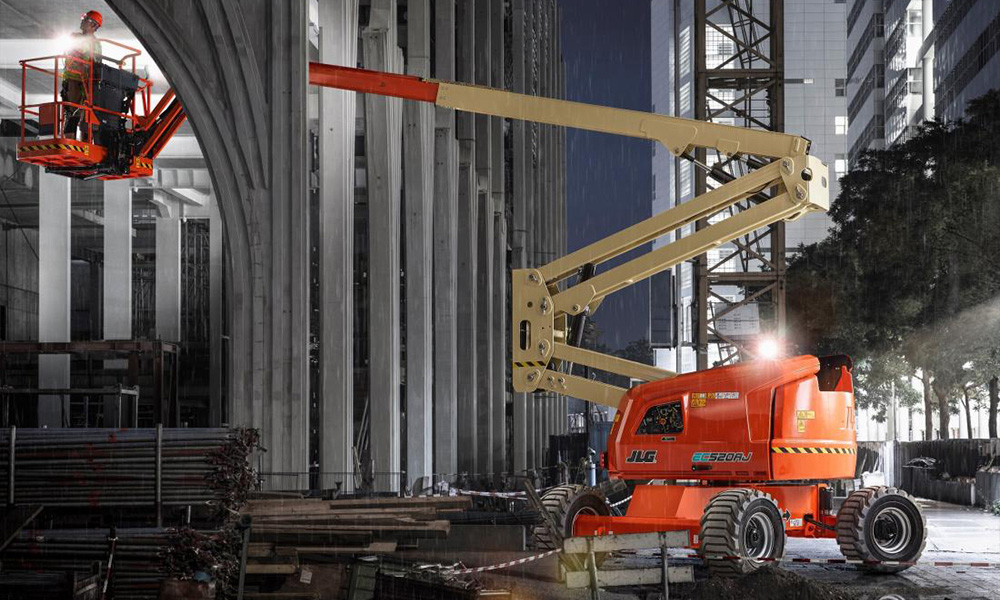
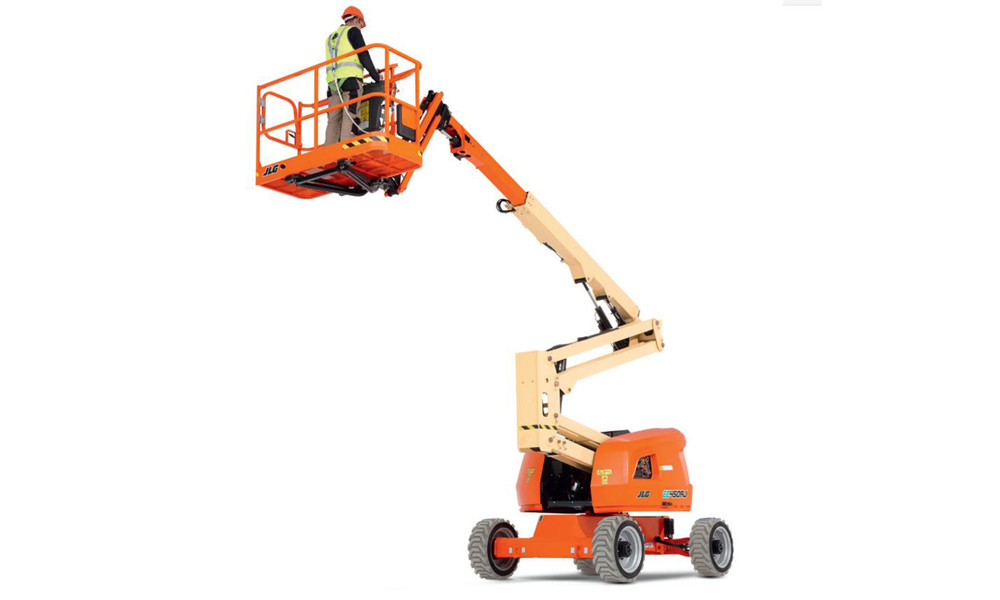
Dingli has added new products to its large electric scissor series, focusing on increased battery life and high load capacity.

The JCPT1912DCL and JCPT1712DCL, which were recently added to the lightweight-designed series offer 500kg of load capacity and come equipped with a 48V420Ah high-capacity battery pack for long-endurance operations, the company says.

In July 2022, Dingli launched a new range extender series and, in August, the manufacturer launched nine new models in its high-metre boom series.

Both models are purely electric driven with zero emissions and have a width of 1.25m making them compact in size so they can easily fit through narrow passages, the firm explained.

Also included is a 1.2m one-way extension deck, allowing operators easier access and outreach to the point of operation. Complementing the range of large electric scissors under 20m, the total weight of the two devices respectively is 7,140kg and 6,280kg, making them especially convenient for transportation, Dingli adds.

The new machines further enhance Dingli’s scissor series which has maximum working height from six to 32m and a maximum load of 1000kg, including mini, compact (AC/HA), large electric, large rough-terrain (electric/ diesel), oil-free & all-electric series.

Construction Machinery Middle East will be hosting the 2022 Access & Handling Summit on 16 November. Registration is complementary but mandatory for industry professionals.

The post Dingli expands large electric scissor series appeared first on Middle East Construction News.


Source: ME Construction News

TF-Awards-2022_1000x600-1.jpg

October 4, 2022 foasummit0

The next edition of the Truck and Fleet Middle East (T&F ME) Awards will take place on the 24 January 2023, the T&F ME editorial team have announced. The awards will celebrate the fleets and vehicles which play a key role in the operations, logistics and projects at the heart of the GCC economy.

Companies keen to participate in any of the 20-plus categories can now go to the awards website to place themselves up for nomination throughout October. Almost 4,000 people voted for categories at the 2022 edition of the awards, with Scania scooping the prestigious ‘Heavy Truck of the Year’ award and DSV winning the ‘Fleet of the Year’ award.

Returning after a successful first event in early 2022, the 2023 T&F ME Awards will once again invite the market to vote for the best fleets, products and services in the region once the nomination process closes in November.

Read about the nominations guidelines for the 2023 T&F ME Awards here.


A judging panel will oversee the shortlisting process to ensure that only the very best companies make it to the voting process, confirmed Stephen White, Head of Content at Truck and Fleet Middle East.

He explained, “I’m excited to be able to kickstart this year’s nomination process – as this is when the fleet sector and commercial vehicles industry get to shout about all the good work they have been doing in 2022. Ultimately, this will help us to ensure that we can once again prove this market can be at the forefront of both fleet practice and technology in the region.”

He concluded, “The first awards featured many nominees from across the region. We’ve expanded the categories list this year, so I urge any business to use the awards to promote their excellence to a huge international audience.”

To see all the categories and to nominate for the 2023 Truck and Fleet Middle East Awards visit the dedicated website.

The post Nominations for 2023 Truck and Fleet ME Awards now open appeared first on Middle East Construction News.


Source: ME Construction News

Saudi-Arabia-Map-Resized-1000x600-1-1.jpg

October 4, 2022 foasummit0

The Saudi Downtown Company (SDC) has been launched by His Royal Highness Crown Prince Mohammed bin Salman, Chairman of the Public Investment Fund (PIF). The SDC aims to build and develop downtown areas and mixed-use destinations in 12 cities throughout Saudi Arabia.

According to a statement, the company plans to improve infrastructure and build strategic partnerships with the private sector and investors, by creating new business and investment opportunities in key economic sectors including retail, tourism, entertainment, and housing.

The 12 cities include: Al-Madinah, Al-Khobar, Al-Ahsa, Buraidah, Najran, Jizan, Hail, Al-Baha, Arar, Taif, Dumat Al-Jandal, and Tabuk. SDC will develop over 10m sqm of land across all projects, creating modern destinations drawn from Saudi Arabia’s diverse local culture and traditional architectural motifs, while using cutting-edge technology in every project, the statement noted.

Big Project Middle East will host the Construction Intel Summit – KSA in Riyadh on 23 November. Registration is complementary but mandatory for construction professionals wishing to attend.

The launch of SDC is said to reflect the Crown Prince’s vision to launch development projects in various regions of Saudi Arabia, highlighting the active role that domestic cities play in supporting the national economy.

The company’s strategy aligns with PIF’s efforts to unlock and enable the capabilities of promising sectors locally that can help drive the diversification of the economy and contribute to non-oil GDP growth, in line with the objectives of Vision 2030, the statement explained.

By launching SDC, PIF aims to increase trade and investment opportunities in various cities across Saudi Arabia to enhance their attractiveness and create a positive impact in their local economies. The projects will also contribute to creating new opportunities for the private sector and new job opportunities for local citizens, as well as localizing knowledge and expertise to help entrepreneurs and companies start and expand their businesses, the statement concluded.

In September 2022, The Red Sea Development Company said contracts worth $1.7bn had been signed for AMAALA to date while, later in the month, Knight Frank said over $1.1tn in real estate and infrastructure projects are currently underway in Saudi Arabia.

The post HRH Mohammed bin Salman launches Saudi Downtown Company to develop areas in 12 cities appeared first on Middle East Construction News.


Source: ME Construction News

UN-Sustainable-Development-Goals_1000x600-1.jpg

October 4, 2022 foasummit0

Global Mission, an Abu Dhabi based non-profit, along with its international partners has announced the establishment of a $17bn fund to achieve the United Nations’ (UN) 17 Sustainable Development Goals (SDGs).

“This Global Fund for Sustainable Development is the most ambitious SDG-fund worldwide. Based in Abu Dhabi Global Market (ADGM), the fund targets to raise $17bn and $1bn will be allocated for each SDG,” said Mohamad Elsamad, Executive Director of Operation and Administration at Global Mission.

He added that since its launch in 2017 at Masdar City in Abu Dhabi, Global Mission – under the chairmanship of Khalid Al Mutawa – has been working intensively with global stakeholders, including the UN, governments, non-governmental organisations, and other international players to support the achievement of key SDGs internationally.

In April 2022, the RTA unveiled its five-year sustainability plan.

The 17 SDGs are an urgent call for action by more than 100 nations in a global partnership, as part of the 2030 Agenda for Sustainable Development, adopted by all UN Member States in 2015.

The SDGs recognise that ending poverty and other deprivations must go hand-in-hand with strategies that improve health and education, reduce inequality, and spur economic growth – all while tackling climate change and working to preserve our oceans and forests, according to the UN.

Elsamad pointed out that although only eight years are left to achieve the SDGs by 2030, there hasn’t been much progress so far. “Actually it’s the other way around. We have experienced more environmental deterioration, more hunger and more climate change in the past few years. But we are very much hopeful that we can still make the change. Anything can be done if you create the right mindset with the right people.”

In August 2022, MOCCAE unveiled a pledge designed to boost the private sector’s contribution to the UAE’s Net Zero by 2050 initiative.

He added that the committee of the Global Fund for Sustainable Development has identified around 100 projects to start working with during the next 12 months, and the investment platforms are already in place. He concluded, “This will be a PPP platform: the projects will be implemented in cooperation with governments and the private sector alike.”

In September 2022, a youth movement called for global leaders to take “urgent and bold climate adaption action” and later in the month, the UAE Ministry of Climate Change and Environment introduced the National Air Quality Agenda 2031.

The post Global Mission launches $17bn fund to achieve UN’s 17 Sustainable Development Goals appeared first on Middle East Construction News.


Source: ME Construction News

Museum-of-the-Future1_1000x600-1.jpg

October 4, 2022 foasummit0

The recently opened Museum of the Future is a visionary hub, showcasing futuristic ideas and technologies to visitors from around the globe. Yet, not many observers will be aware that its steel diagrid structure was in fact created by a bespoke growth algorithm, literally ‘growing’ the structure organically to its optimum parameters.

The museum’s unconventional eye-shaped structure with a mesmerising void was designed by architect Killa Design to be a symbol of progress and innovation. No less striking by night, when LED lighting outlines each bespoke glass window shaped in the form of Arabic calligraphy, illuminating phrases of inspirational quotes written by His Highness Sheikh Mohammed bin Rashid Al Maktoum, about his vision for the city’s future.

Dubai Future Foundation’s (DFF) concept for a Museum of the Future was brought to life by lead design engineering consultants Buro Happold and developer North25. Despite challenges posed by the building’s complex shape and façade, Buro Happold’s engineers were able to overcome these by pushing the boundaries of digital design, combining bespoke parametric modelling and an industry-leading approach to Building Information Modelling (BIM).

Presented with DFF’s vision and Shaun Killa’s design for the building, Buro Happold needed to consider how to build a feasible structure for the unique shape without deviating away from the original design. Using computational tools, Buro Happold developed a bespoke growth algorithm to ‘grow’ the theoretically optimum arrangement for the steel diagrid structure that would balance buildability and structural member commonality, while supporting 1,024 stainless-steel-clad glass fibre reinforced plastic (GFRP) panels that would form the museum’s exterior.

“Creating Shaun’s shape structurally was one complication but to weave all disciplines together to produce a high-performance exhibition facility was the real challenge,” says Tobias Bauly, Buro Happold’s Project Director of Museum of the Future. “We realised very quickly that a design that needed to integrate so many architectural and engineering aspects together would need a design approach and a set of design tools that would be bespoke to the project. We wanted to honour the overall vision. The digital and analytical tools developed by us for the project became the true enabler for delivering on that promise.”

Commencing the design back in 2015, Buro Happold and Killa Design spent nearly two years developing what is effectively a full digital prototype of the building. This revolutionised the team’s way of working, creating an efficient and holistic design process that was built around having ‘everything’ in the 3D models.

“Typically, a concept design might only involve the architect creating drawing content, with conceptual level input from engineers. However, for Museum of the Future, we threw the rule book out and had all architectural and engineering disciplines integrating and contributing into the digital model from the very start,” says Bauly. “While managing a design team of nearly 40 people has its challenges, the exhaustive planning put into the digital design process streamlined the delivery of the project and removed many of the typical problems you’d face during later construction phases. With the amount of risk it removes, ‘digital’ is the single greatest step forward our industry has seen for designing and constructing the built environment.”

The prototype digital modelling also proved essential in determining the façade of the building. The exterior is made up of over 10,000 bespoke pieces of glass integrated within the 1,024 panels – the panels themselves are all unique in size and shape. The areas of calligraphy glazing were determined by parametric scripting to optimise the amount of energy use – balancing thermal gain, light entering the museum and HVAC system designs. The glass panels were treated locally and cut into shape using water jets before placement into the GFRP panels.

“Once again, technology was the great enabler to achieving what would otherwise have been logistically unfeasible. Initially we were concerned about producing the digital cutting patterns for the thousands of different glass shapes but once the analytical modelling was set up, the data production was relatively quick. The water jet machinery is then of course indifferent to whether pieces are all the same or all different – it’s just following data, at which point the variability of the glass makes little difference,” says Bauly. “It meant we had far greater freedom to create glass shapes that could closely match the calligraphy created by artist, Mattar Bin Lahej.”

With futuristic thinking at the core of the design, the sustainability credentials of the building could not be overlooked. From the start of the project, it was built to LEED platinum rating standards. The design technology developed by Buro Happold proved crucial in delivering this ambition. Energy modelling was encapsulated within the 3D modelling work, allowing for interaction with a host of other engineering disciplines in real time. This ensured sustainability was put at the forefront of all key design decisions, enabling a huge reduction in water use and total energy savings.

“Working in a digital environment completely altered our capabilities related to energy use. Without these tools, we would not have been able to make building as energy efficient as it is now,” says Bauly.

The Museum of the Future also has its own green power source. A vast array of solar power was designed and built for the building, providing a direct power link for the facilities. With a purposeful brief to keep parking spots to a minimum, and with a pedestrian bridge built as part of the project and connecting directly with Emirates Towers’ metro station, the building encourages Dubai to embrace its ever-developing public transport network. With its positive impact on how people move in and around the city, and representing how digital is changing how we design, the museum really does offer a glimpse into the future.

Read more:

The post Museum of the Future: A digital phenomenon created by a ‘growth’ algorithm appeared first on Middle East Construction News.


Source: ME Construction News

RTA-Roads2_1000x600-1.jpg

October 4, 2022 foasummit0

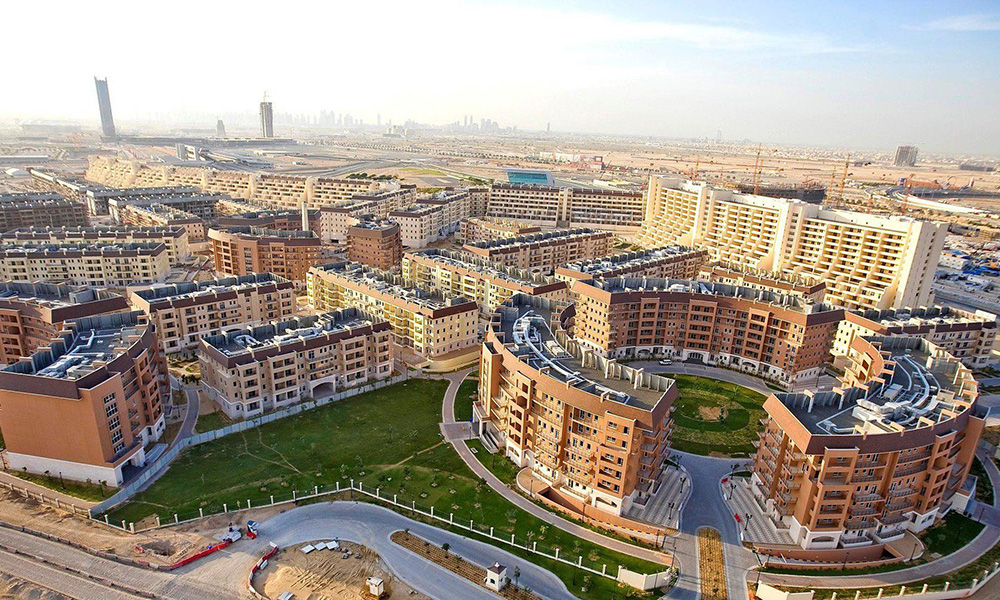
Dubai’s Roads and Transport Authority (RTA) has awarded a contract for the construction of internal roads and lighting for four residential communities: Margham, Lahbab, Al Lesaily and Hatta.

In a statement, the RTA said that the project, which covers roads extending 37km in total, also includes road works running over 21km long and adding streetlights for existing roads stretching 16km. The project is expected to be completed by the end of 2023.

Announcing the contracts, Mattar Al Tayer, Director-General and Chairman of the Board of Executive Directors of RTA said: “The construction of internal roads stems from RTA’s keenness to improve the infrastructure of roads, light and stormwater drainage systems in residential communities.”

In May 2022, the RTA announced plans to extend dedicated bus and taxi lanes over a five-year period.

On the Margham project, Al Tayer said the project covers the construction of roads extending 8km in an area on the Dubai-Al Ain Road, near Skydive Dubai. The infrastructure works include rainwater drainage networks and streetlights. It will serve more than 1,100 residents of the neighbourhood, he added.

Commenting on the Lahbab project, he said it involves paving roads extending 4km along with infrastructure works of rainwater drainage and streetlights. The project scope also covers lighting works of the existing streets extending 2km on the Dubai-Hatta Road beside the Lahbab Camel Racetrack.

“The project serves more than 3,000 residents and improves the linking of the residential area under construction with the roads network,” he explained.

In early August 2022, the Sheikh Rashid Bin Saeed Corridor Improvement Project was 75% complete, the RTA said.

On the Al Lesaily project, Al Tayer pointed out that the internal roads span 7km. “The project includes road works at Saih Assalam near Last Exit and Al Qudra Lake over more than 14km – the project serves about 2,900 residents and improves the entry/exit points of the area,” he noted.

For the Hatta project, the RTA chief said the project covers the construction of roads extending 2km at Hatta, specifically at Sa’aeer, Al Salami and Suhaila, in addition to infrastructure works that include rainwater drainage and streetlights.

“This will serve about 6,000 residents and improves the entry/exit points as well as the connection of the residential community under construction with the road network,” he concluded.

Late in August 2022, the RTA said that 55% of construction work at the Falcon Interchange improvement project was complete.

The post RTA awards contract for construction of internal roads across four communities appeared first on Middle East Construction News.


Source: ME Construction News

DREW-GILBERT_1000x600-1.jpg

October 3, 2022 foasummit0

A new architectural era is among us, the creation of place making has teleported to a parallel world. A realm that bypasses physical constraints of materiality, structural integrity and enclosure from the physical elements. This has unleashed a new kind of reconceptualisation of what architecture is, what it can be, and how we will experience it.
As the Metaverse concept has been around for decades, it has become a buzzword with the announcement of Facebook becoming Meta and billions of dollars being invested into Metaverse technologies. Experiencing the internet will have a new connotation as we enter ourselves into the 2D screen into a fully immersive 3D world; a 3-Dimensional world of connectivity that enables users to shop, visit friends and family, meet with colleagues and clients all in one place. We must ask ourselves the question on how to best utilise this evolving technology to enrich our lives and the built environment.

A 3-Dimensional World of Connectivity

The Metaverse will become a collection of fully immersive real-time environments interlinked/interoperable with one another where users (in the form of avatars/meta personas) can interact with the environment and each other either for business/entertainment purposes in decentralised and co-created worlds. In short, the Metaverse is a virtual reality version of the internet where the outside will be shared as a digital form. It is all possible thanks to the emergence of Web3.0 technology, a world driven by data, decentralisation, and user autonomy.

The easiest way to visualise the transition from Web2.0 to Web3.0 is like moving from 2D to 3D. The existing protocols and services of today’s internet will still be visited, however with Web3.0, we will start to see services built on permissionless blockchains with open protocols, open standards, and built within open “worlds”. This provides massive opportunities for individual users, content creators, and businesses to expand and explore the latest evolution of the internet. While the infrastructure behind Web3.0 is still in the works, the future of the internet looks promising and it’s arriving faster than we think.

Shifting paradigms

The primary aspect of architecture was intended to provide shelter to human beings from external actors, in the Metaverse this is no longer the case. An entire new world of possibilities has been unlocked. What kind of expression, creativity, and design has become possible? As technology advances, the philosophies continue to evolve.

Each Metaverse platform has a set of rules, for example a set plot size that may limit the height and footprint, polygon count that may limit the detail of the design, or even a cap on the number of users that can access at once, these new constraints will create a new kind of architecture and it will continue to adapt as the Metaverse evolves. The methods of conceptualising architecture in the Metaverse will need to be re-imagined.

As architects building and shaping the future of Metaverse architecture, we will start to incorporate aspects of multiple fields, for example user interface, content design, character design, landscape development, block-chain based protocols, and even game design. Within the Metaverse there will be multiple virtual worlds that contain a mix between both the physical and digital world, where people can experience and engage in a vast range of activities.

Most activities will be centred around social activities like meeting with friends, clients, and loved ones, but there is also a utility aspect that can enable education to be easily accessed around the world, or even have easy access to governmental agencies and healthcare that are operated 24/7 by expert digital assistants.

Each of the current Metaverses offer different possibilities; a creator entering the Metaverse must first ask what the most important aspects are of what they are trying to achieve. Aspects like daily user count, age and demographics of users, open or closed platforms (either enable full freedom of creation or to work within a “design” framework) along with other factors will determine which Metaverse platform will best suit their needs. Entering a Metaverse may or may not require the purchase of digital land in the form of a Non-Fungible Token (NFT) and purchased with the native cryptocurrency of the platform.

The structures in the Metaverse are made of polygons or voxels that is defined as three dimensional pixels. Each one of the current Metaverses offer different options – some provide a sprawling, colourful, low poly wonderland, while others still expand to more tightly detailed worlds that focus on high-quality renders that explore niche ideas. And others still use cubes as a standard building block for each ethereal build and an ingrained emphasis on recreating an Earth-like world.

Opportunity to decarbonise the Earth

As we are heading towards the next big-tech paradigm shift, we must consider the impacts it may have on our planet. Many blockchains such as Ethereum verify transactions through a method called “Proof-of-work” and this process is an energy consuming process where hundreds of computers on a network solve complex cryptographic puzzles to verify transactions. Simply put, every transaction that is made using cryptocurrency on a PoW blockchain is energy consuming. The amount of energy consumed for the blockchain along is estimated to be 150TW-hours annually.

Luckily, there are hundreds of blockchains all working towards a more sustainable future. Ethereum network which is the major network that powers the majority of the virtual transactions will be rolling out the next generation that will move to “Proof-of-Stake”, which reduces energy consumption while providing the same transaction verification. In addition to recycling e-waste and setting up 100% renewable energies datacentres, for example, Google and Microsoft are setting up run data centres on completely carbon-free energy by 2030.

Another way the Metaverse can help in that is by using digital twins. Digital twins represent the physical world and allow users to interact with these digital replicas from anywhere and in a number of productive and efficient ways. They are especially effective in helping to control energy usage and carbon emissions.

The options are limitless, and the opportunities being presented by governments all over the world are making it more attractive and affordable to rethink how technology can help reduce greenhouse gasses. The 3D digital twin showcases a scaled layout of the facility and offers a virtual walkthrough that can be manipulated and viewed from multiple planes. To start tracking your commissions, decarbonising your work force and industries, eliminating paper waste, reducing the need to prototype multiple times, and it’s a great place for digital twins to solve it.

Read more:

The post Into the Metaverse: Fusing the real world with the digital appeared first on Middle East Construction News.


Source: ME Construction News