Dingli-Launch1_1000x600-1.jpg

August 16, 2022 foasummit0

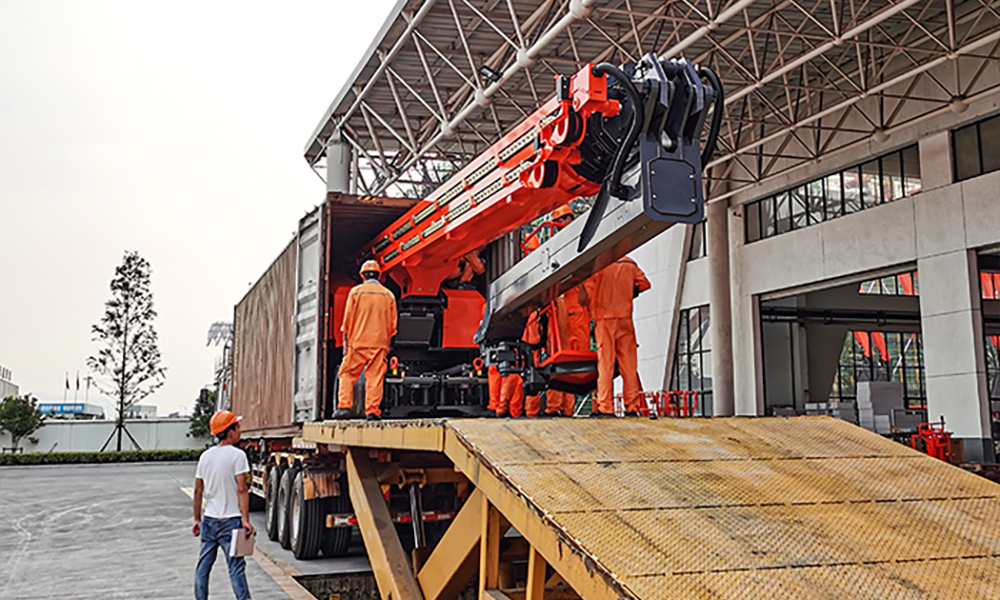
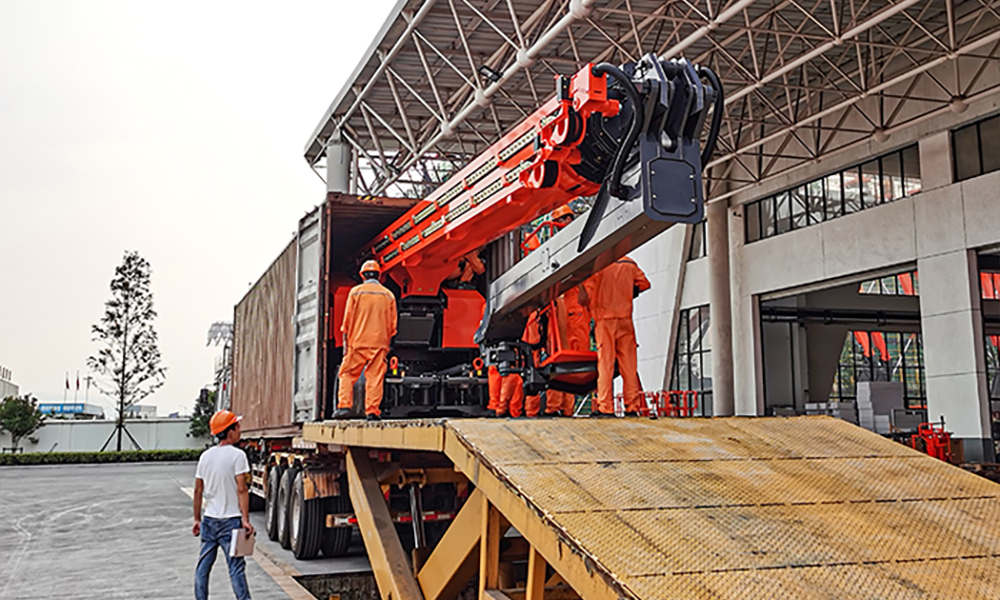
Dingli has launched nine new models of its high-metre boom series in electric, hybrid and diesel variations. The 36-44m boom lifts were developed by Dingli’s German R&D Centre and produced in China’s intelligent manufacturing factory.

The latest additions extend the maximum working height to 44m, while offering a load capacity of up to 54kg. It comes three years after Dingli’s Italian R&D Center launched the 24-34m modular electric boom series.

Among the series’ features is the adoption of tire parallel axle expansion technology and four steering modes that allow for more flexible operation of the booms.

In July 2022, Dingli launched an advanced version of its electric boom – the Range Extended Series.

According to Dingli, the electric model is configured with 358V200Ah lithium battery packs, with no noise, zero emissions and long endurance, while the automotive-grade power system is safer and more efficient. The hybrid model is equipped with a high-capacity lithium battery pack and a universal range extender, which can generate electricity by itself without external power supply.

The diesel model features a Deutz engine imported from Germany with strong power, high performance in rough-terrain and gradeability up to 45%.

The manufacturer adds that “compared with the equivalent models in the industry, there is significant reduction in movement completion time and 40% increase in efficiency.”

In early August, Bobcat said it delivered a new telehandler for work at a Tata Steel site, while Johnson Arabia said it completed works on a calcined petroleum coke plant in Oman.

The post Dingli launches nine new models in high-metre boom series appeared first on Middle East Construction News.


Source: ME Construction News


Namshi_1000x600-1.jpg

August 16, 2022 foasummit0

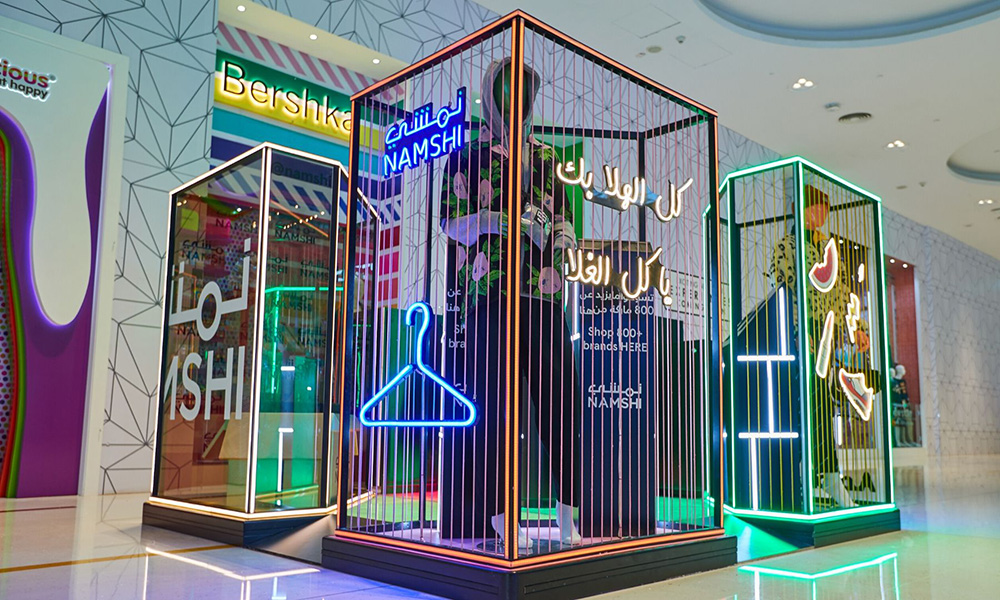
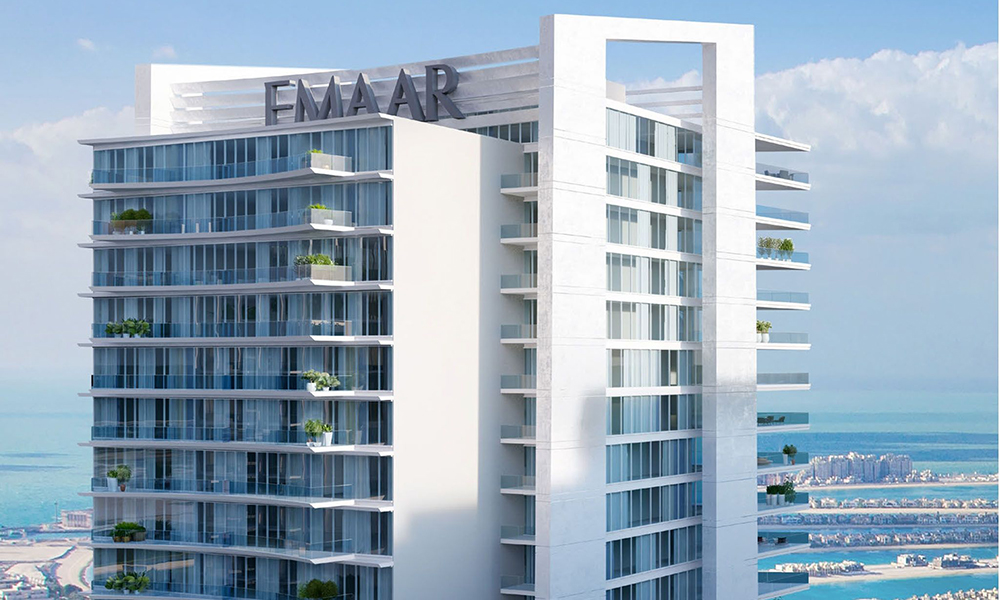
In a statement to Dubai Financial Market (DFM), Emaar has announced that its board will meet this week to discuss the sale of online fashion retailer, Namshi. This follows reports last year that Emaar was looking to sell a 50% stake in the e-commerce retailer it fully acquired in 2019. The property giant had owned a 51% stake since 2017.

Emaar has recently undergone significantly new dynamics in terms of its share ownership, with Dubai Holding, the investment vehicle of HH Sheikh Mohammed bin Rashid Al Maktoum, now the second largest shareholder.

The move to shed Namshi is most likely a reflection of new investment focus, as Emaar’s property interests return to strength in the post-pandemic era. The company has recently posted near-record performance for H1 2022; led by strong figures from its core property development business, Emaar recorded first half revenue of $3.696bn, representing a growth of 10% compared to H1 2021.

The successful launch of properties, both in the UAE and international markets, and concerted focus on sales of under-construction projects resulted in a record first half group property sales of $4.81bn, an increase of 5% compared to H1 2021 sales of $4.58bn, it said.

In 2021, Emaar Properties and Avaya collaborated to roll out a digital buying experience for real estate in Dubai.

Namshi was founded in 2011 by e-commerce entrepreneurs including Hosam Arab, who is now CEO and founder of split-payment firm Tabby. Namshi bills itself as ‘your leading online shopping website for fast, reliable, and simple online shopping in the UAE’.

In April, Emaar said it would handover 8,500 residential units by year end.


The post Emaar considers selling online fashion brand Namshi appeared first on Middle East Construction News.


Source: ME Construction News


Fakhruddin-Properties-Maimoon-Gardens1_1000x600-1.jpg

August 16, 2022 foasummit0

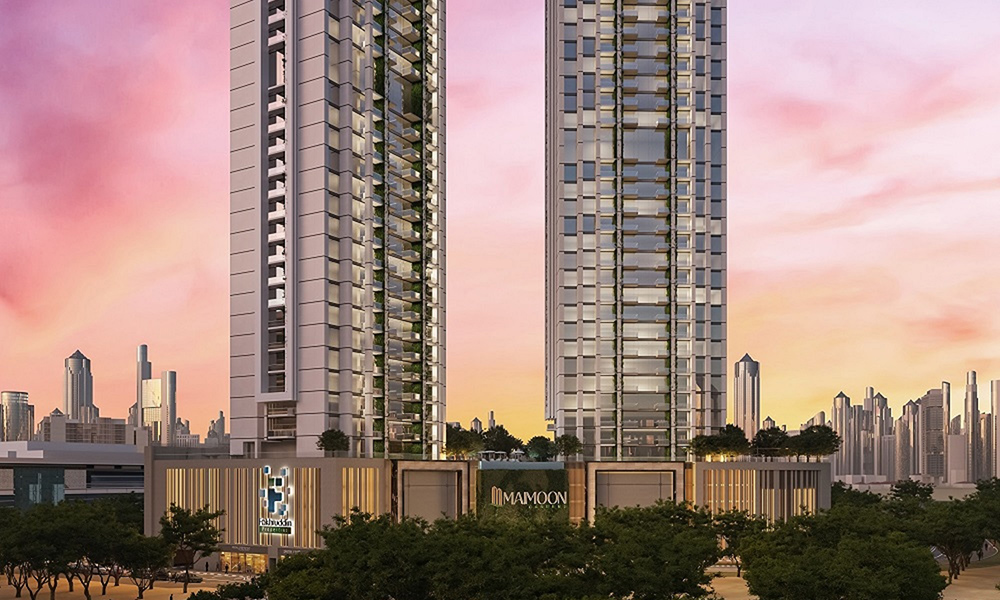
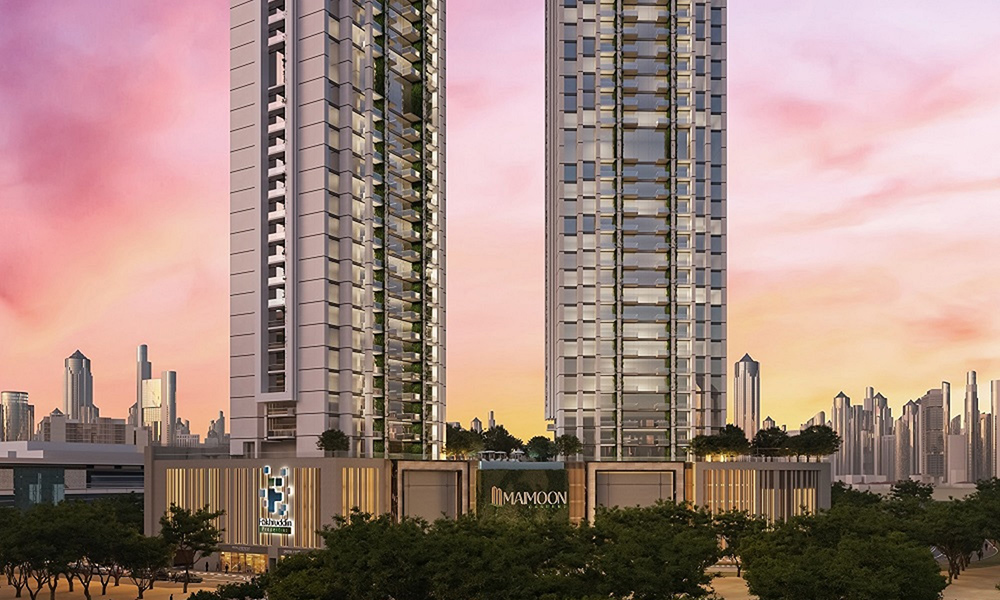
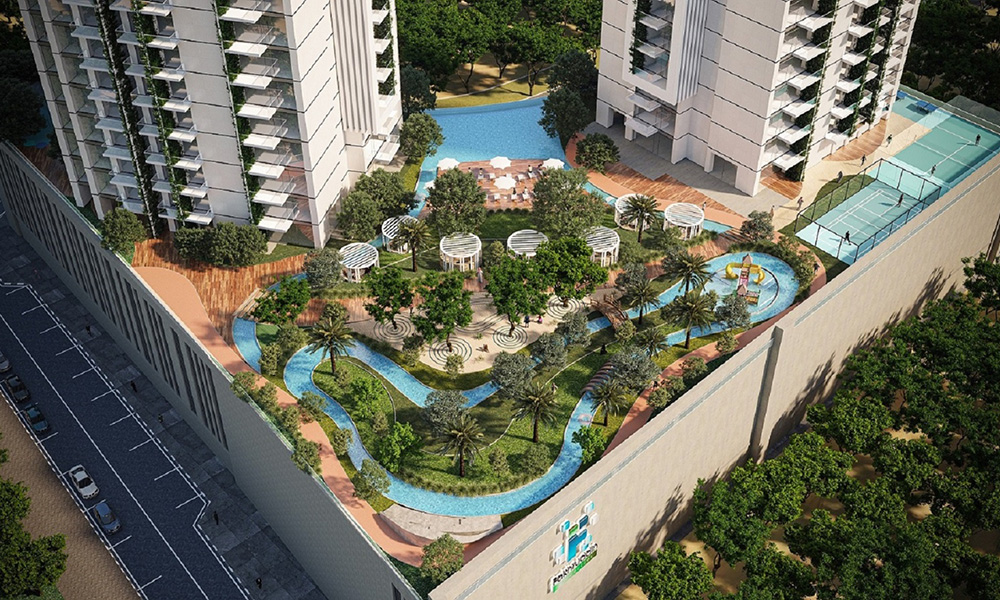
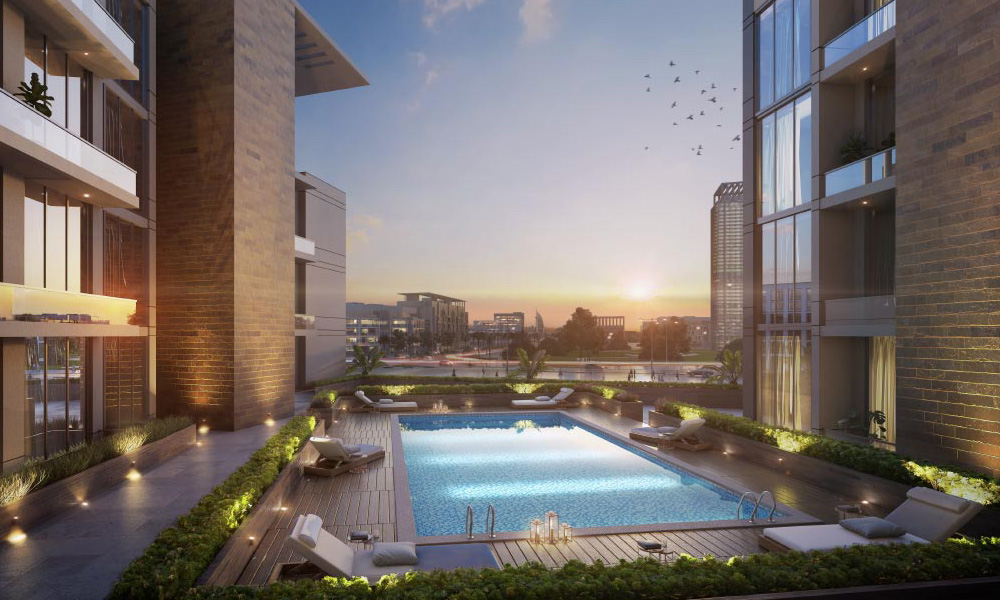
Developer Fakhruddin Properties says that sustainability will be a core focus with its forthcoming residential project, Maimoon Gardens. The project, which is said to mark the developer’s return to Dubai’s real estate market, aims to give home owners the best indoor air quality (IAQ).

The developer says it will use technology developed by NASA to ensure that IAQ is the highest in each apartment, while special smart home automation and optimised designs are being leveraged to provide a cleaner and healthier lifestyle. The development will also feature popular amenities, it added.

The project, which will officially be unveiled in the near future, will take shape in Dubai’s Jumeirah Village Circle community, and will feature studio, one, two and three bedroom apartments, offices and retail spaces.

In June 2022, real estate brokerage Union Square House (USH) said that a quarter of homebuyers in Dubai are on the hunt for living spaces that provide mental health benefits. Middle East Consultant is hosting its inaugural Wellness in Construction Summit on 28 September. Registration is free for construction professionals.

The development will leverage energy optimisation technologies with specially automated smart homes that will be projecting energy savings up to 30%, enhanced convenience and reduced carbon footprint, the developer emphasised.

Discussing the project further, it noted that one of the key highlights of the project is waste management technology that will aide in segregating dry and wet garbage, thereby reducing combined carbon emissions by almost 1250 tonnes. An advanced centralised RO water tech feature for all apartments keeping sustainable living in mind is another key highlight of the upcoming project, it said.

Making its closing statement, the developer explained that Maimoon Gardens aspires to lend a resort-like feel to its inhabitants with inclusions like a Zen Garden, Cascading Waterfalls, a Meditation garden, a Community Green House with Radiant Cooling Technology, a vertical Herb Garden in every apartment and much more, keeping in mind the 360-degree wellbeing and healthier lifestyle of an individual.

“The new property marks our return as a robust galvaniser of sustainable living and checks all the boxes of smart design, complete optimisation, functionality and overall wellbeing,” the developer concluded.

In July, Verdantix called for employers to take steps to protect staff from physical climate risks.

The post Sustainability a key focus of its new residential project says Fakhruddin Properties appeared first on Middle East Construction News.


Source: ME Construction News


Scott-Park-Bobcat1_1000x600-1.jpg

August 16, 2022 foasummit0

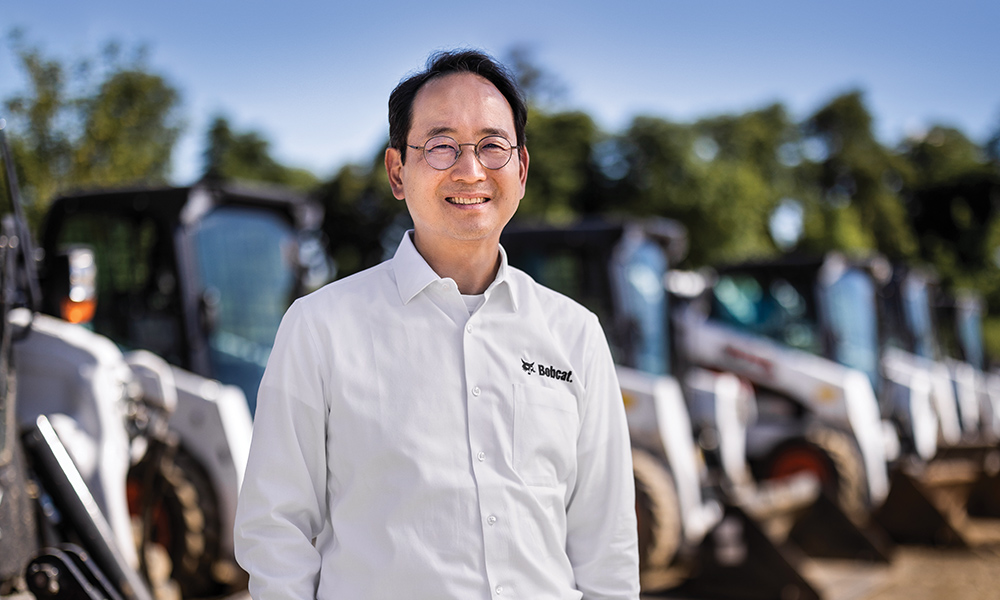
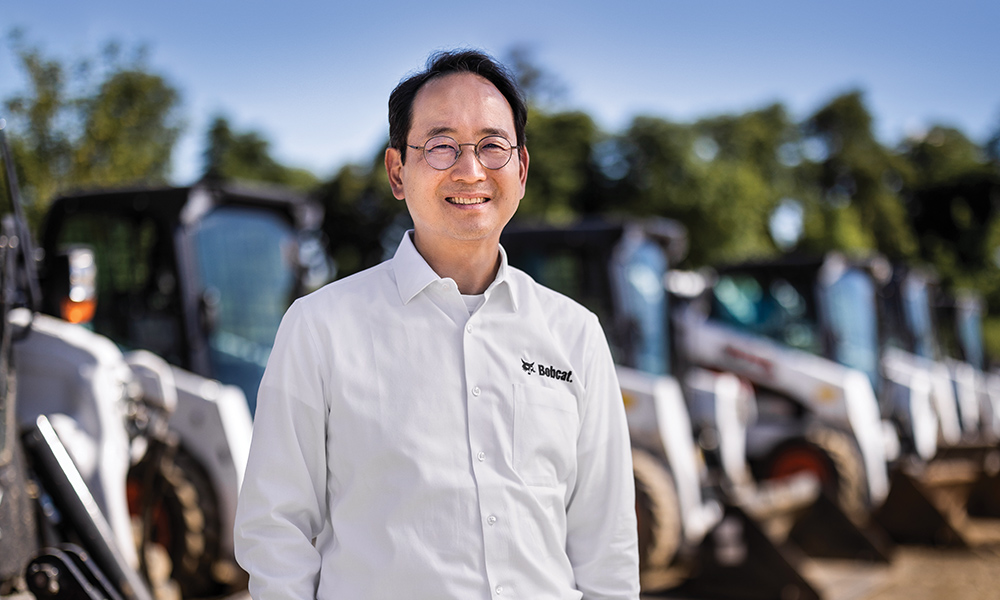
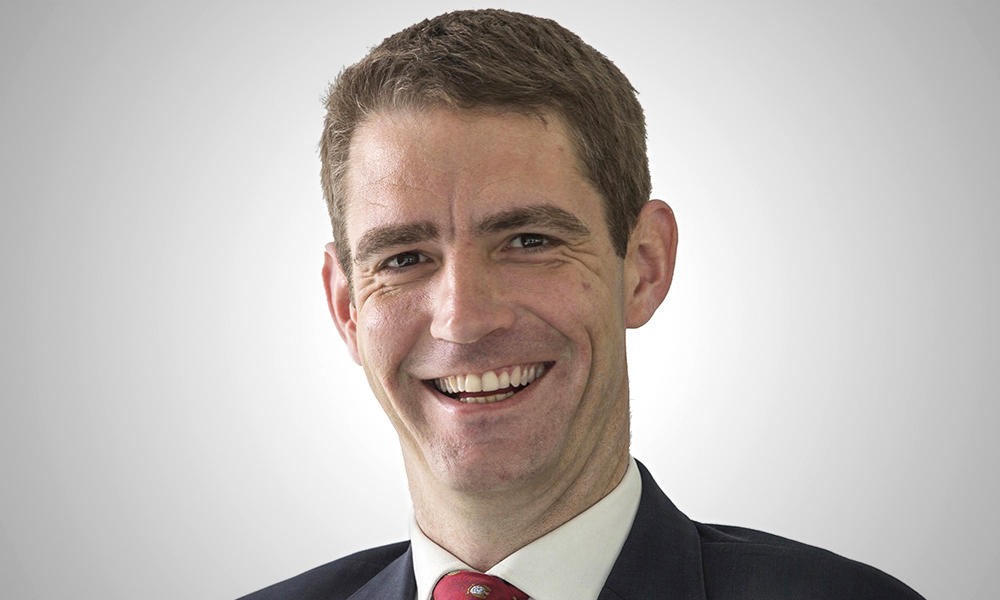
Sitting down with Doosan Bobcat CEO, Scott Park at the company’s headquarters in Dobříš, Czech Republic, it’s pretty obvious that he enjoys his job. Whether discussing near-term headwinds or Bobcat’s strategy both globally, and in the Middle East, he is pleasantly forthcoming. Everything is on the table; the company’s philosophy when it comes to expanding its product portfolio, how a new mindset is helping to grow the business and whether today’s innovations really are meeting its customers’ needs. Throughout it all, he comes across as a man at ease with both himself and his environment.

“It doesn’t matter if I’ve been up for 48 hours and travelling around the world, once I start talking around the business something clicks,” he says.

Amongst the challenges of the last couple of years; rising energy prices, supply chain delays, a war that rages on in Ukraine and persistent rumours of a global recession, there are genuine reasons to be excited at Bobcat. The company is experiencing one of its most successful periods with record numbers on revenue in four of the last five years proving that it is possible to move forward, even in a climate where new obstacles seem to appear at almost every corner.

“We actually expected steel prices to go down and then the war happened, so it’s a balance between ensuring that you’re moving forward achieving your strategies that you’ve defined, while at the same time saying how do we act prudently to ensure that whatever decisions that we make, in case there is an event that is going to go in the wrong direction, that we are prepared to be able to work through that,” says Park.

“Whatever the scenario is, we still have to move forward because the world doesn’t stop. It’s just a matter now of with how much intensity, and how much capital and how much investment you are going to do that with.”

Over the course of its 65-year history the manufacturer has become most widely known for its skid-steer loaders, which were invented by the two Keller brothers and began trading under the Bobcat name in 1962. Both the skid-steer and its other most well-known export, the compact excavator, remain core products in its portfolio today.
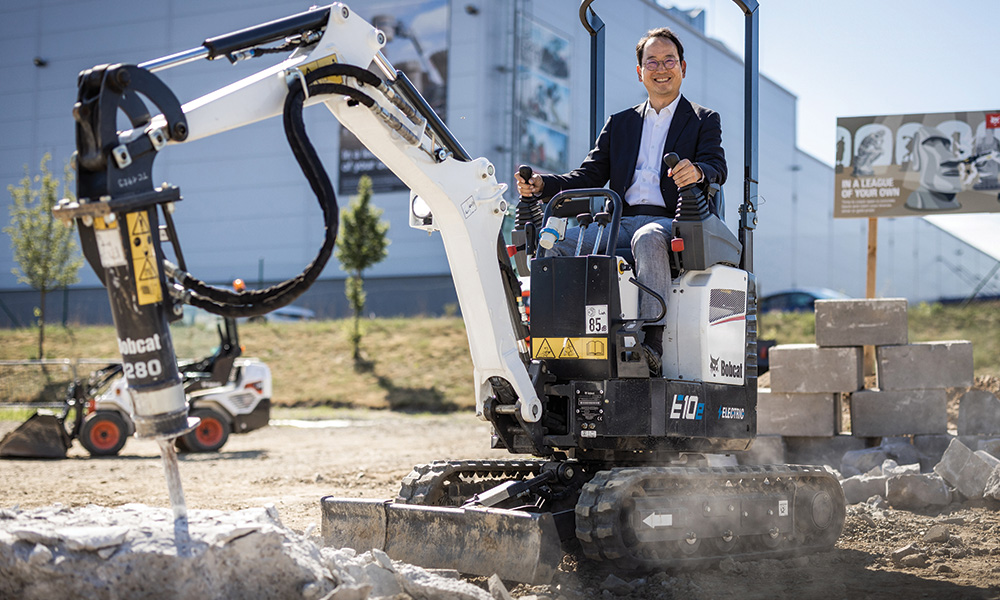
“What made us great, we will continue to do that,” explains Park, pointing out the importance of also focusing on the dealers and customers and providing the “product bundle” that they need.

“That product bundle is really focused in with our core value. We empower people to do more. We are going to look at that bundle and we are not going to stay within the constraints or confines of what the industry says is compact equipment but we are going to look at it from a customer perspective. Therefore, we have a very strong plan on product diversification of growing our product portfolio.”

To clarify its core capabilities and competencies, one of the things the company did was take a review on what has made it great over the last 65 years. It was part of a product strategy that involves looking not just at the space it is in, but also using its strengths as leverage elsewhere. The review found that, aside from just looking at what else the company can do with a skid-steer or compact track loader, there are also other key qualities such as its ability to create products with great functionality, combining high quality with a fantastic brand or financing offer, or having excellent channel development and management capabilities.

“It’s all these things put together that make us successful,” says Park. “That really opened up our eyes in trying to define what we do. And that really gave us the ability to step away from a traditional industry. That’s why we acquired a forklift company. It doesn’t really overlap too much with compact loaders or mini-excavators but it overlaps significantly with our core capabilities.”

Innovating to create value

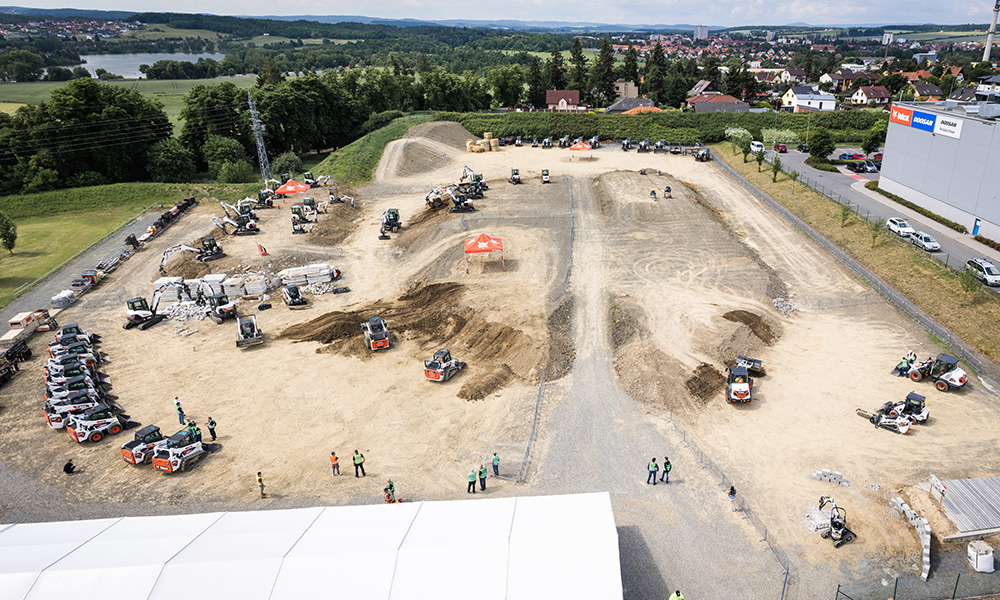
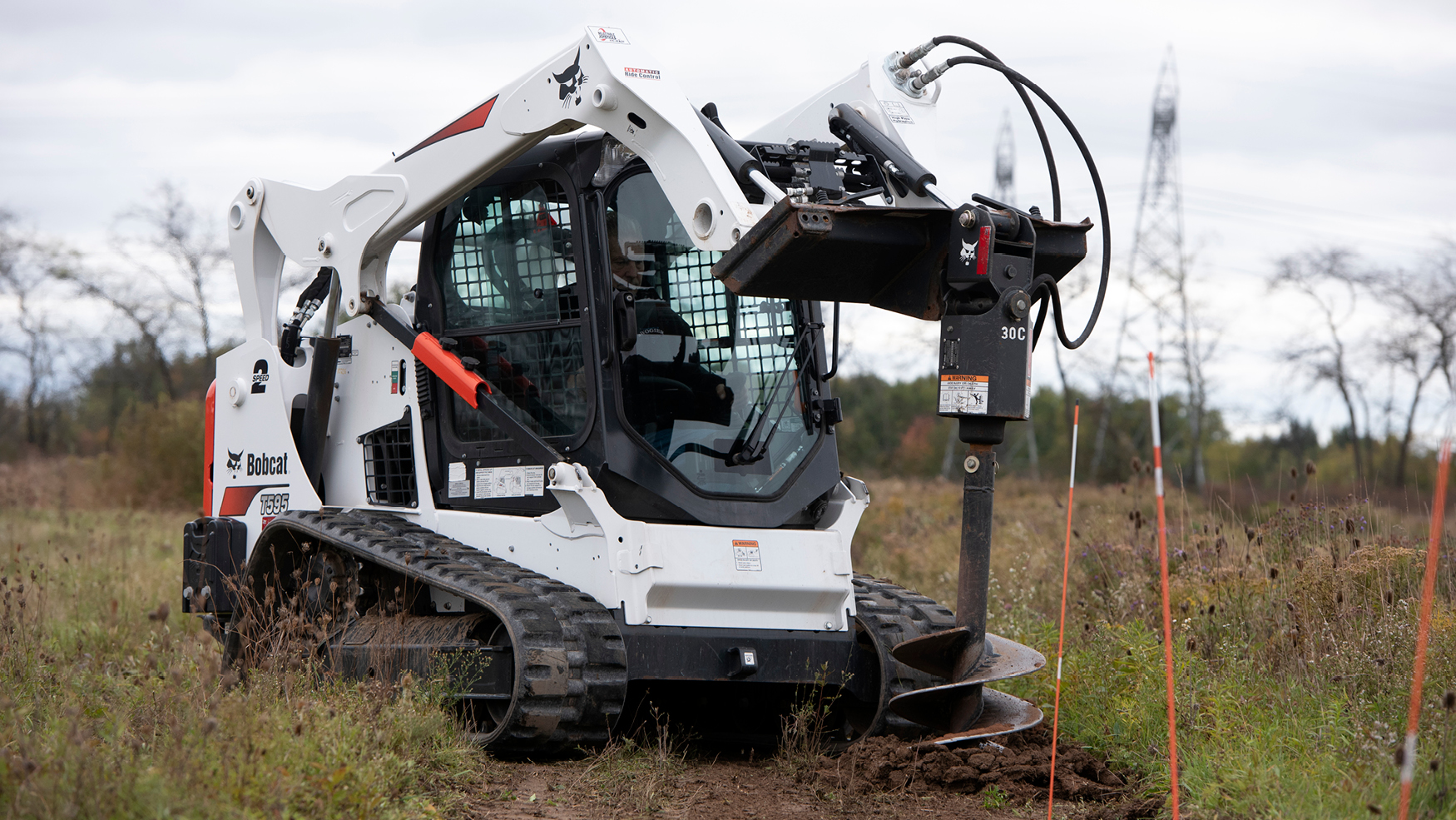
As the saying at Bobcat goes, innovation is in their DNA and it is something which the company continues to pursue. No more than a hundred yards away from the main building where this interview takes place, customers and dealers gather at the innovation tent outside trying first-hand the latest Bobcat concepts such as the Bobcat T7X – the World’s First All-Electric Compact Track Loader and Bobcat MaxControl Remote Operation with Joysticks.

Speaking about the need and practicality of such innovations in today’s world, Park describes openly how it is not about innovating for the sake of innovating but rather about empowering Bobcat’s customers to do more.
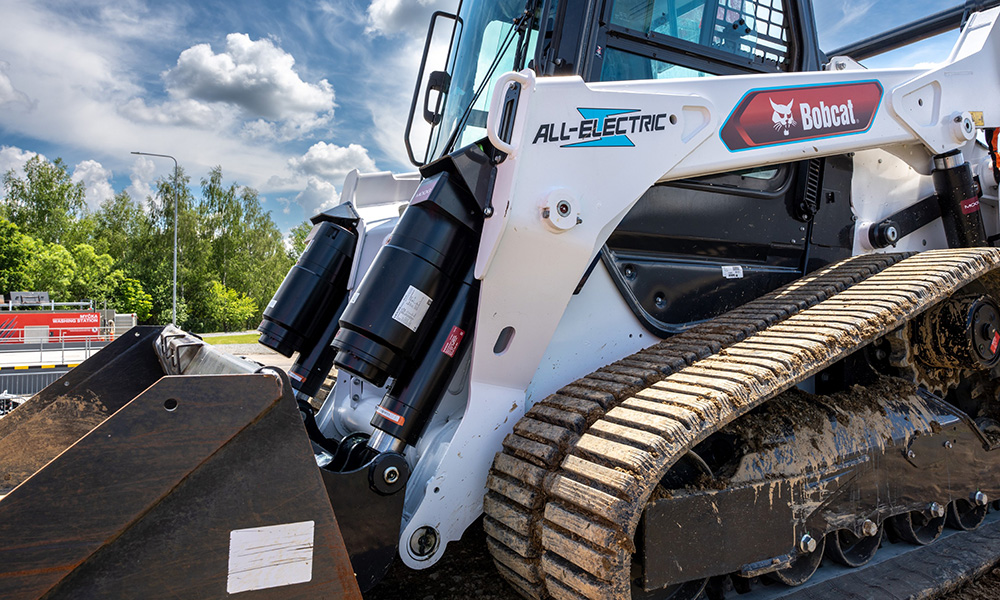
“It’s about innovation that is really stemming from efficiency and productivity. There’s this whole discussion around Environmental, Social and Governance (ESG) and it’s about saying what is our part in enabling the earth to be more sustainable but also providing everything else that goes along with it that can provide that productivity and efficiency for the customer.

“For example, we’ve got the remote control on our phone and we even have a device that you put on it so you can have a toggle on there. You can see that this is definitely an efficiency play. If you’re in the cabin and you need to go through the gate it’s much better that you just get out of the cabin and then go out and move the gate open, let the track loader through using the remote control and then you can close the gate. So there’s a big efficiency and productivity thing here.”

Park continues: “Now if you think about it from a social perspective, how about the safety around that where you have certain angles or certain places that are a little bit dangerous to be working in. You can do that remotely. So now we are providing an additional value to the customer that’s around safety. Even for people with special needs, if you’re in a wheelchair or you’re not able to put yourself in the cabin to operate that machine suddenly now you have a way to be productive in your wheelchair working in your backyard or making money as a contractor. This ties in with social and environmental responsibility but also ties in with efficiency and productivity. So that’s what innovation is about. It’s not just about innovating for the sake of innovating but innovating to create value for the organisation and for the world.”

Bobcat in the Middle East

Park is keen to point out that the company’s strategy in the Middle East falls right in line with what it is doing globally. Although the speed of adoption can vary from one place to another it is still driven forward by the company’s eco-system with the process never really changing that much. On the day itself, many of the dealers and customers on Bobcat’s campus are actually from the Middle East and Africa. Days like this give each of them the chance to experience the latest technologies and see the possibilities of having these types of solutions on their own worksites.

“It’s a value proposition. If people truly understand the value of it then they start getting into it,” explains Park.

“Quite often if you look at new technologies, like the iPhone for example, there were a lot of failures at the beginning and people said I don’t need something like that, I don’t want to pay for that but now this is cheap because they say I’m doing my banking, I am doing my scheduling, I am doing my emails and communications, I am doing my Instagram and everything else. So we see the value. So how do we get people to understand and see what that value is? It’s a step-by-step process but we’ll get there because people will see it and then others will start to look over their shoulder and say I have to get that too.”
Of course, regulations in different parts of the world is something, which Park says Bobcat will continue to look at in terms of getting new technologies and products approved. However, as far as the dealers are concerned there is already a considerable amount of interest there.

“If you think about it, everywhere in the world there is a shortage of people. It’s hard to hire the people that you need. Another one is also the capability of the people. Even if you do hire someone it’s surprisingly hard to dig a trench. If you want to dig a certain amount wide and deep and flat on the bottom, if a human does it, we are not that efficient. What if someone you hired to be an operator could just press a button. Now that person is actually working to the equivalent level of someone who is a 20-year professional.”

Attachment business growth

When it comes to technological advancements in the industry there will always be competition, yet the key advantage that Bobcat has over many new software startups today is the hardware and infrastructure that is already in place.

“It’s a question of hardware and software. You need to have the stuff that needs these innovations that can actually create this additional value,” Park points out, explaining further that within the organisation Bobcat’s machines are commonly referred to as “tool carriers.”

Currently in the MEA region, the company offers approximately 150 attachment families and globally it offers more than 400. It is based on the philosophy of putting the building blocks in place whilst, at the same time, expanding the product portfolio. The more infrastructure or carriers of innovation that are out there then the higher capability there is that the software can make life better for the customer.

At Bobcat, the parts and attachments business already makes in excess of a billion dollars a year, which Park says, not only makes it a massive part of Doosan Bobcat but also one of the largest parts and attachments businesses in the world. Against this backdrop, he recently challenged the team to think of it almost as a second stand-alone business and take a look at some things that could be done differently.
“We’re actually transforming the mindset of that organisation to think of it as a wholly separate profit and loss organisation that’s really allowed to do whatever they want to do,” he says. “There’s a lot of exciting projects going on right now, so yes we do plan on accelerating the growth of that business. That side of the equation actually has higher profitability and also more stability during the downturns than the actual power unit itself.”

He adds: “People buy a lot of attachments not because they use it eight hours a day but because it gives them so much productivity. That’s why the profitability is so high. The value proposition is there instantly so the growth of that area is tremendous.”

Looking Forward

Looking forward, the company is on track to make more than $6bn US this year, up from $5.1bn last year, and $3.9bn the year before. With the trajectory and profitability going up, it is an exciting time for all those who are part of the Doosan Bobcat transformation. Yet, away from the numbers, Park is keenly aware of the people driving the company along this road of growth and perhaps it is this that gives him the most pleasure.

“What’s really exciting is, I look at younger people because my job as a CEO is to create a vision and a desire to be in this organisation and grow in this organisation because it’s a great place to be in and it’s got a great future. You spend most of your working hours at work, so being able to give a vision to these younger people to say five, ten, twenty years down the road, there’s so many opportunities and fun to be had here – why would I go anywhere else? That’s the kind of culture that we’re cultivating and growing and it’s really happening. I can feel a big change in the organisation from that perspective. And that’s what’s really exciting.”

Read more:

The post Creating value through innovation appeared first on Middle East Construction News.


Source: ME Construction News


Marc-Jenning-CDE-CEO-Tony-Convery-Chairman_1000x600-1.jpg

August 16, 2022 foasummit0

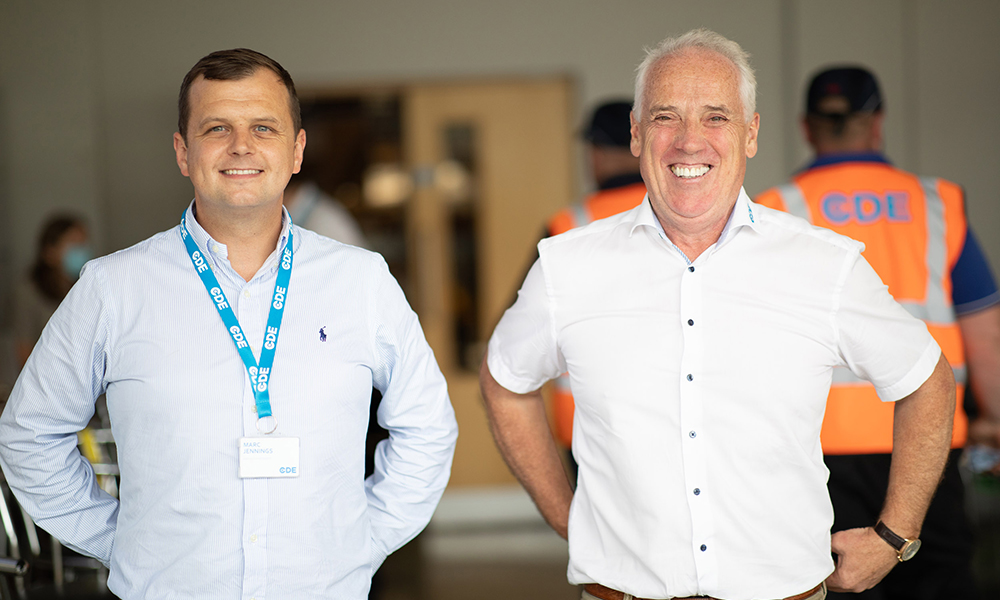
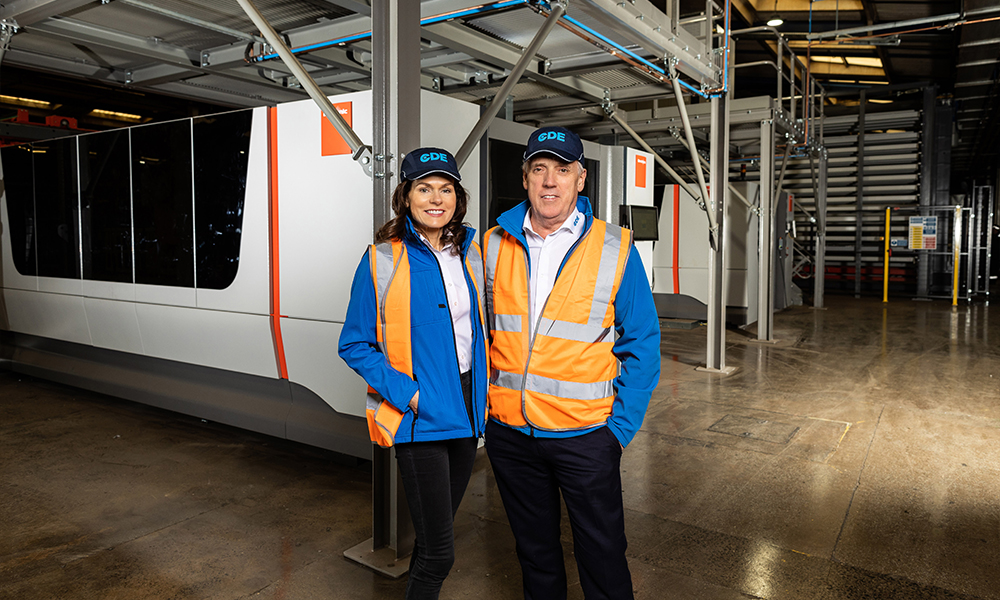
CDE’s wet processing technologies have helped divert over 100m tonnes of construction, demolition and excavation (CD&E) waste from landfill globally, over the past three decades, the company has revealed.

The supplier of sand and aggregate wet processing solutions for the waste recycling and natural processing sectors says it has reached the milestone as it celebrates its 30th year in business.

In March 2022, Tadweer and Al Dhafra Recycling said they had deployed IoT technology at their C&D waste recycling station to increase the facility’s operating time and energy efficiency. In November 2021, Averda said it won a new contract for waste management services at The Red Sea Development.

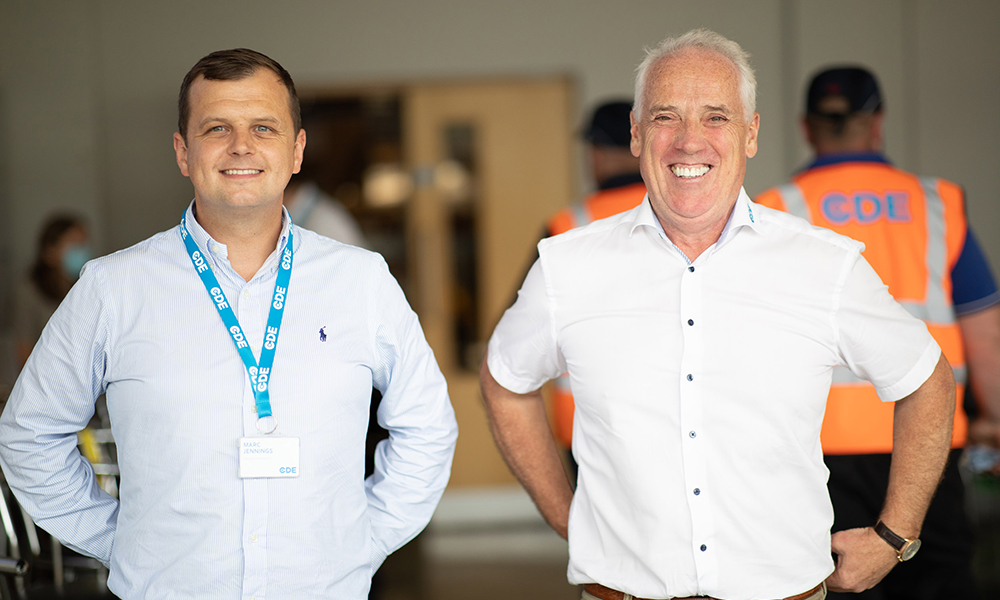
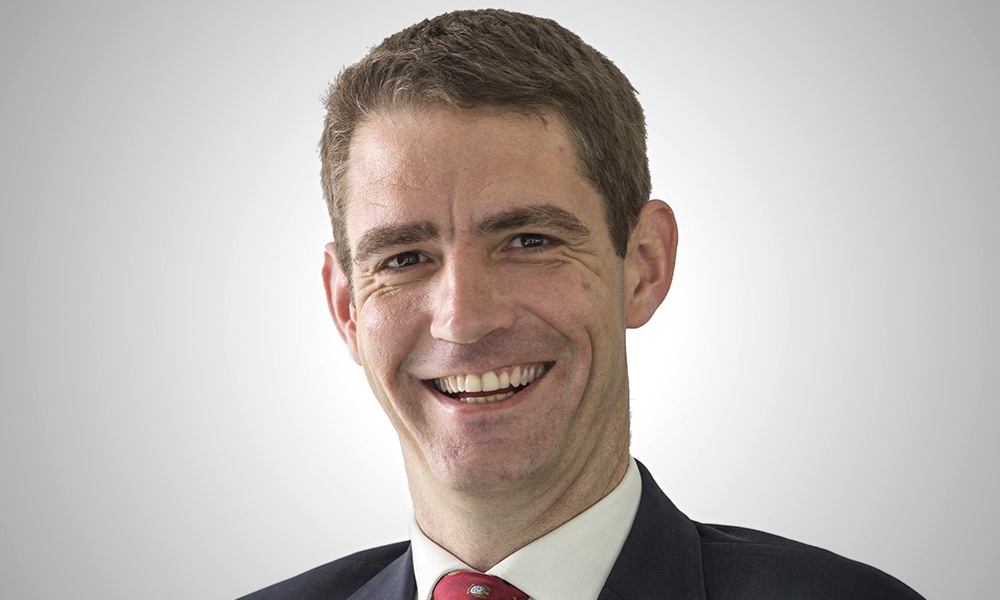
CDE’s Chief Executive Officer Marc Jennings said: “We’re very proud to announce that in our 30th year, together with our customers, we have diverted 100m tonnes of CD&E waste from landfill, while continuing to support our customers to maximise their natural resources in the most sustainable way possible, with greater efficiency and less waste than ever before.”

He added: “It’s a direct result, too, of the past and present talent at CDE. We know our success is dependent on our people and that’s why we are so focused on developing, promoting, and retaining great talent, so that we can continue to develop innovative solutions that empower and equip our customers, and the wider industry, to build a more sustainable future.”

Headquartered in Northern Ireland, CDE operates across five regions – the UK & Ireland, Europe, Middle East & Africa, Australasia and the Americas – with regional headquarters in each. The firm says it plans to celebrate its 30th year in business by strengthening its manufacturing capabilities and regional hubs, and expanding its workforce in response to increasing demand for innovative waste recycling solutions.

Take the five minute Middle East Construction News Survey and you could win a brand new Apple Watch!

The post CDE surpasses 100m tonnes of diverted waste from landfill appeared first on Middle East Construction News.


Source: ME Construction News

Azizi-Park-Avenue_1000X600-4.jpg

August 15, 2022 foasummit0

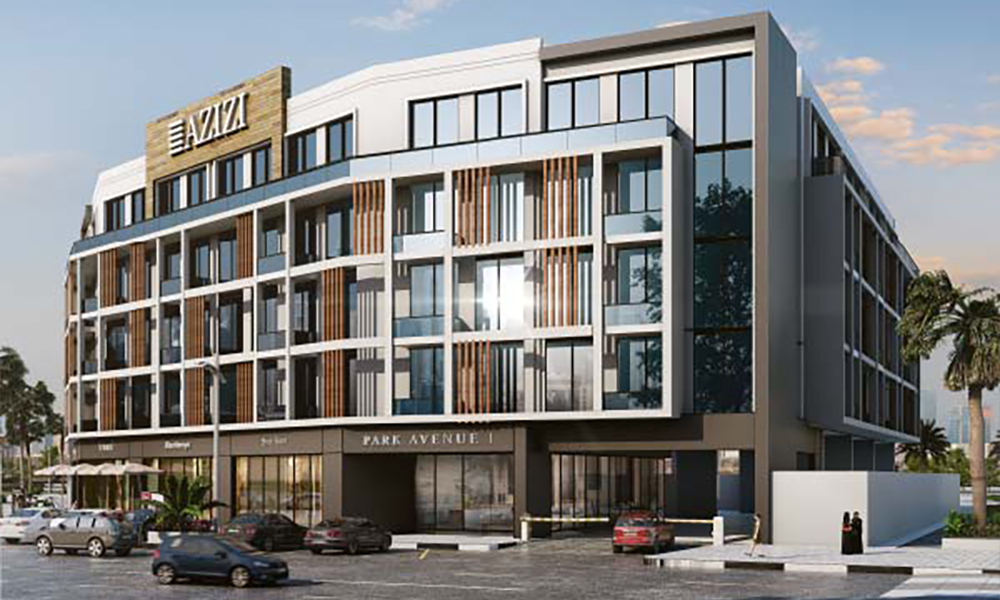
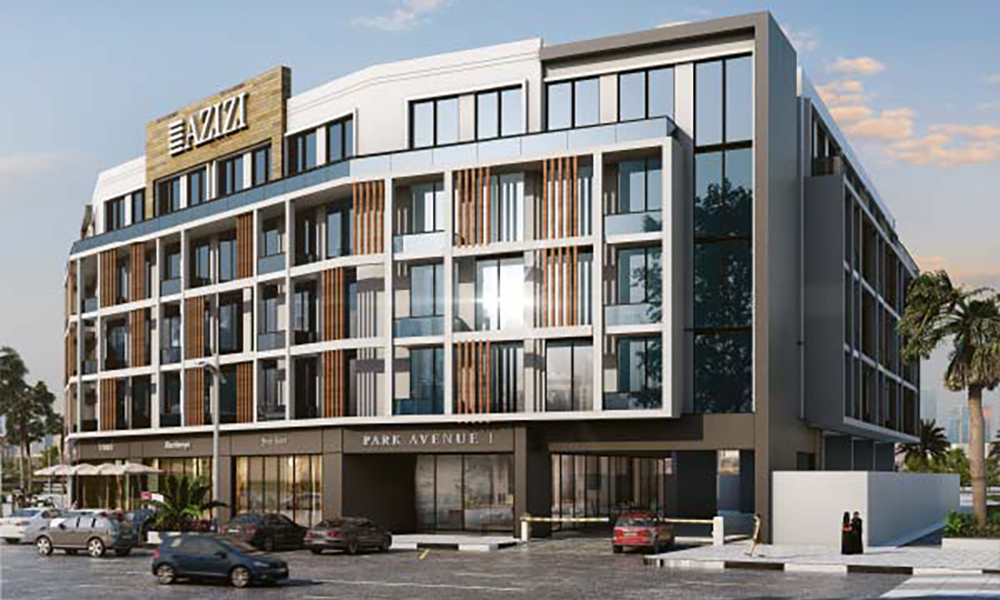
For the supply and installation of Hyundai elevators across three buildings in its Park Avenue development, Azizi Developments has extended its deal with key supplier Bin Ham North Ocean Elevators. Park Avenue is located within Mohammed Bin Rashid City in Dubai.

For nearly a decade, Bin Ham North Ocean Elevators has been the exclusive distributor of Hyundai lifts in the UAE. The firm is said to provide a wide variety of lifts, for example, double-decker, destination control, ultra-high-speed, observation, freight, and bed elevators.

Early in August 2022, Azizi Developments said it was making rapid progress on the residential community.

Commenting on the agreement, Farhad Azizi, CEO of Azizi Developments, said: “This partnership reflects our mission to work hand-in-hand with best-in-class suppliers only, to cater to our valued investors and end-users. We take pride in developing properties that represent unparalleled modern luxury and outstanding quality, a design and construction philosophy that sets us apart and ensures investor satisfaction. Bin Ham North Ocean Elevators was appointed based on important commonalities and an array of attributes precisely meeting the stringent standards and quality of Park Avenue.”

The project comprises 372 residential and 29 retail units, with each of the three buildings having its own fully equipped gym and swimming pool. Work is progressing apace, with the structure of Park Avenue I now being 84% complete and Park Avenue II and III currently reaching 96% and 97%, respectively. The total workforce has also been increased to 340 to further accelerate construction.

Built around the concept of connected serenity, Azizi’s Park Avenue project is within close proximity to Azizi’s French Mediterranean-inspired master-planned community, Riviera, and the upcoming Meydan One Mall, all less than a 10-mnute drive from established attractions such as Dubai Mall and Downtown Dubai.

In May, Azizi said it had signed an agreement with Nerkal Interior for luxury interiors at its Riviera megaproject. Later in the month, it said its 245-unit Berton development was on track for delivery in Q3.


The post Azizi chooses ‘best in class’ suppliers for Park Avenue project appeared first on Middle East Construction News.


Source: ME Construction News

Oman-Botanic-Garden_1000x600-1.jpg

August 15, 2022 foasummit0

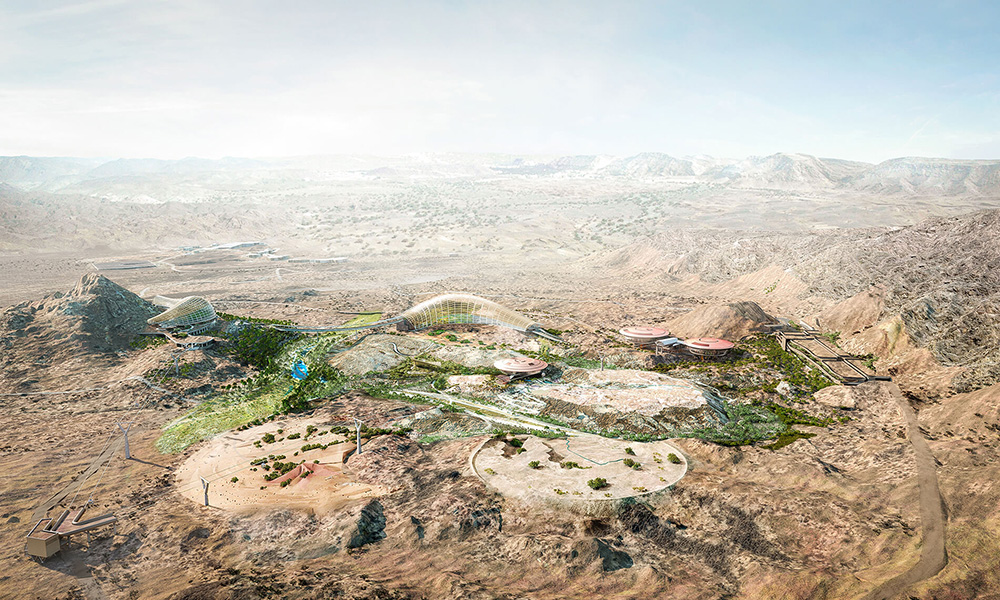
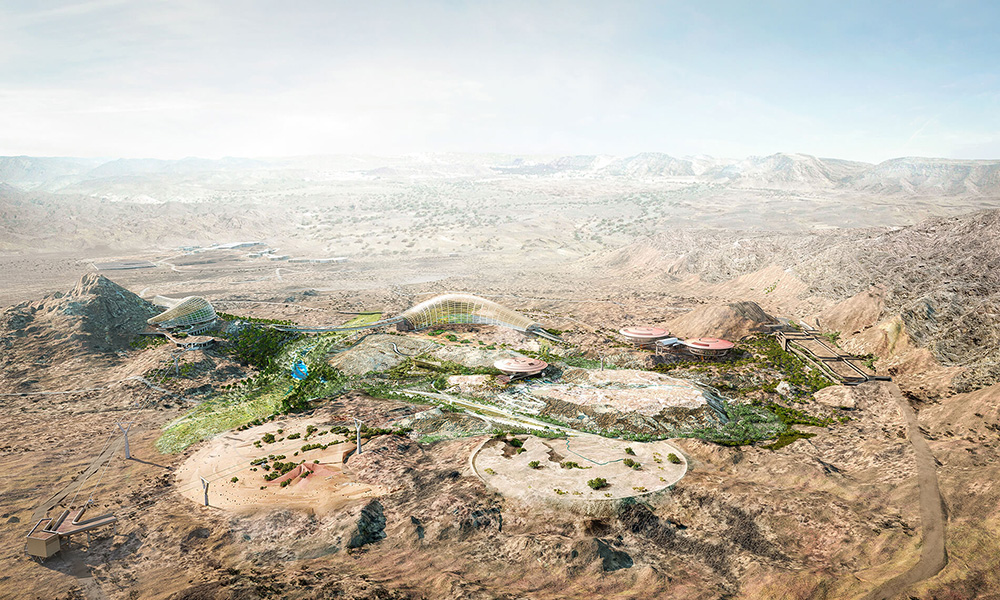
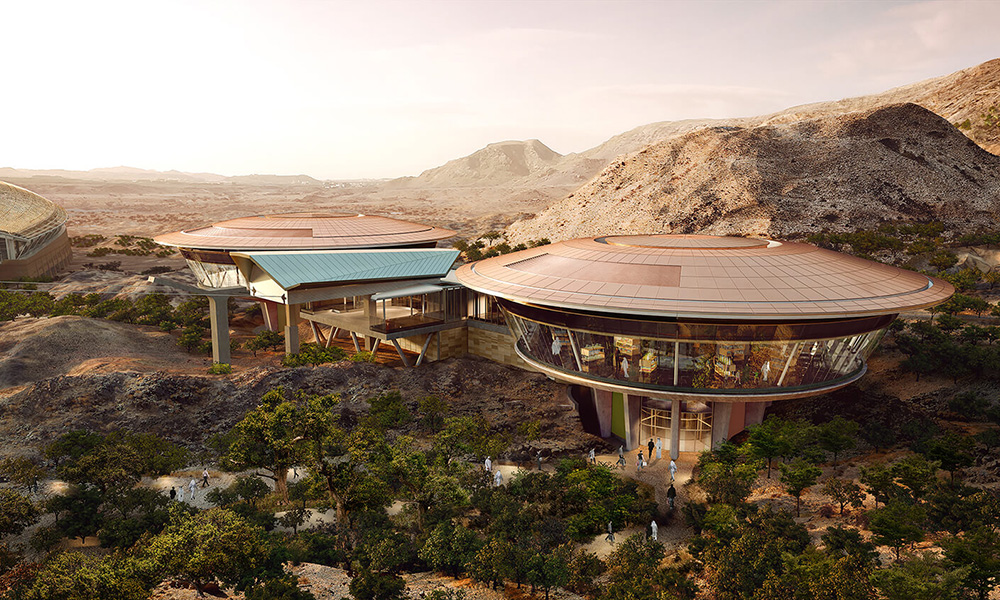
Oman’s $175mn Botanic Garden is said to be on track for completion by the end of 2023. The project, which is billed as a first of its kind for the country, is being delivered by more than 700 multidisciplinary engineers and dedicated designers.

The development is being led by the Diwan of Royal Court in Oman, and aims to celebrate the unique plants, landscapes and cultural traditions of Oman. According to ARUP, who is said to have had 600 of its engineers involved in the design, the project will feature eight habitats and, occupying some 430ha, it will stand as one of the largest botanic gardens in the world.

The project is taking shape between the mountains and wadis of the Al Khoudh area in the Wilayat of Al Seeb and is approximately 35km from Muscat.

Take the five minute Middle East Construction News Survey and you could win a brand new Apple Watch!

Once it opens to the public, the garden will show-off all the native plant species of Oman in a series of naturalistic habitats from the dry deserts to the rich monsoon cloud forests. The garden will also showcase the traditionally cultivated crops and the many ways that people use plants in Oman, said a report by the Oman Daily Observer.

In June 2021, the project achieved a major construction milestone, when the first structural arch of the garden’s Northern Biome was lifted into place.

The garden will consist of the following key components: nursery, visitor center, research center, field studies center, outdoor habitat gardens, habitats pavilion, northern mountain biome, southern mountain biome, demonstration garden, and a variety of amenity areas, play spaces and family zones for fun and relaxation in a garden setting that is unique to Oman.

All the materials used in the construction of the Oman Botanic Garden will be environmentally sustainable. The vision of this project is to inspire people to preserve biodiversity and enhance Omani plant heritage for a sustainable future, the report noted.

In early August, Oman’s Rakiza received a capital commitment of $298mn from Saudi Arabia’s PIF.

The post Oman’s $175mn Botanic Garden on track for completion in 2023 appeared first on Middle East Construction News.


Source: ME Construction News

Sharjah1_1000x600-1.jpg

August 15, 2022 foasummit0

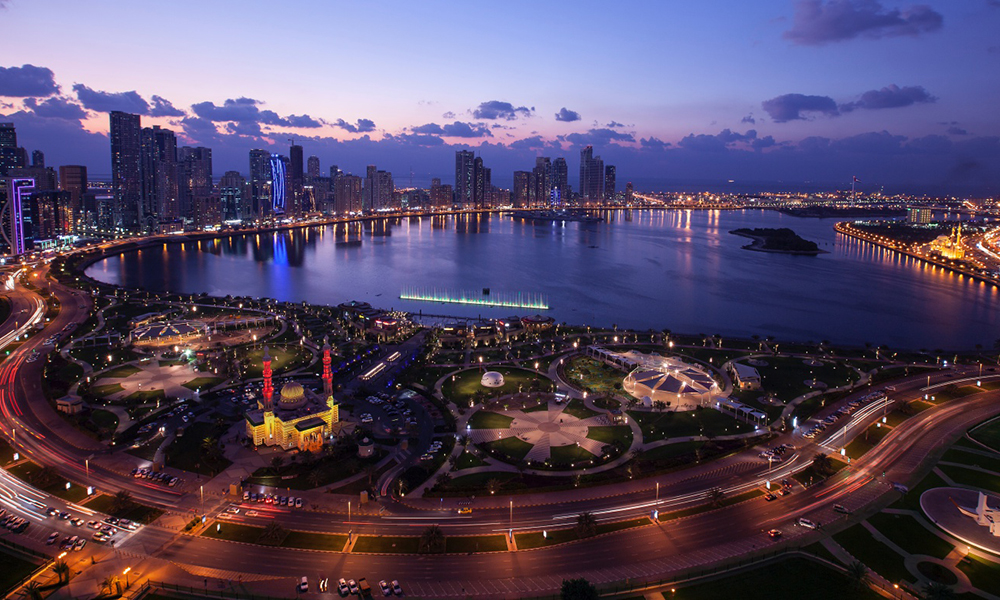
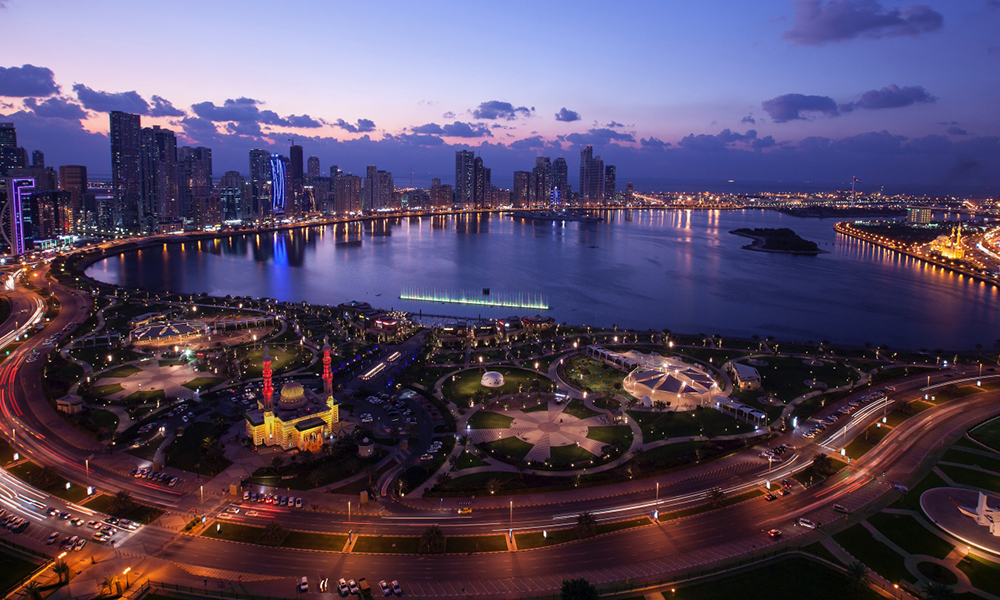
Sharjah Commerce and Tourism Development Authority (SCTDA) has announced a new regulatory framework – Sharjah Tourism’s ‘Holiday Homes Project’. This will offer an official framework of facilitation and control to Sharjah residents wishing to rent out their accommodation as holiday homes to tourists and visitors.

According to the terms and standards approved by SCTDA, the residential units can be rented out annually, in rotation. The idea of the project is to successfully develop an official facilitation framework in line with international best practices for the operation of holiday homes; these homes will then be registered under a unified umbrella and database.

In June 2022, Big Project ME met with Diamond Developers to discuss progress at Sharjah Sustainable City and the impact the sustainable lifestyle development will have on the real estate sector.

The project will also empower prospective users with a new source of income recognised by the Government of Sharjah, offering them official guidance on operating requirements, classification criteria, violations and other mechanisms, the SCTDA said.

In July, Sharjah’s Alef Group launched the $435mn Al Mamsha Raseel project.

Khalid Jasim Al Midfa, Chairman of SCTDA commented, “With Sharjah Tourism’s Holiday Homes project, the emirate’s aspirations to continue advancing this sector has crossed a meaningful milestone, as the initiative not only introduces an innovative new service to the tourism landscape but also puts Sharjah’s home owners at the forefront of benefiting from a drive that is poised to drive more visitors from around the world to the emirate.”

According to estimates there are currently over 300 holiday homes in Sharjah. The first year of the project will see the registration and licensing of 150 holiday homes. About 15 operating companies will be involved in the process, and the holiday homeowners will be given three months to complete the documentation process. The first phase of the project includes organising field visits and inspection campaigns, as well as electronic or digital follow-up of holiday homes, their operators, and owners.

Take the five minute Middle East Construction News Survey and you could win a brand new Apple Watch!

The post Sharjah’s new ‘Holiday Homes Project’ set to diversify economic growth appeared first on Middle East Construction News.


Source: ME Construction News


David_Clifton_Web_1000x600-1.jpg

August 15, 2022 foasummit0

This year has seen the global economy reel from the consequences of a decade long quantitative easing (QE) binge combined with the costs of the pandemic. The war in Ukraine only acted as a compounded effect, the majority of the current fiscal effects were already built into the system. Subsequently, the world is either in or trending quickly towards a recession in 2022 that will last all of 2023 and depending on government responses has the markers of lasting a fair proportion of 2024 as well.

With the continued geopolitical risks, not just in the Ukraine war, but with uncoordinated global policy and disparate political situations in major economies, we see significant global risks that might be capitalised on by nations without such wranglings.

With the ECB having raised rates by 50 basis points, in light of the Fed having led the market with a 75 basis points rise and again a further 75 basis points on 27 July, we expect to see 1-2 more rate rises in 2022 at a US level, forcing a similar move for the ECB and BoE – which would be followed by GCC countries with currencies pegged to the US dollar.

This will have the potential to drive further inflationary pressures due to the supply side issues. Most industries, having not seen a pre-pandemic return to the demand levels of 2019, will raise higher costs of capital to support growth to pre-pandemic capacity, driving a pass through of costs to end users.

Inflation is still trending to the previously forecasted global 10% and certain nations will exceed this level. As the cost of energy is a driving factor, for now this indicates that Net Zero considerations are largely on hold, despite the ambitions and commitment to them. This model will only create more of a reduction in standards of living and a further degradation of developed nations debt-to-GDP, as they borrow more in what is becoming a standard response to crises.

For the GCC though, should the governments wish to take a long-term Net Zero view (which largely they do), then the investment cycle and 20+-year horizons to achieve this can be met.

We’ve seen global supply chains start to speed up their capacity to mitigate the pandemic and invert some of the supply-side problem, although it should be noted that few industries are fully back to pre-pandemic demand levels.

Oil over $100 barrel drives confidence in infrastructure and non-oil economic investment by regional governments. Historical award trends show that the higher the oil prices, the greater to commitment to major schemes of work – although there is a lag of 6-18 months. Pertinent examples include the high oil prices of 2011/12 which drove the Riyadh Metro, Midfield Terminal and Doha Metro.

We expect to see continued economic stimulus due to post pandemic recovery, which the region is best placed for internationally due to the fiscal balance of the oil economy. Due to an increased income of approximately $735mn (KSA) and $130mn (UAE) per day year to date, we expect economic confidence in the deployment of this reserve. KSA will likely be via PIF and UAE via a combination of central/federal government and PIF.

Saudi non-oil PMI data is incredibly strong at 57.0 for June 2022, rising from 55.7 in May (any score over 50 is a growth market). This is even with the inflation pressures being seen (although at a much lower level than other countries). Although partially attributable to the post pandemic recovery, the stimulus being provided by the PIF internal investments and market sentiment regarding the future developments of the Kingdom are driving a positive perception as well as starting to produce work orders.

The key GCC countries are expected to see extended GDP growth of 14% in KSA in 2022 and 5.4% in UAE, due largely to oil output and price rises (KSA has a 42% oil-based economy vs 16.2% for UAE). However, the benefits to the regional economies who are not major producers will be greater than most international competitors due to the trickle-down effect and inter-governmental support for them.

Within the Kingdom, we are still seeing a very significant amount of tendering of main contract works, although the awards trend is still only slightly above initial forecasts. This is in certain areas leading to ‘tender fatigue’ in the supply chain as the quantity of works being sent to market (or re-sent to market – which is common) is causing a significant rise in pre-contract costs. Combined with supply chains expecting an awards boom in KSA, we are starting to add risk and increase profit margins and prelims (some of which is pass through costs of the quantum of tendering) in what is now trending towards a self-fulfilling prophesy.

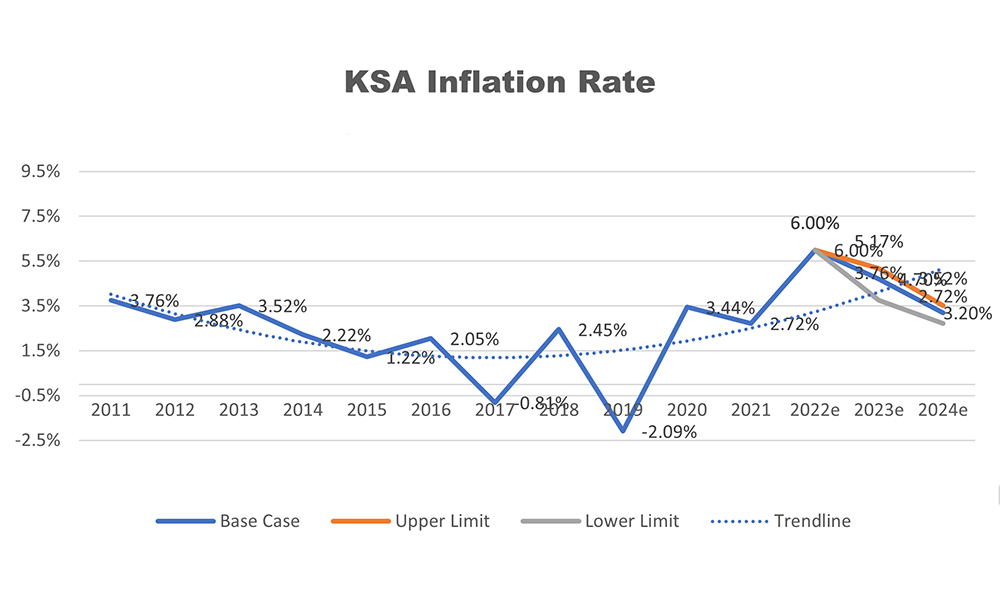
With the post-pandemic recovery, poor global economic responses to the situations, the ongoing war in Ukraine and challenges around market perception of the awards in Kingdom – which are that the market will double year on year at least, construction inflation is set to peak at over 10% this year, whilst CPI (consumer price index) will only be 6% (higher than KSA government forecasts, but unless major subsidies are brought in, this estimate is closer to trend).

Construction as a contribution to GDP is steadily rising from the 2019 low, although it should be noted that this is largely a consequence of projects awarded pre-pandemic. We see this trend likely to continue due to the forecast increase in awards, with a Compound Annual Growth Rate (CAGR) of approximately 5% in our forecasts.

When looking at construction material prices, we have seen a softening in the market, as the shock to the system due to the Russian invasion of Ukraine is muted by the supply side reacting to the loss of certain input products. The price points though are still significantly above historical market trends.

If we take one example, landed (in Kingdom and available for purchase) rebar prices have started to reduce in Q2 as global prices decline quickly. There is a lag between price falls due to supply in the global market increasing and translation onto the ground. This is in part due to stockholding requirements, meaning that previously purchased product needs to be sold prior to re-ordering and also shipping time to country.

Looking at the futures market, we can see significant price reductions through the rest of 2022 and with a recession on the horizon for major economies, this trend is expected to continue. By comparisons to 2021, we have seen a 2% price reduction and we forecast 2022 to reduce by a net 7%, based on increasing global production capacity and the spike in costs due to the Russian invasion of Ukraine having been fully passed on it this material during Q1 and early Q2.

When looking at the drive for development, we haven’t seen as many awards as the market expected. This presents a potential risk as, due to the major contraction in awards during the pandemic, the industry has a ‘drop off the cliff’ potential in 2023 and 2024 as projects from before the pandemic will complete. This means the country has a backlog burn issue that needs to be addressed swiftly if capacity is to be maintained, let alone grown in line with forecast requirements.

With a suite of major awards due in H2 2022, from hotels at The Red Sea to a select number of major packages at NEOM, we still forecast a 12% increase in awards in KSA of around $42.3bn.

The will of the clients and the hope/perception of the market is significantly higher, but a combination of red tape, delayed decision-making, capacity and capability, as well as logistics, make this assessment close to the maximum the current supply chain can absorb.

When combined with the ability and the cost to finance working capital for the supply chain (which will increase further this year and more next as the Fed looks to tame inflation even if contributing to a recession), the delivery models won’t support much more growth – certainly when compounded by the challenges of getting qualified and experienced staff and the issues of getting visas for the workers who are needed, even if funding is secured to enable this.

To this end, we are seeing examples where PIF is looking to secure its own capacity. The most publicised example being the 30% stakes it is looking to acquire in four major contractors in the Kingdom (El Seif, Al Bawani, Al Mabani and Nesma).

Whilst we now expect a global recession on the horizon, with sustained high energy prices for the foreseeable future, Saudi Arabia is in a strong fiscal position to push on with development in line with Vision 2030 and the delivery of the giga projects won’t be abated in the short term by lack of capital to be deployed. But it may be by capacity and supply chain funding. This will mean a need to keep differing delivery models in mind, whilst also ensure entities can attract suppliers with reasonable contracts and swift payments to ensure continued commitment from the supply chain.

To conclude, the short-term future at least is bright, perhaps not as bright as market perception, but certainly on a solid growth trajectory.

Read more:


The post Where’s the magic in the Kingdom? appeared first on Middle East Construction News.


Source: ME Construction News


DEWA-1_1000X600-1.jpg

August 15, 2022 foasummit0

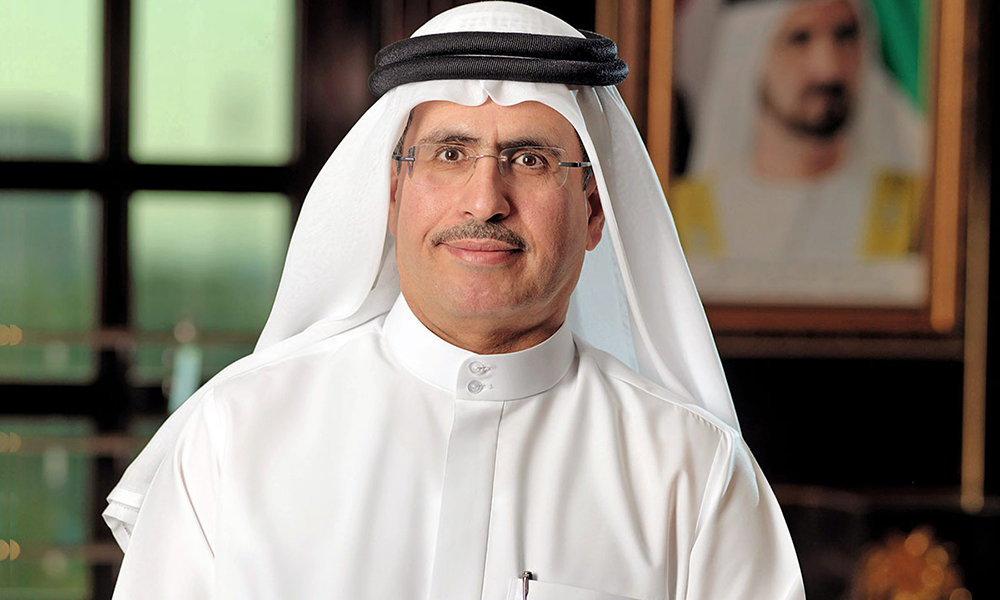
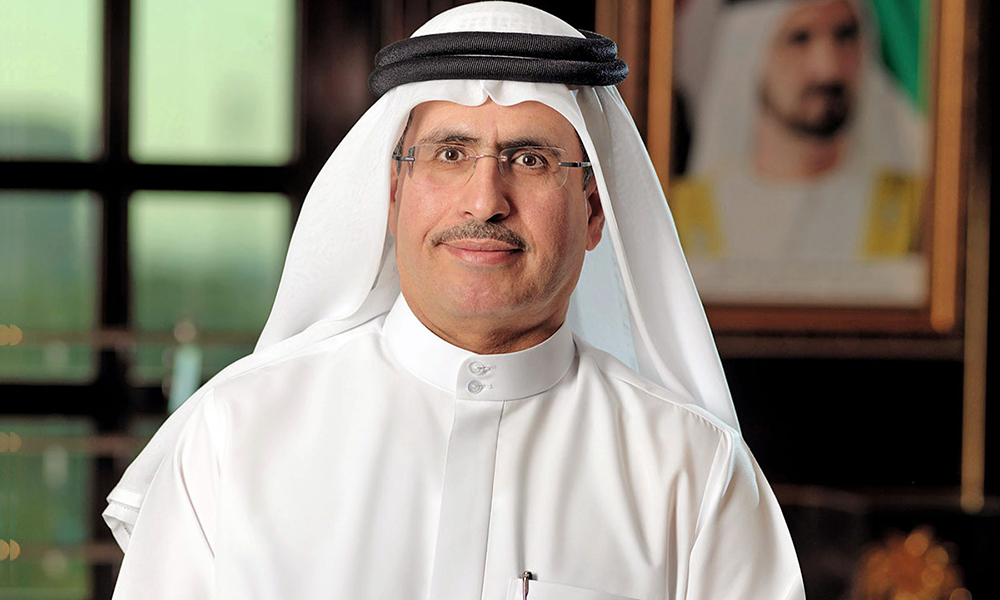
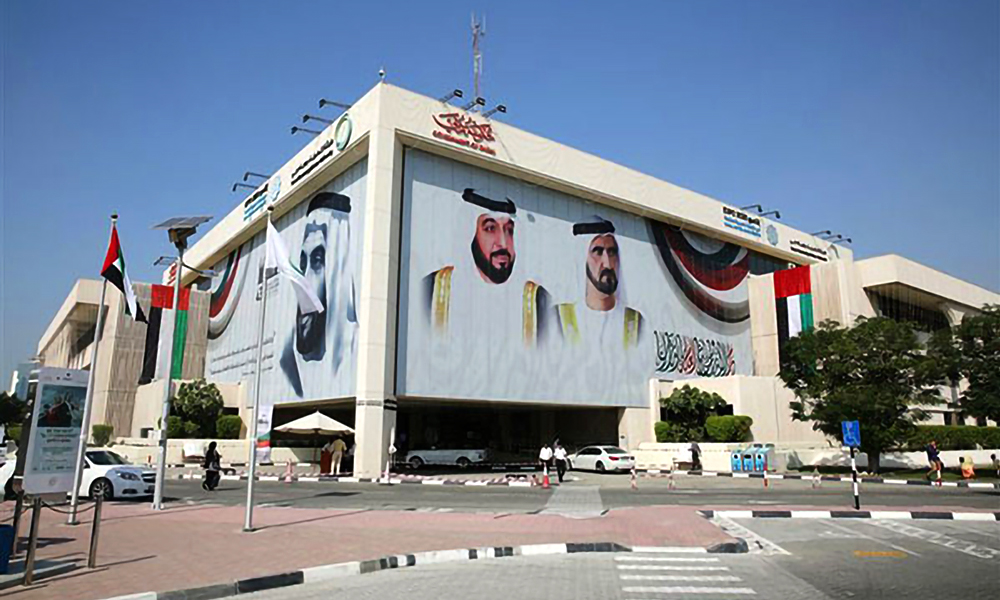
Dubai Electricity and Water Authority (DEWA) has announced that it has recorded revenues of $1.91bn for the second quarter of 2022.

In a statement, Dubai’s exclusive electricity and water services provider said that it posted net profits of $710.59mn for the same time period, while in H1 2022, its revenue totalled $3.28bn, and net profit was $898.4mn.

“DEWA’s half year financial results demonstrate our commitment to advancing strategic priorities of sustainability focused smart growth, enhanced customer happiness, operational excellence and attractive capital returns for our shareholders. Continued focus on project delivery, innovation and accelerating our digital transformation has bolstered our results through the first six months of 2022,” said Saeed Mohammed Al Tayer, MD and CEO of DEWA.

Take the five minute Middle East Construction News Survey and you could win a brand new Apple Watch!
The statement added that DEWA’s first half revenue increase of 15% to $3.28bn was driven by an increase in demand and a transition to a normalised tariff structure.

It pointed out that energy demand in Dubai increased during the first half of 2022 by 6.3%, compared to the same period in 2021 (23.27TWh compared to 21.9TWh). Nearly 10% of this generation came from solar. Similarly, water demand in the same period grew by 6.4%.

Peak power demand in the first half of 2022 was 9.4GW, which was a 7% increase over the same period last year. By the end of the second quarter, the authority said that it served 1,126,121 customers, representing a 5.12% increase from the same time last year.

Early in August 2022, the utility major said that smart solutions are a priority.

DEWA’s majority owned subsidiary, Empower, also demonstrated record growth in segmented revenue and profit. In the first half of the year, Empower’s revenue was $314.18mn, while net profit was $117.6mn, representing a 16% and 11% increase respectively versus the same period in the last year.

“We maintain significant capacity to deploy capital through a disciplined investment strategy with a focus on meeting the aspirations of the Emirate of Dubai. In line with our strategy, we continue to provide a robust infrastructure to keep pace with rapid developments in Dubai and provide our services to more than a million customers according to the highest standards of availability, reliability, efficiency, and safety,” Al Tayer said.

“We continue to implement pioneering projects to diversify Dubai’s clean and renewable energy sources and achieve our wise leadership’s vision for a bright and sustainable future for generations to come,” he concluded.

In May 2022, DEWA said it had completed 98.83% of its $72.4mn project to extend Dubai’s water transmission network.

The post DEWA announces revenues of $1.91bn for Q2 2022 appeared first on Middle East Construction News.


Source: ME Construction News