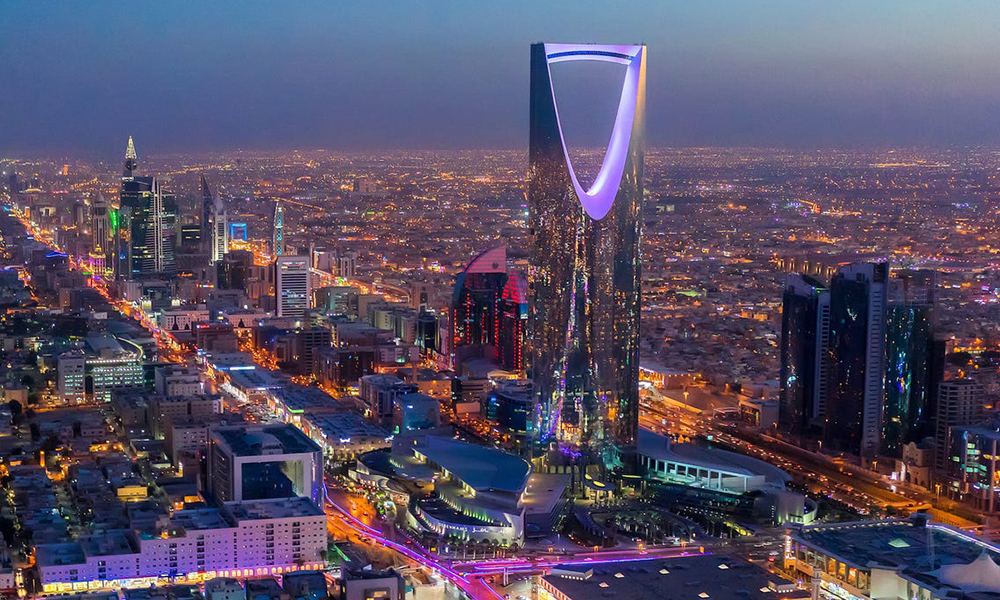
Aqua_Raffles_-Jeddah_KSA_1000x600-1.jpg

May 30, 2022 foasummit0

Tenable Fire Engineering Consultancy (FEC) has secured over $1.73mn in projects in the first quarter of 2022. The fire and life safety consultancy says this performance represents a 120% increase in the number of contracts won in Saudi Arabia compared to the same period in 2021.

The firm said the increase in KSA projects has driven forward plans for it to open its first office in the Kingdom this summer. Its contracts have come from a range of sectors including commercial, cultural and heritage, hospitality and retail. The company believes the addition of a Saudi-based team will see continued growth in projects won and will aid the Kingdom in its construction developments.

Year-on-year growth has not been limited to Saudi Arabia; 2022 has seen Tenable FEC increase GCC-wide revenues by 15% compared to the same period in 2021, the firm said.

Headquartered in Muscat, Oman remains Tenable FEC’s largest market in terms of revenue, generating close to $1mn in the first four months of 2022. The organisation also recorded significant growth of 46% in the UAE, as well as winning more contracts for international projects, including several across Africa, the statement explained.

“We are thrilled at the company’s growth so far this year, not just overall but across the majority of our serviced sectors. Our leading and accredited engineers ensure we are the region’s largest single-discipline fire and life safety services consultancy. By providing expert code consulting, fire system design, site inspections, and third-party verification, we’re able to excel in projects across the region and worldwide due to our flexible approach to architectural design aspirations in the initial planning stages. By the end of 2022, we aim to increase the number of projects in key sectors and continue our growth and positioning as an industry-leading specialist,” said Sultan Al Maskri, Tenable FEC’s founder and CEO.

Mazin Al Yaarubi, Tenable FEC’s Director – HQ, believes a major contributing factor to the organisation’s performance in the first four months of the year is an increasingly active construction market.

Al Yaarubi explains, “It’s promising that despite the difficulties faced globally due to the pandemic, we’re experiencing more business opportunities and projects across the region come to fruition. Now the world is returning to a steady-state of business and growth, our priority is to ensure the fire and life safety of these new developments and projects are in line with the numerous codes and requirements — something we pride ourselves on being industry experts in.”

According to Sam Alcock, Tenable FEC’s Dubai director, hospitality currently commands the highest revenue within Tenable FEC’s existing portfolio, as the number of new hotel openings increases and the need to service existing locations for their ongoing fire and life safety requirements continues. The energy sector, including oil and gas, LPG, power and petroleum, and the industrial sector in general remain key sectors for the organisation as its portfolio of clients grows. Retail has been identified as a target growth area for Tenable FEC as new malls across the region open, including the Mall of Oman, which has been a milestone project for the fire and life safety consultancy, he remarked.

Alcock concluded, “2022 has the makings of being a record year for Tenable FEC, and we are committed to continuing along this growth trajectory. We offer a comprehensive range of fire and life safety consultancy services and shall be focusing on delivering our existing expertise into new sectors, further establishing ourselves as the consultancy partner of choice in existing sectors and achieving our ambitious international growth plans, with a key focus on KSA in-line with Saudi Vision 2030. Already in 2022, we have successfully accredited three of our engineers with Saudi Council of Engineers, further cementing our commitment to providing world-class fire and life safety engineering consultancy services adhering to the local regulations in the markets within which we operate. We are looking forward to continuing to ensure some of the region’s, and the world’s, most prestigious and groundbreaking projects are delivered with robust fire and life safety as a priority.”

The post Tenable FEC to open office in Saudi following a significant increase in contracts won appeared first on Middle East Construction News.


Source: ME Construction News


01-Aldhay_1000x600-1024x581-2.jpg

May 30, 2022 foasummit0

Aldhay, the fifth phase of Bloom Gardens, is more than 50% complete according to developer Bloom Holding. The phase is scheduled for completion in Q3, 2023 and will add 181 two-, three-, four-, and five-bedroom villas and townhouses to the existing 457 villas and townhouses at Bloom Gardens.

The Bloom Gardens gated community is taking shape on the Eastern Mangrove Corniche in Abu Dhabi city.

According to Bloom Holding, the structural work for the townhouses is in the completion stage, while infrastructure across the site is 38% complete. Deep services are also in the final stages, and once complete, shallow services will commence.

“The progress of Aldhay is testament to the strength of Bloom’s promise as a leading developer. Bloom Gardens has proven itself to be a very popular edition to the Bloom portfolio, and the progression of Aldhay is further evidence of our ability to deliver prime community developments to schedule and to the highest standard. We look forward to handing over this phase, which will provide its residents with a solid asset that delivers excellent value,” said Carlos Wakim, CEO of Bloom Holding.

Residents of Aldhay will have access to multiple amenities including round-the-clock security, landscaped recreational areas, an exclusive clubhouse, swimming pools, a children’s play area, F&B outlets, tennis courts, prayer halls, cycle tracks, and state-of-the-art male and female gyms. The community also features retail shops and is close to educational institutes such as Brighton College Abu Dhabi and Bloom Nurseries.

In October 2021, Bloom Holding appointed Emirates Link Maltauro as the main contractor for the project. Earlier this year, in line with Abu Dhabi Economic Vision 2030, the developer also launched a 4,000 home community in the capital. In March of this year, the developer said the first phase of its Bloom Living development in Zayed City sold out within four hours of its release to market.

The post Fifth phase of Bloom Gardens on track for completion in Q3, 2023 says Bloom Holding appeared first on Middle East Construction News.


Source: ME Construction News


Jubail-3B-IWP_1000x600-1.jpg

May 30, 2022 foasummit0

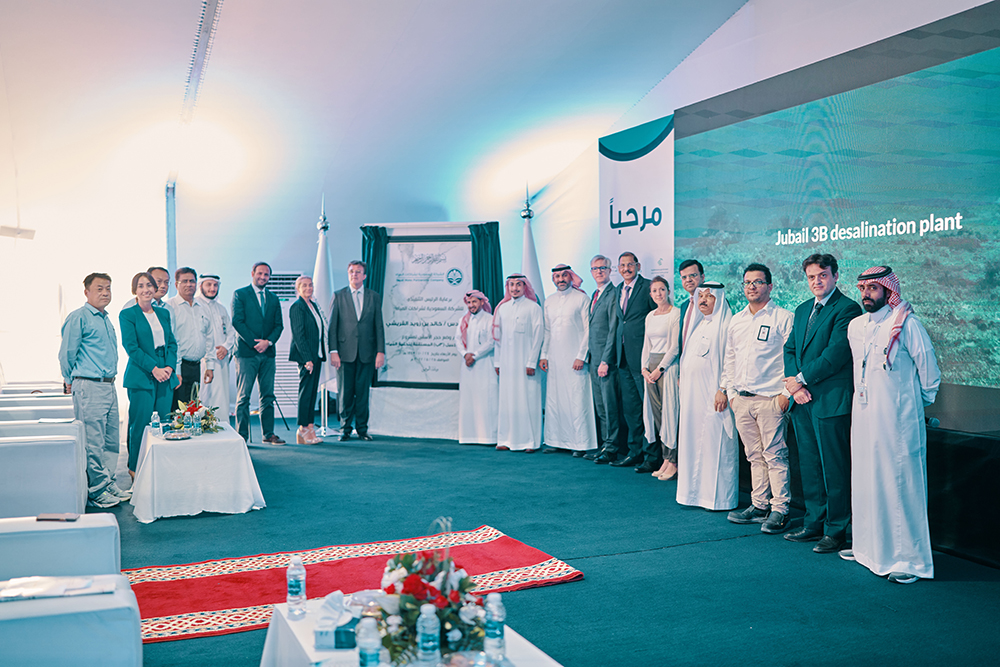
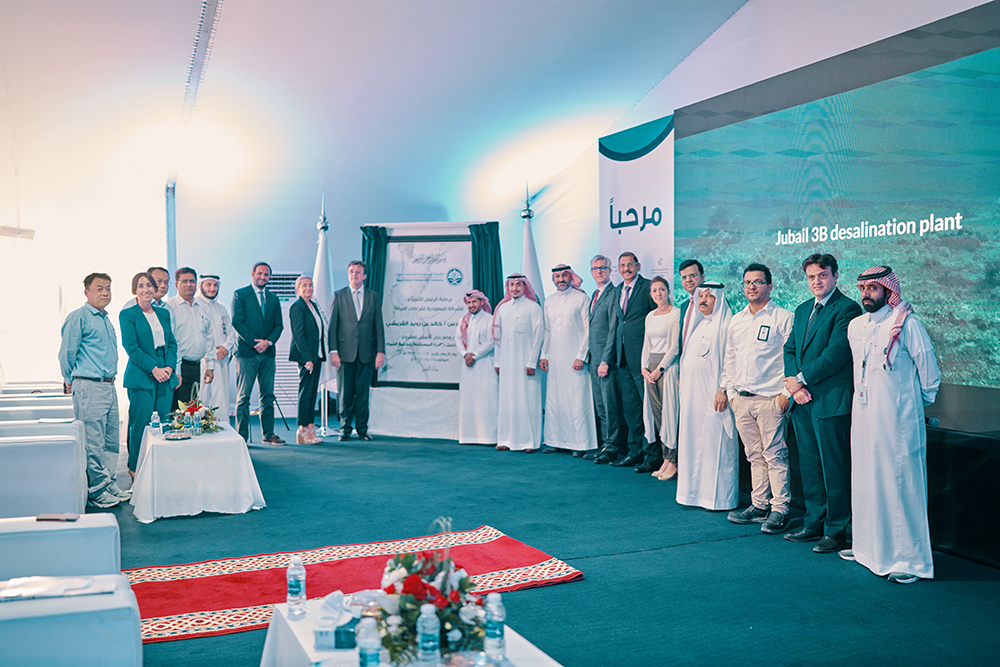
Engie along with its partners Nesma Company and Ajlan & Bros Holding have broken ground on the Jubail 3B Independent Water Project (IWP). Commissioned by the Saudi Water Partnership Company (SWPC), the Jubail 3B plant will produce 570,000cu/m per day of potable water using reverse osmosis technology.

Located 65km north of Dammam airport, the plant will supply water to the Riyadh and Qassim regions once commercially operational in 2024, under the terms of a 25-year Water Purchase Agreement.

The Engie-led consortium was awarded the Jubail 3B project in June last year after submitting a bid with a tariff of SR1.591 per cu/m of potable water to SWPC. Developed under a public-private partnership structure (PPP), the plant will be financed by the consortium and operated and maintained by Engie, a statement from Engie said.

Once complete, the plant will have a 61MWp capacity solar facility, which is said to be the largest in-house solar capability for a desalination plant in the Kingdom, and will optimise electricity consumption and reduce grid reliance.

Jubail 3B’s use of solar energy speaks directly to the Vision 2030 and net-zero objectives, which seek to reduce the country’s reliance on fossil fuels and drive the shift to clean energy, explained Khaled Z Al Qureshi, CEO of SWPC.

He explained, “As we look to increase the desalinated water supply across Saudi Arabia, we are delighted to see construction on the Jubail plant begin today. The provision of desalinated water is an essential strategy in our nation’s objective to ensure secure water supplies across the Kingdom while meeting the goals of Vision 2030. The Jubail 3B IWP plant will not only use reverse osmosis, a more energy-efficient process than traditional thermal desalination technologies but will also use renewable solar energy in place of traditional fossil fuels, helping to reduce its carbon footprint. Moreover, the plant will critically support the creation of local job opportunities.”

Engie CEO (Saudi Arabia) Turki Al Shehri said the launch of the construction work on the Jubail 3B plant is yet another milestone for the group that works to support of the government’s transition to low carbon, energy-efficient solutions in line with Vision 2030.

Al Shehri added, “For 30-years, we have been at the forefront of developing independent power and water projects across the Gulf. This latest innovative desalination solution is further proof of our commitment to supporting regional governments and businesses in delivering sustainable utility solutions against a backdrop of rapid economic growth.”

Jubail 3B CEO Philippe Lambert concluded, “With rapid demographic and economic growth taking place across the Kingdom, the Jubail 3B IWP plant will be essential to providing a secure and sustainable source of water to local populations. Jubail 3B Operation also aims to achieve 90% Saudisation, helping to support job opportunities for Saudi nationals and local economic growth. We are delighted to be breaking ground on the plant today and look forward to becoming fully operational by early 2024.”

In recent years, the Kindgom has invested heavily in energy and water infrastructure. In January of this year, Acciona handed over a 450,000cu/m water desalination plant to Saudi Water Partnership Company (SWPC), while, in March, over 60 water projects worth $9.33bn were announced. In March, Neom also launched an all new subsidiary to develop sustainable energy and water systens.

The post Engie-led consortium breaks ground on sustainable desalination plant in KSA appeared first on Middle East Construction News.


Source: ME Construction News


Oman_1000x600-1.jpg

May 30, 2022 foasummit0

23 land development (usufruct) agreements worth $95.8mn have been signed by several private sector companies and Oman’s Ministry of Housing and Urban Planning. The agreements are said to cover various sectors including business, sports, education, rehabilitation, agriculture, health and fuel filling station.

The land is spread over several governorates including Muscat, South Al Batinah, North Al Batinah, North A’Sharqiyah, A’Dhahirah, A’Dakhiliyah and Al Wusta, said a report by the Oman News Agency.

The agreements were signed with the companies by Dr Mohammed Ali Al Mutawa, Undersecretary of the Ministry of Housing and Urban Planning for Urban Planning. He noted that the agreements aim to stimulate the economy and boost investments. He also affirmed that the ministry is ready to help investors overcome challenges in those fields.

More lands will be offered for bidding in the coming period including several locations for integrated stations in the Wilayats of Barka, Haima, Saham and Liwa, concluded Al Mutawa.

In recent months, the country has embarked upon a number of upgrade and investment drives. In early April, Khazaen Economic City signed an agreement to build $9.06mn worth of industrial projects, following which over $207mn was invested into enhancing power distribution by Mazoon Electricity. On April 27, the country, also announced $3.8bn in investment opportunities.

The post Oman ministry inks $95.8mn in land development deals with private sector appeared first on Middle East Construction News.


Source: ME Construction News


Dubai-Al-Ain-Road_1000x600-1024x576-2.jpg

May 30, 2022 foasummit0

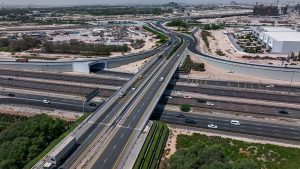
Authorities have announced the official completion of a $544mn revamp of the Dubai-Al Ain road. The scope of the Dubai-Al Ain Road Improvement Project spanned 17km, from the intersection of Emirates Road to the intersection of Ras Al Khor Road along the Dubai-Al Ain Road.

According to Dubai’s Roads and Transport Authority (RTA), construction works included widening the road from three to six lanes in each direction, and constructing six main interchanges along with bridges and ramps stretching 11.5km. Undertaken as part of Dubai’s master transport plan, the project affirms Dubai’s efforts to accelerate its economic development with major projects.

Speaking at the opening ceremony, Sheikh Hamdan bin Mohammed bin Rashid Al Maktoum, Crown Prince of Dubai and Chairman of Dubai Executive Council, said, “Dubai continues to advance the implementation of infrastructure development plans aimed at enhancing human welfare and catalysing sustainable economic growth.”

He noted the government has always placed the highest priority on constantly improving the city’s road infrastructure, since it plays an important role in raising the emirate’s competitiveness, in addition to creating an attractive business and investment environment and providing a high quality of life for the community. He also pointed out that by expediting the pace of its infrastructure development, Dubai has put itself at the forefront of global economic recovery, and created a strong foundation for sustained development in the next phase of the emirate’s growth.

Sheikh Hamdan was later briefed by Mattar Al Tayer, Director-General, Chairman of the Board of Executive Directors at RTA, on the project. The new road will help ease traffic flow and improve links with the Sheikh Mohammed bin Zayed Road, Sheikh Zayed bin Hamdan Al Nahyan Road, and Emirates Road, besides serving the current and future development projects on both sides of the Dubai-Al Ain Road, the RTA explained.

“The project will benefit a population of 1.5mn living or working in the neighbourhood on both sides of the road. It also serves 25 universities and colleges where a total of 27,500 students are enrolled. The improvements will double the intake of the road from 12,000 to 24,000 vehicles per hour in both directions,” said Al Tayer.

He concluded, “It will also slash the travel time on the Dubai-Al Ain Road from the intersection of Ras Al Khor Road to the intersection of the Emirates Road by 50% from 16 minutes to eight minutes during peak time. Furthermore, it will solve traffic snarls that used to extend about two km.”

Earlier this year, the RTA also announced its five-year sustainability plan and, earlier in the year, completed another major project with the opening of the $1.4bn Infinity Bridge.


The post RTA: $544mn revamp of Dubai-Al Ain road now complete appeared first on Middle East Construction News.


Source: ME Construction News


AS850_1000x600-1.png

May 30, 2022 foasummit0

Mecalac has added a trio of new loaders – the AS750, AS850 and AS1000 – to its existing range of specialist compact equipment. The new additions along with the AS900tele, AS1600 and AS210 provides capacities from 600 to 2,100 litres capable for urban jobsites.

According to the manufacturer, simultaneous driving, maneuvering and 180° swiveling are key to the productivity of the new models.

The AS 750 is a big sister of the Mecalac AS600 Swing loader, and offers a 1870 mm wheelbase for even more stability, an increased engine power to 45kW / 61 hp and more lifting and loading capacity.

The AS850 has all the benefits of Mecalac’s Swing machines, including its rigid chassis and 4-wheel steering, and is available in a 40 km/h version for faster travelling.

The Mecalac Swing loader AS1000 offers maximum performance with a 4-cylinder 55.4 kW / 75 hp engine with high torque (375 Nm) and the possibility of being equipped with a high-flow hydraulic line offering up to 120 l/min perfectly suited to drive hydraulic attachments.

The post Mecalac expands range with three new swing loaders appeared first on Middle East Construction News.


Source: ME Construction News


Caterpillar-906-compact-wheel-loader_1000x600-1.jpg

May 27, 2022 foasummit0

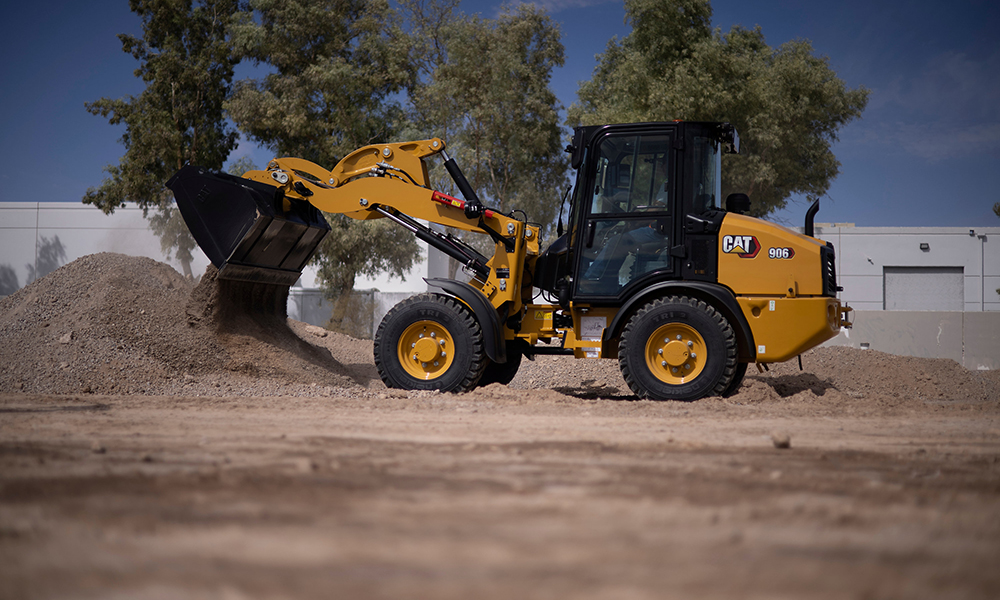
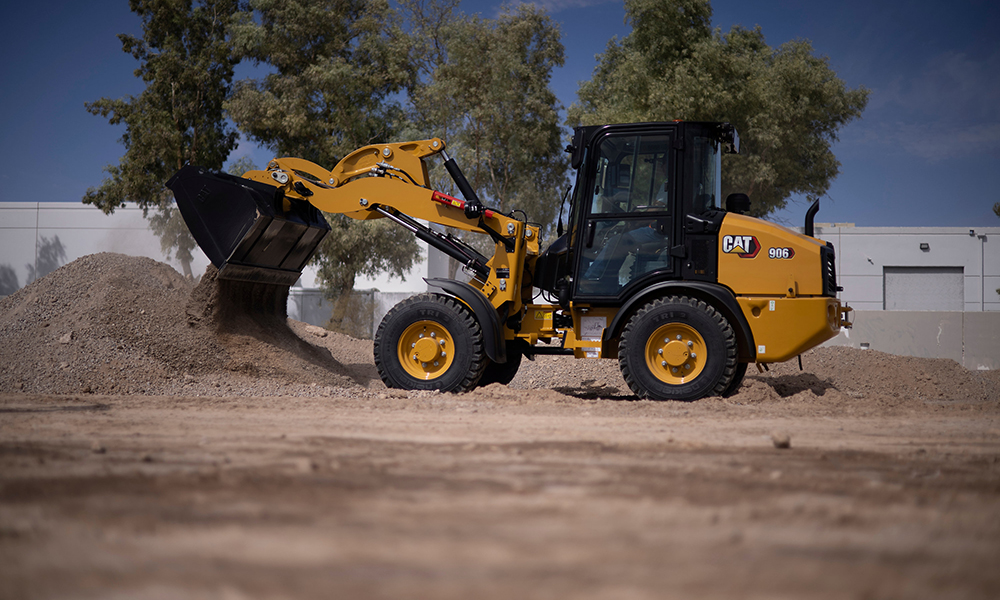
Caterpillar has launched three new compact wheeled loaders as part of its ‘Next Generation equipment’ line.

The Cat 906, 907 and 908 models feature the new Cat C2.8 engine, while the hydraulics and structures have gone through an overhaul to meet demand for increased multifunctionality while powering hydromechanical tools.

According to Caterpillar, “the upgraded drive and powertrain deliver faster roading speeds” and improved “tractive effort” compared to Cat’s previous M-series loaders.

The new Stage V-compliant C2.8 engine provides 55.7kW (74 hp) of power and delivers 13% more torque. As part of the new cab design the Next Generation control monitor offers a range of real-time machine operating information.

The three models, which can travel up to 25mph (40km/h) and feature a reengineered operator station, will be available globally.

There are also new features to regulate temperatures in dusty environments, the manufacturer adds. “When working in dusty environments, the new reversing-fan option assists in keeping cooling cores clean for more efficient temperature control. Through an in-cab soft-touch button, the system can be turned off, set to operate in an automatic mode or momentarily activated by the operator.”

In addition, an optional Cat 908 high-lift configuration is available for customers in agricultural, industrial and waste markets.

The post Caterpillar launches three new compact wheeled loaders appeared first on Middle East Construction News.


Source: ME Construction News


Ankita-Rao_1000x600-1.jpg

May 27, 2022 foasummit0

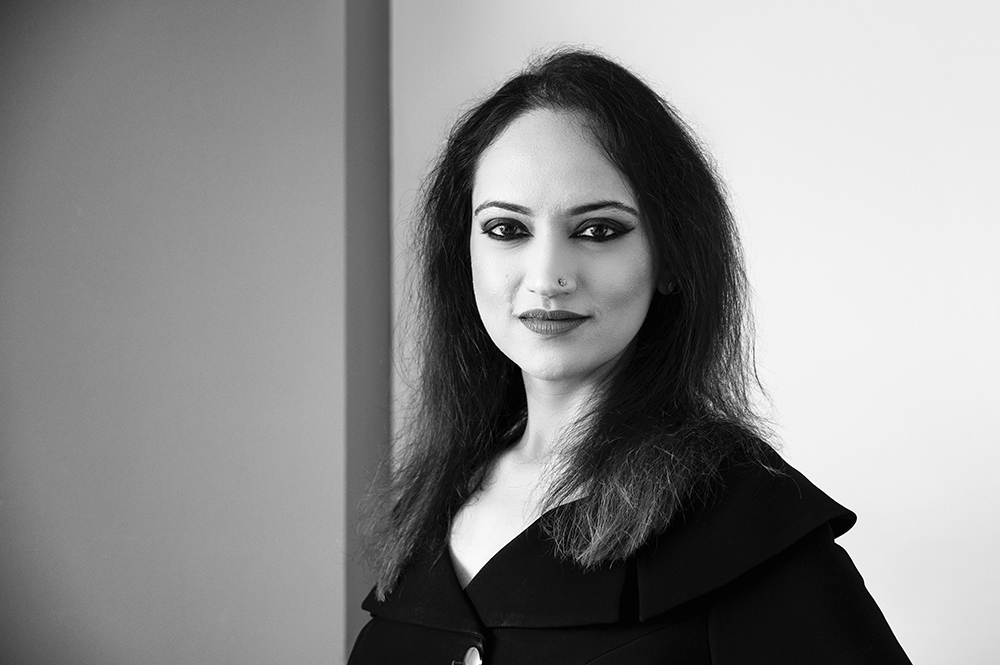
Construction, as an industry, has always been fascinating and volatile in equal proportions. It is exciting to witness the metamorphosis from scribbles on a drawing board to a full-fledged constructed project. The current turbulent times have magnified the volatility across all industries and brought it to the fore, but specific to our industry, we are no strangers to the ebbs and tides.

Specific to these current times, we have noticed the following challenges leading up to the completion of projects:

  • Meteoric rise in the demand for residential developments specially villas: This market curve is both a boon and a bane for us. Boon because we now have a higher influx of villa projects and bane because this seems to be the only sector where investors seem to have confidence in.In some cases, this has resulted in redirection of commercial project capital towards private residential investments thus resulting in delay until a new influx of capital comes in. If there was ever a time when homes were perceived as the safest haven in true sense of the word, it is probably now. With many businesses moving off-site towards home offices, there seems to a strong inclination and renewed unprecedented interest to invest in either upgrading current homes or building new ones.
  • Inability to detect light at the end of the tunnel: With regards to current times, at least for now, there seems to be no finite end to the situation, with new curveballs emerging every now and then. Financially, the inability to accurately formulate projections seems to translate into a higher degree of cognisance towards investments. This uncertainty seems to be directly proportional to the decision making viz-a-viz under construction projects and reluctance to start new projects. Again, directly impacting project completion and indirectly impacting the growth of the construction footprint.
  • Oversupply of real estate from pre-COVID-19 times: We are seeing an increased spotlighted interest in considering existing built real estate options and customising it towards internal requirements. For some investors where time equals money, this seems to be a viable opportunity wherein they have readily available options at possibly subsidised rates due to the oversupply and current times. It seems to be an acceptable trade off to compromise on not having a tailormade facility but having a ready unit with acceptable level of customization.
  • Increased costs of building materials, specially, steel: Steel, as a key construction material specially in this part of the world, recently saw a huge jump in price. This has caused some sort of a disproportionate balance in the project costings either from the investors’ side or contractors’ side or both. Moreover, prices have increased to such an extent that it is creating pressure on pre-existing contracts with steel rates locked in at earlier prices. In the pandemic world where most have been affected financially, this increase has been challenging to absorb.

In view of the above, there is a challenge completing projects in current times with almost everything boiling down to two commodities: money & time.

The post Trends and issues affecting regional construction projects appeared first on Middle East Construction News.


Source: ME Construction News


Mark-Farley_1000X600-1.jpg

May 27, 2022 foasummit0

The expectation of structures across geographies and sectors has evolved in recent years. This shift has been triggered by everything from the pandemic to a desire to make structures more productive or even lessening their impact on the environment. As a result, firms with a proven track record of offering management and technical consultancy services on complex projects have been busier than ever.

In the GCC specifically, this is perhaps doubly true as governments look to diversify their economy, attract foreign investment, and property owners/operators seek to roll out new buildings or upgrade existing structures so they are market relevant.

Discussing how his business unit has fared in the key GCC markets of the UAE and Saudi Arabia, Mark Farley, managing director – Property & Buildings at WSP in the Middle East notes, “We’re pleased to be seeing comparable growth within our core GCC markets. This is bolstered by positive economic forecasts for the region, recent budget allocation announcements declaring healthy stimulus for the construction sector, and determined optimism as key GCC nations such as the United Arab Emirates (UAE), the Kingdom of Saudi Arabia (KSA) and Qatar embark on bringing their respective national visions to fruition.”
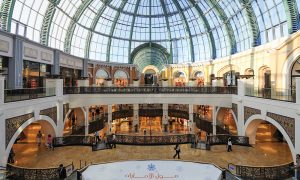
The consultancy is involved in helping flagship clients innovate and evolve existing assets for future retail experiences, such as Majid Al Futtaim’s Mall of the Emirates

Discussing key trends in the UAE, he states, “Market trends tend to be more in line with making better use of existing building stock. As a result, we’re seeing a lot of opportunity around repurposing and refurbishment of existing assets. We’re confident there will still be major projects coming online throughout the UAE, but for the time being a large proportion of older building stock – such as malls and hotels – are approaching the 15-20-year-old mark. WSP’s Building Services team, headed up by Naji Zerbe, is proud to be involved in the preservation and regeneration of flagship structures, such as Majid Al Futtaim’s Mall of the Emirates, where our multi-disciplinary teams are helping MAF re-shape existing assets to be fit for purpose retail within the evolving future retail experience.”

Shifting to the KSA market, he says, “In comparison to KSA, the UAE’s construction sector in my view is a lot more mature. In saying that, I certainly believe that the sector in KSA will ramp up significantly in the next three to five years as a lot of giga-projects projects and development portfolios take shape. We’ll be seeing a lot of these major pipeline projects hit the market and actually be completed at a much faster pace than what we have witnessed in the UAE over the last couple of decades. The sheer scale and trajectory of greenfield development is exciting to be part of, but it’s worth adding that KSA does have a significant amount of pre-existing building stock in Riyadh and Jeddah, which could be earmarked regeneration in the future.”

Pressed about some of the major differences he sees between the two markets, Farley says that the UAE already has strong infrastructure facilities and systems in place to support its population base. “It’s evident that people-centric placemaking will remain a key tenet with the likes of Dubai Urban Master Plan 2040 and Abu Dhabi Economic Vision 2030 setting the tone for long-term transformation. It’s exciting times for KSA in this area too, especially as the nation looks to empower its homegrown population base. Compared to the UAE, there’s more work to do on the provision of infrastructure in the healthcare and education spaces. Despite this, current signals are extremely positive and the sky’s the limit as different sectors are brought in to the mix to transform each area of society akin to the pillars of Saudi Vision 2030.”

He adds, “I think the quality of the construction industry’s contractors is another difference in the Kingdom when compared to the UAE. Successful stakeholder collaboration and project execution is something that we as an industry need to focus on – certainly health and safety standards.”

“The sustainability ambitions in KSA are promising, particularly within the giga projects. There’s a real built-in need to embrace climate at the core and design and implement developments that factor in things like bio-diversity, evolving climate, and circular outcomes. WSP is proud to be working on iconic packages within The Red Sea Project – Desert Rock mountain resort being a major one of these – where our teams are working to preserve and fully utilise the area’s unique environment and biodiversity.”

Discussing the UAE and Saudi markets in terms of how they might evolve in the next three to five years, Farley says both markets are known for not sitting still, as the respective authorities are intent on empowering their economies to remain globally competitive to drive future growth.

“The foundations for this growth are in place, and it’s going to be exciting to witness many key projects in KSA get across the line and start welcoming guests in the coming years. Most importantly, I’m looking forward to seeing the positive change within these countries as they reach their ambitions.”

Remaining Competitive

As structures age, new requirements or even issues may cause the structure to fall out of favor in the market. This then puts the onus on the owner/operator to either refurbish or demolish it and start from scratch. From a sustainability standpoint, refurbishments make the most sense however this isn’t always possible particularly if the cost and time for refurbishment is substantial.

Asked about his views on refurbishments Farley explains, “In a market such as the United Kingdom, if you build a development and you change its use; you don’t demolish it unless it’s not fit for purpose or if for example you are replacing a 20-storey building with an 82-storey tower. Whilst the Middle East is an entirely different market altogether, the point is that you should in principle be looking to reuse and refurbish what you have first and foremost. That’s not to say that you should never be building new builds because that’s not the answer either. My view is it’s a balancing act, and we should always be looking to reuse and refurbish buildings wherever possible. In other words, you don’t knock them down – you make them better, you extend them, you change their use and create a new experience.”

WSP is delivering multi-discipline engineering services for The Red Sea Development Company’s Desert Rock mountain resort

Discussing whether complete lifecycle costs are being more seriously considered within the regional markets or whether it is still on an limited basis, Farley points out, “In general, I think there’s a lack of looking at overall lifecycle costs and making a decision based on payback and benefits other than just simply the capital expenditure of the initial development. I think there needs to be a lot more focus on this.”

He adds, “Every client organisation and project will have different requirements and probably be operated slightly different, so I don’t think it’s a theme specific to any particular client. I think as a region the Middle East needs to place a lot more emphasis on lifecycle costing rather than just looking at what you’re spending for the initial build and then selling an asset onward.”

Asked about what technology has the potential to impact the built environment in this respect, Farley believes Digital Twins are the key. “The digital twin process has enormous potential to transform the asset lifecycle by enhancing communication, efficiency and the integrity of construction data. Standardising and automating parts of our processes will mean we have more time to spend on other complex elements of project delivery.”

He continues, “Another key trend that will continue to emerge is modular construction and design for manufacturing. We’re seeing good examples in the region, and I think that’s a massive part of the industry going forward. A major benefit of modular is the sustainability breakthroughs, as well as the affordances it allows in terms of quality, time and control. There’s also an HSE advantage to it by having less people on site, things being erected offsite, and availing so many different benefits to building within a controlled environment.”

“I also think the need for more innovation is one of the things that our industry has to be cognisant of. At WSP we want to try to look at different ways to do things, different solutions, and spend some real time on that. To remain a key player in the evolution of digital within our industry, we have to leverage innovation and break new ground to stay relevant to the emerging needs of our clients. The ultimate goal of this is design innovation and ingraining a ‘what’s next?’ approach to everything that we do.”

Key Takeaways

The UAE’s key markets of Dubai and Abu Dhabi kicked off their construction and property booms ahead of major markets in Saudi Arabia and other GCC countries. They’ve blazed a trail for others to follow and even learn from.

Asked about what learnings can be taken away from the key UAE markets, Farley remarks, “I think leveraging the best HSE practices and creating high performing teams should be front and centre, as well as delivering projects on time to avoid programme delays and ensuring all stakeholders are working towards the same end goal. Creating and influencing the right behaviors but also providing empowering cultures that ensure the safety of people and the ability for project stakeholders to deliver efficient programmes and great projects is essential. A key focus for Property & Buildings will involve our head of Integrated Design Delivery, Russell Hughes and head of Integrated Construction Delivery, Graham White driving progression in these areas.”

With regards to how buildings can be made more sustainable and efficient, Farley believes starting off on the right foot is absolutely essential. He states, “I think setting the highest standards in terms of what’s actually being developed and built is a crucial starting point and embedding a long-term vision for a project without being too driven by cost in the short term. Instead, it should be driven by value – if we value the environment, climate change and sustainability, then it’s about incorporating this as a high value item within as many aspects of a development as possible and making sure that it’s clear within the standards set and adhered to within a project.”

“There’s so much work we can do in this space, but from WSP’s viewpoint this is something that we are committed to influencing via our Future Ready mindset. We’re committed to setting the standards and raising the bar in the areas of climate, energy, and decarbonisation of the built environment. This ambition is set to grow in 2022. As we establish a new Future Ready lead to continue to drive the agenda with our clients, we need to continue the ‘What’s Next?’ mindset that is embedded in WSP.”

Sharing his thoughts on what the industry should come together around to address in the near future, Farley says, “Addressing the climate challenge and combatting carbon in the built environment is a subject we should be taking seriously and setting the highest standards in as many ways as possible. It’s clear we need to massively improve future building stock by reconsidering how to minimise carbon of buildings both in the way they are built and the way they are used and operated.”

He concludes, “At WSP Middle East, our multi-disciplinary teams are working to combine front-end strategic advisory with high-quality technical delivery in order set the standard for industry innovation in this area, which in turn will help achieve client ambitions and limit the impact of climate change whilst addressing environmental concerns.”

The post WSP’s Mark Farley on raising the bar in the property and buildings space appeared first on Middle East Construction News.


Source: ME Construction News


Saudi-Arabia_1000x600-2.jpg

May 27, 2022 foasummit0

Dur Hospitality has announced expansion plans that aims to keep up with the growing tourism sector and increasing demand for hotel services in Saudi Arabia.

Hassan Al Ahdab, President of Hotels Operations said the group is increasing its investments in the sector through local development projects, which will help accelerate economic growth, achieve the goals of Saudi Vision 2030, as well as solidify the Kingdom’s position as a leading hub for business and entertainment.

The group’s plan includes 15 new hotel and real estate development projects, he pointed out. Earlier in May, the group awarded a $48.5mn contract for the development of the Rixos Jeddah Resort.

CEO Sultan bin Badr Al Otaibi said Dur remains fully committed to advancing the tourism and hospitality industry, especially at a time when Saudi Arabia is undergoing large-scale transformation and witnessing significant developments that yield immense benefits for all stakeholders in this sector.

Its portfolio currently includes over 32 hotel and residential properties, commercial plazas and entertainment centers in various regions across the kingdom, he concluded.

The post Dur Hospitality announces plans to launch new hotels and real estate developments appeared first on Middle East Construction News.


Source: ME Construction News