HRE-Sakura-1.jpg

November 25, 2025 foasummit0

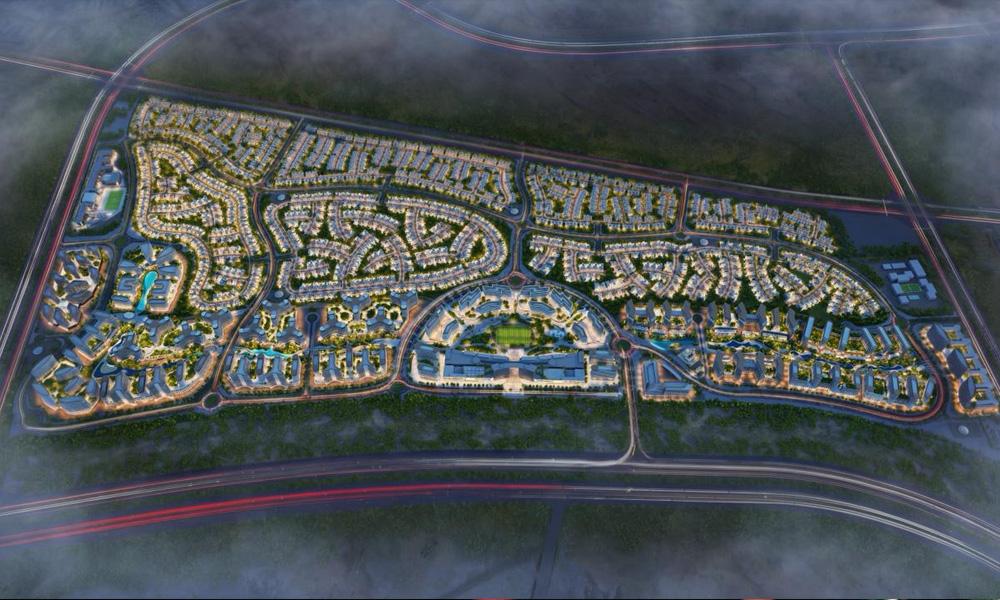
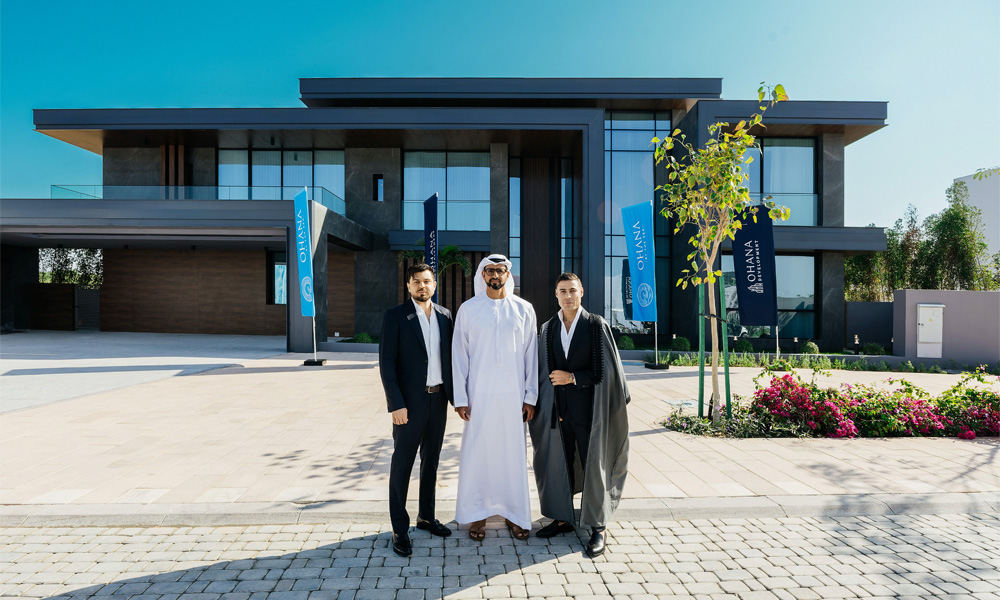
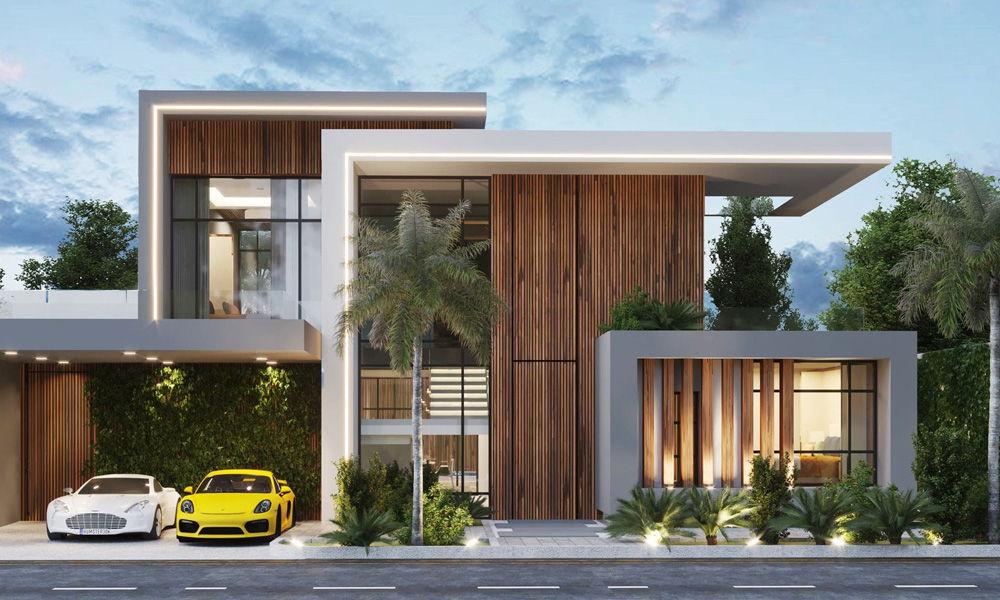
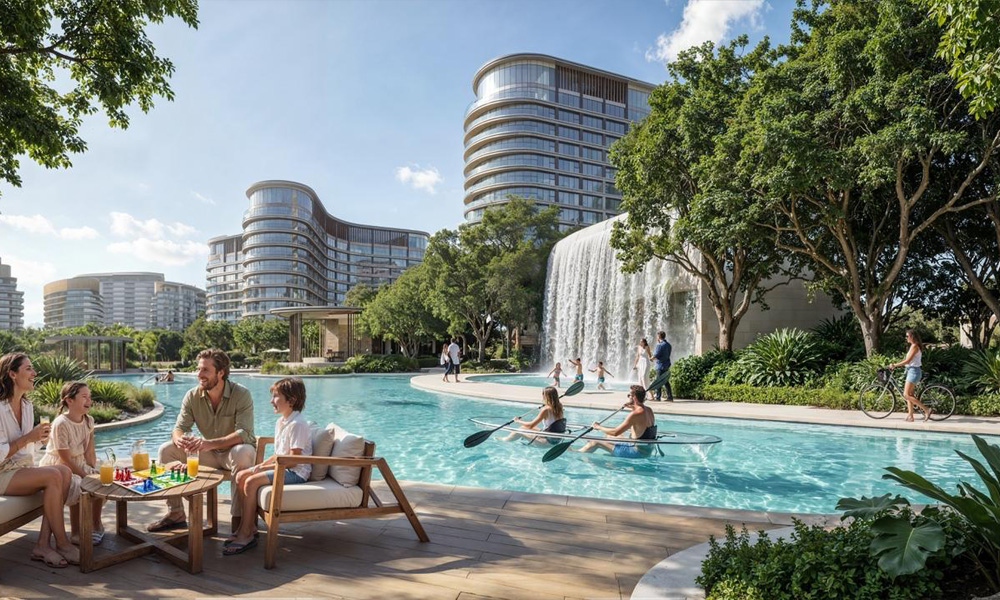
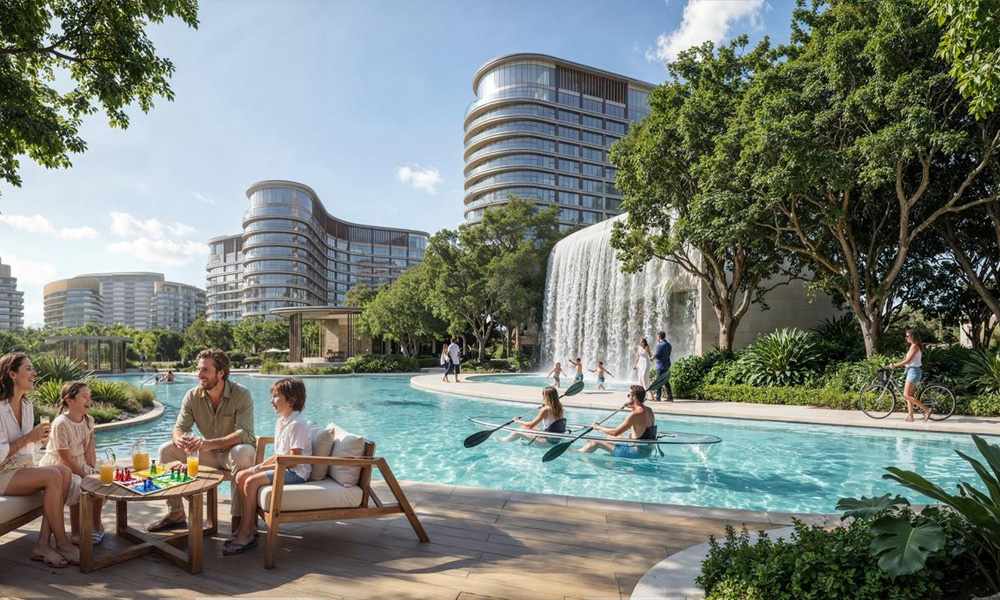
HRE Development has unveiled Sakura Gardens, which is billed as a resort-style community nestled in Dubai’s Falcon City of Wonders. Inspired by the beauty of Sakura, or cherry blossom, Sakura Gardens embodies harmony, connection, and balance. Designed as a living sanctuary, it features lush gardens, courtyards, and community spaces, the developer said.

Sakura Gardens is guided by six pillars, Wellness Sanctuary, Fitness & Active Living, Social & Creative Spaces, Resort & Leisure Experiences, Nature & Outdoor Escapes, and Smart & Sustainable Comfort. These pillars collectively redefine modern living in Dubai, it added.

“Sakura Gardens rewards balance while providing an investment opportunity in Dubai’s new lifestyle belt,” said Wissam Breidy, CEO of HRE Development. “Here, peace does not mean isolation; it means being close to the city while nurturing a connection to oneself.”

The low-rise, nature-centric community will cater to the growing demand for alternative living options. As families and professionals increasingly seek spacious and green environments, the demand for such communities continues to rise, the firm explained.

“At the heart of every great place are the people who bring it to life,” said Dr. Hassan Hijazi, VP of HRE Development. “Sakura Gardens is a reflection of thoughtful planning and genuine connection, designed to create a community that truly feels like home.”

Sakura Gardens, spanning 49,000sqm of land, boasts 127,500sqm of living space blending contemporary architecture with a lush, car-free central park, creating an environment that prioritises well-being, community, and aesthetics.

The project caters to a diverse range of lifestyles and family needs with a variety of property types, including studio, one-, two-, and three-bedroom apartments, as well as townhomes. The community will offer a lifestyle characterised by a relaxed pace.

The post HRE Development unveils Sakura Gardens appeared first on Middle East Construction News.


Source: ME Construction News


Stark-Warning-1.jpg

November 25, 2025 foasummit0

At the European Cement Decarbonisation Summit 2025 in Frankfurt, the World Cement Association (WCA) unveiled its vision for sustainable industry transformation. They also warned that cement prices could triple or quadruple under current European policies.

Speaking at the two-day conference, Emir Adiguzel, WCA Director, highlighted the key challenges facing the industry, such as rising energy costs, growing global overcapacity, and the effects of carbon pricing, while reaffirming the association’s commitment to representing independent cement producers worldwide.

“Cement prices will triple if not quadruple with these policies in Europe,” Adiguzel warned, highlighting the significant cost burden that decarbonisation measures will place on the construction sector and end consumers. The WCA noted that most carbon-related costs will be passed to consumers, with carbon pricing becoming a “selling imperative” for price increases across the industry.

The WCA’s latest analysis was presented, indicating that the cement sector will require US $200bn in investment by 2050 to fully decarbonise. Between 2019 and 2023, leading global firms reduced carbon intensity from an average of 700kg CO2/t to 640kg CO2/t, demonstrating that progress is achievable with the right support mechanisms.

While acknowledging that carbon capture projects “must continue if applied correctly”, he emphasised that these technologies will have a limited effect on global industry decarbonisation. Adiguzel’s presentation highlighted that current carbon capture technology requires investment exceeding the capital cost of an entire cement plant, with significant development still needed for scalability.

The WCA highlighted four key levers for decarbonisation that remain largely underutilised by the sector, including:

  • Energy efficiency: Waste heat recovery, advanced process control, and AI optimisation
  • Alternative fuels: Increased use of biogenic fuels and higher thermal substitution rates
  • Reduced clinker factor: Adoption of LC3, natural pozzolans, and supplementary cementitious materials (SCMs)
  • New technologies: Carbon capture and storage, electrification, and heat storage solutions

Adiguzel also raised concerns about the effectiveness of the EU’s Carbon Border Adjustment Mechanism (CBAM) in incentivising non-scheme exporters to reduce their carbon footprint, particularly given the expensive investments required. Adiguzel emphasised that the cement industry must engage actively with governments to promote policies that incentivise a healthy transition to a low-carbon, low-clinker future.

“Cement is an irreplaceable material, vital for the infrastructure that underpins a green economy. This journey will require more than just plans, it demands collaborative action across the entire value chain,” Adiguzel concluded.

The post WCA warns European policies could triple cement prices appeared first on Middle East Construction News.


Source: ME Construction News

IL-VENTO-1.jpg

November 25, 2025 foasummit0

KORA Properties, the real estate development arm of APPCORP Holding, has unveiled IL VENTO, which aims to redefine luxury apartment living in Dubai Maritime City. This new waterfront community is poised to become a hub of cruise and leisure tourism in Dubai, said a statement from the firm.

IL VENTO, meaning The Wind in Italian, is said to embody the fluid grace and free spirit of waterfront living. The tower will exude elegance and sophistication, offering residents a waterfront lifestyle just minutes away from Dubai’s landmarks.

Homes at IL VENTO offer over 40 facilities and amenities, making it a lifestyle destination. Residents can enjoy a sky pool, indoor and outdoor swimming pools, a family entertainment and events hall, a kids’ play area, a gym, a yoga area, and more, the developer said.

IL VENTO, will feature 40 storey and 330 apartments. These include 182 one-bedroom apartments, 93 two-bedroom apartments, 51 three-bedroom apartments, and four penthouses. Each penthouse features three-bedrooms and additional amenities, such as a private swimming pool.

The central location and amenities of IL VENTO are expected to enhance its return on investment. Investors can anticipate an investment opportunity, with a projected price appreciation of six to 10 percent within the next decade, making IL VENTO a key asset in Dubai Maritime City, the statement explained.

Nilesh Ved, Chairman of APPCORP Holding, Owner of Apparel Group and Chairman of KORA Properties said, “At KORA Properties, our vision is simple to create spaces that inspire living. IL VENTO brings together artistry, architecture, and aspiration to redefine what timeless living feels like. Inspired by the spirit of the wind and the calm of the sea, it captures the essence of Dubai dynamic, elegant, and full of life.”

He added, “With KORA, we’re extending APPCORP’s legacy of innovation and trust into the world of real estate. We’re not just building developments; we’re creating destinations that enrich lives, nurture communities, and shape the future of how people live, connect, and belong in this remarkable city.”

IL VENTO will offer a blend of design, comfort, and exclusivity. Each residence boasts panoramic views of the sea and Dubai skyline, floor-to-ceiling glass façades and open layouts that flood the interior with natural light.

The project is said to embody the company’s vision to redefine modern living, harmonising luxury, sustainability, and craftsmanship.

The post KORA Properties unveils IL VENTO Tower in Dubai Maritime City appeared first on Middle East Construction News.


Source: ME Construction News


NMDC-2.jpg

November 24, 2025 foasummit0

NMDC Energy has entered into a strategic Memorandum of Understanding (MoU) with Baker Hughes, a global energy technology company based in the United States. This collaborative effort aims to explore opportunities that would enhance the localisation of Baker Hughes’ key products and solutions in Saudi Arabia.

By serving energy markets across the Middle East, North Africa, Turkey, and India (MENATI), the collaboration seeks to capitalise on the growing demand for energy services in the region, said a statement.

NMDC Energy will leverage its facilities, particularly its yards capabilities in Saudi Arabia, to focus on offshore products and associated services. This collaboration will enable the company to serve the dynamic offshore market effectively.

Notably, they will undertake an Emergency Pipeline Repair System (EPRS) project and establish a logistics base that provides solutions for offshore flexible pipeline systems. These solutions will cater to the KSA and the wider MENATI markets. It is important to note that this collaboration is separate from an MoU that NMDC Energy previously signed with Baker Hughes, which pertains to gas technology products.

NMDC Energy has actively engaged in collaborations with various international, regional, and UAE players during the recent ADIPEC conference in Abu Dhabi. These collaborations are part of NMDC Energy’s strategic efforts to expand its EPC services and meet the demands of the energy sector in the region.

Eng. Ahmed Al Dhaheri, Chief Executive Officer of NMDC Energy said, “NMDC Energy’s fabrication capabilities have drawn global players, particularly leading entities such as Baker Hughes, who share our vision of finding synergies that meet the evolving energy sector demands in the Kingdom and the wider MENATI region. As a strategic enabler of Saudi Arabia’s energy sector through global partnerships, NMDC Energy is committed to finding new pathways towards increased localization in the Kingdom, supporting economic growth, job creation, and diversification.”

NMDC Energy recently inaugurated its fabrication facilities in Ras Al Khair, Saudi Arabia, within the Ras Al-Khair Special Economic Zone. This 400,000sqm fabrication yard is designed to cater to both offshore and onshore projects, with an annual production capacity of 40,000t. Equipped with automation and digital systems, the facility offers comprehensive services, including full-spectrum fabrication, rigging, maintenance, and modularisation, for complex energy infrastructure.

The post NMDC Energy and Baker Hughes partner to localise offshore solutions in Saudi Arabia appeared first on Middle East Construction News.


Source: ME Construction News

Atkins-1.jpg

November 24, 2025 foasummit0

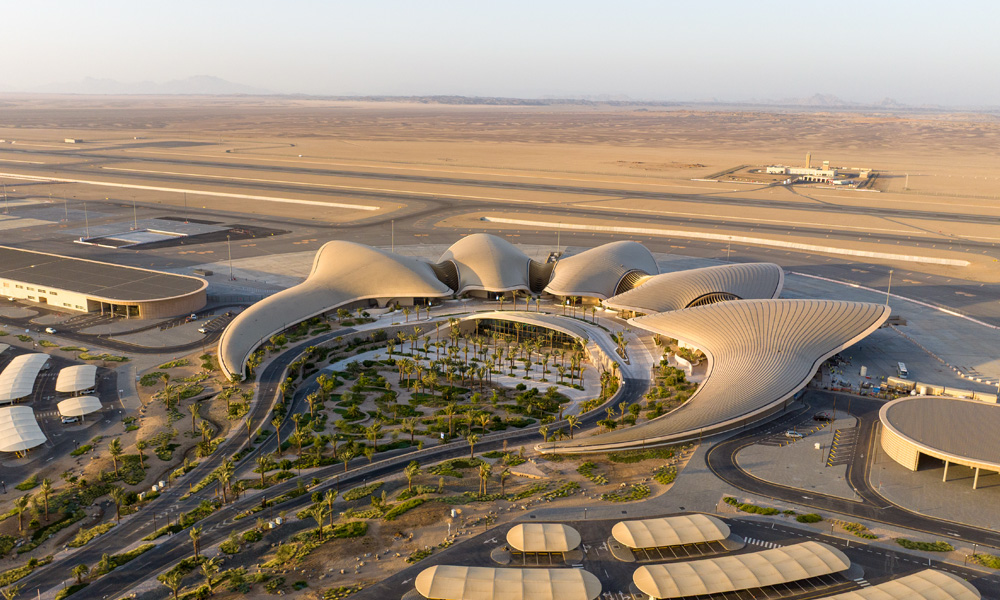
AtkinsRéalis has been appointed as the cost consultant for Phase II of The Avenues – Riyadh, a mixed-use development in the Kingdom of Saudi Arabia. This appointment, made by Shomoul Holding Company, signifies a pivotal moment in the evolution of Riyadh’s urban landscape and underscores AtkinsRéalis’ commitment to delivering transformative infrastructure in line with Saudi Arabia’s Vision 2030, said a statement.

Phase II of The Avenues Riyadh builds upon the success of its predecessor and introduces five towers that will house premium hospitality, commercial, and residential amenities. Strategically located along King Salman Road, this development aims to become a landmark destination for both residents and visitors. AtkinsRéalis will provide comprehensive cost consultancy services throughout both phases of the project.

“The Avenues – Riyadh represents a bold step forward in redefining urban experiences in the Kingdom. Our involvement reflects a shared commitment to excellence, innovation, and collaboration. We look forward to working closely with all stakeholders to deliver a destination that inspires and endures,” said Paul Doherty, Regional Country Director, AtkinsRéalis.

AtkinsRéalis envisions a collaborative approach with all partners and stakeholders to ensure the delivery of this large scale development. The project encompasses a three storey mall with nearly 370,000sqm of leasable space and ample parking for over 14,000 vehicles, making it one of the largest retail destinations in the region.

The firm’s scope of work includes cost planning, procurement advisory, and value engineering to support the client’s vision of delivering a commercially viable development. The company’s deep regional expertise and global delivery model position it uniquely to manage the complexities and ambitions of this project.

The post AtkinsRéalis appointed as cost consultant for Phase II of The Avenues – Riyadh appeared first on Middle East Construction News.


Source: ME Construction News

Object-1-Dubai-Land-1.jpg

November 24, 2025 foasummit0

Object 1 has said that it is expanding its portfolio within the Dubai Land Residence Complex (DLRC). This expansion aligns with Dubai’s ongoing infrastructure development, particularly the upcoming Dubai Metro Blue Line, which is expected to transform connectivity and enhance property values across the city’s key residential corridors.

Dubai Land Residence Complex, considered one of Dubai’s hidden gems, has evolved into one of the city’s key real estate destinations. Located at the intersection of Emirates Road (E611) and Dubai Al Ain Road (E66), the area offers residents access to business hubs, schools, and attractions. It also retains a serene, open landscape. The planned Blue Line will connect DLRC to Dubai’s transport network, linking it directly to Dubai International Airport and Business Bay. This further strengthens the area’s appeal for end-users and investors, said the statement from Object 1.

DLRC has recorded some of the city’s strongest property performance indicators. Apartment sales volumes remain high, and rental yields have reached up to eight percent in select projects, which has positioned the area as a destination for investors seeking long-term returns and for residents drawn to modern living within a well-connected, district, it added.

Tatiana Tonu, CEO at Object 1 said, “Dubai Land Residence Complex has transitioned from a quiet suburban community into one of Dubai’s most dynamic residential corridors. With the upcoming Dubai Metro Blue Line redefining mobility across the city, the district’s potential for sustainable growth has never been stronger. Our investment in this area reflects Object 1’s long-term belief in creating buildings that combine design excellence, accessibility, and well-being. Our development VERDAN1A embodies that vision, a community that nurtures connection, sustainability, and quality of life while offering lasting value for homeowners and investors.”

VERDAN1A 1 & 2, a multi-phase residential development inspired by the word verde green, is part of Object 1’s DLRC expansion. Designed around sustainable urban living principles, VERDAN1A blends modern aesthetics with practical functionality, promoting wellness and fostering community interaction. The project encompasses 316 units across two phases and boasts resort style amenities such as swimming pools, a gym, yoga and meditation zones, a cinema, children’s play areas, and outdoor lounges. The firm said that every detail is crafted to enhance the overall well being of residents in their daily lives.

VERDAN1A adheres to the Dubai Green Building Regulations and Specifications, aligning with the UAE Net Zero by 2050 strategic initiative. These regulations prioritise insulation efficiency and energy-saving measures, ensuring the project’s environmental responsibility. Moreover, VERDAN1A aligns with the Dubai 2040 Urban Master Plan’s vision of developing inclusive, human-centric, and climate-resilient communities.

Object 1 said it remains committed to delivering communities across various locations, including Jumeirah Village Circle (JVC), Jumeirah Village Triangle (JVT), Al Furjan, Sports City, and Dubai Land Residence Complex.

Object 1’s portfolio now boasts over 20 design led projects focused on wellness, sustainability, and family centric living. Each project is crafted to provide long-term value and contribute to Dubai’s evolving urban landscape. Beyond Dubai, Object 1 is expanding its presence in Abu Dhabi, reflecting its vision of creating connected spaces across the UAE that cater to the needs of a new generation of residents and investors.

The post Object 1 announces expansion of its development portfolio within DLRC appeared first on Middle East Construction News.


Source: ME Construction News

The-Caden-Prescott-1.jpg

November 21, 2025 foasummit0

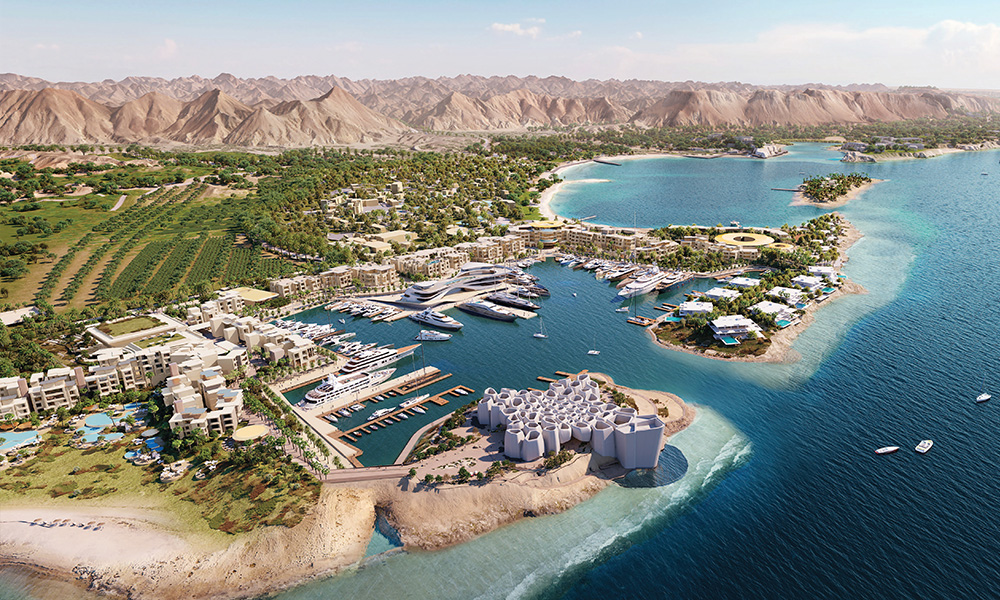
Developer Prescott has unveiled its latest residential project, The Caden, at its newly renovated experience centre in Dubai Hills.

This landmark development, valued at US $177.1mn, offers designed residences without studios, reflecting the brand’s commitment to low density and high comfort living.

This launch marks a significant milestone for Prescott, combining its signature quality and functionality with elevated design, smart technology, and resident-driven amenities. Strategically situated in Meydan Horizon, one of Dubai’s last remaining lagoon-front master-planned communities near Downtown, The Caden boasts a prime location, directly overlooking the development’s defining feature, a man-made crystal lagoon, said a statement.

Prescott’s Executive Director, Shaheer Tabani said, “This project has been nothing short of a passion project for me. Over the past six months, our team has poured heart and precision into every single detail ensuring that every square foot of this project surpasses anything seen before and delivers an experience beyond what any customer could imagine upon completion. We pride ourselves in creating homes that are a reflection not just of our vision, but more importantly the people who will be living there. Every amenity and layout in The Caden was shaped by direct feedback from our loyal clientele.”

The unveiling took place at Prescott’s newly upgraded experience centre, a multi-functional space featuring a fully furnished show apartment, podcast studio, theatre, refreshment lounge, and meeting rooms. This venue reflects the developer’s ambition to raise the bar in Dubai’s competitive real estate landscape.

The post Prescott introduces US $177.1mn residential project – The Caden appeared first on Middle East Construction News.


Source: ME Construction News

DBX-07498-1030x687-web-1.jpg

November 20, 2025 foasummit0

As the Middle East moves through one of the most transformational periods in its built-environment history, few voices carry the weight and perspective of Duncan Waddell. A frequent visitor to the region since the late 1990s, and one of Australia’s most respected authorities on facilities, asset and property management, Waddell has spent four decades shaping global best practice. Today, as Chairman of ISO/TC 267 Facilities Management and Managing Director of FM Intelligence, he is uniquely positioned to assess how the GCC’s FM and asset management sectors are changing; more importantly, he is clear about what still needs to change.

At the recent MEFMA conference in Dubai, Waddell reflected on the evolution of the market, the growing professionalism of the sector, and the need for long-term thinking as the region enters an era defined by mega-projects, rising expectations and rapid technological disruption. His reflections are grounded not only in global experience but also in the nearly three decades he has spent observing the Gulf’s development first-hand.

He describes himself as someone who is still energised by helping people understand what FM really is and why it matters. “I enjoy helping people understand more about what I’m passionate about,” he says, noting that “I’ve been doing it for 39 years as of this year, so 40 years next year.” That longevity fuels his desire to continue influencing the next generation of FM professionals. “If people get a little infected by that, well, I don’t mind.”

His memories of arriving in Dubai in the late 1990s paint a picture of a market that was still in its infancy. “When I came here, the marina didn’t exist. It was being dug out,” he recalls. “The only thing that was down here at the time was the three buildings up the top end… and the Hard Rock Cafe.” The FM sector was fragmented, with training delivered through private institutions rather than industry bodies. He began running courses through IIR, which at the time represented one of the few structured FM learning channels available. “I started doing it on a frequent basis,” he says, and before long he found himself helping to grow FM capability across the region.

The founding and subsequent importance of MEFMA, he believes, was a turning point. “It’s incredible to me to see how that association has changed over that time,” he says. “It tells me the market has changed a hell of a lot.” But MEFMA’s most important achievement, he argues, has been its ability to unify a region that often prefers to work independently. “It’s great to see the way MEFMA has been embraced,” he says. “Quite often there can be: we’re not going to deal with them from Dubai; we do it the Saudi way; we’re from Bahrain or Kuwait. But these guys have broken down those barriers.”

Much of his attention today is focused on Saudi Arabia, where the scale and ambition of development is unprecedented. Waddell recognises the optimism behind the Kingdom’s rapid expansion, but he also offers a measured reality check. “They want to be a gem in a crown country,” he says. “If they want it to last, they’re going to have to do it right.” That means raising expectations around construction quality, skills and planning. “They’ve got unskilled labour doing pretty skilled stuff,” he warns. “If they want it to last, they’re going to have to demand the performance… employ skilled labour, or make sure they’re employing the best consultants in the world.”

Above all, he stresses that every project must have purpose. “There has to be a purpose behind the investment,” he says, “and the purpose has got to be that the life cycle of the building is supported by its use. It’s got to have a use… 40, 60 years.” Without this thinking, even the most iconic projects risk becoming stranded assets.

Waddell is equally clear about the future of FM itself. One of the most significant global shifts, he says, is the blurring of boundaries between facilities management and asset management. “It’s becoming more cloudy,” he says. “Facilities management has always been place and process, but with people. Asset management tended to be more about the built form.” That distinction, he explains, has faded as organisations begin to understand the value of lifecycle thinking and user experience. “You can see by the development of the ISO 55,000 series [ISO 55000 sets standards for requirements and specifications for an integrated, effective system for managing assets] that there is now much greater consideration of the people engagement with the assets.”

He also points out a truth that many developers overlook. “Eighty percent of a building’s life cycle is in the maintenance and operations,” he says. “Once the party’s over at the opening day, the facility manager is then responsible.” Asset managers, meanwhile, take on the responsibility of driving value out of the property. Both functions depend heavily on the quality of design and construction; poor decisions at the development stage create decades of operational challenges.

This is where he sees lingering issues in the region. “Otherwise you end up in a society which is very much a veneer,” he says. “Many of the buildings here have been built with unskilled labour… you’re going to get what you pay for.” The UAE’s growth has been remarkable, but it has also brought inconsistencies in build quality. Some buildings constructed just 10 or 20 years ago are already struggling with maintenance issues because the standards of the time were not aligned with international expectations.

Yet Waddell has also witnessed the market maturing. “There’s now a realisation: we’re not going to get away with that for much longer,” he says. As Dubai’s demographic has shifted and more people settle long-term, expectations have risen sharply. Families demand higher standards; residents compare apartments with those in their home countries; and operators must now maintain buildings to levels befitting a global city.

Training remains a critical component of this evolution. Waddell recalls early experiences training cleaning teams in Dubai. “The way to train them was from people who’d never done it, and probably the first pair of shoes they’d ever worn,” he says. To bridge the gap, he created visual benchmarks. “I made up three rooms. This is a five; that’s a three; that’s a one.” Education, he says, is essential in emerging markets. “It wasn’t their fault they didn’t know. You have to take the time to train people.”

He believes the FM sector is being transformed by data and digital capability.

He is unequivocal: “The spreadsheet’s dead.”

To achieve predictive, efficient and intelligent FM, organisations must embrace digital twins, integrated data systems and sensor-driven insights. “They’re not going to put it in an Excel spreadsheet; it just won’t work,” he says. “What will make a difference is the day when someone has a digital twin… and they can interrogate, analyse and come to grips with what they need to do.”

However, he warns that many service providers are unprepared. “The industry is incredibly poor when it comes to self-investment,” he says. “They rely on the client to do it for them.” Without investment in training, technology and capability, he believes some FM providers risk being bypassed entirely. “Service providers need to lift their game,” he says. “Otherwise owners will bring it in-house.”

For Waddell, the ultimate question is how organisations are preparing for the future. “How can you have a management structure that encourages predictability into the future?” he asks. “What jobs are going to exist in five or ten years’ time that exist today but are going to be replaced?” Preparing for that future requires clear thinking about data, roles, operations and user expectations.

For Waddell, the Middle East has already proven that it can build extraordinary structures. The next chapter depends on whether it can maintain those structures, adapt them and run them to world-class standards. The region’s future will not be defined by how quickly it constructs new assets but by how intelligently it manages them and how well it prepares for the decades ahead.

The post Death of the spreadsheet: Duncan Waddell on the changing FM and asset management landscape appeared first on Middle East Construction News.


Source: ME Construction News

Patheon-1-1.jpg

November 20, 2025 foasummit0

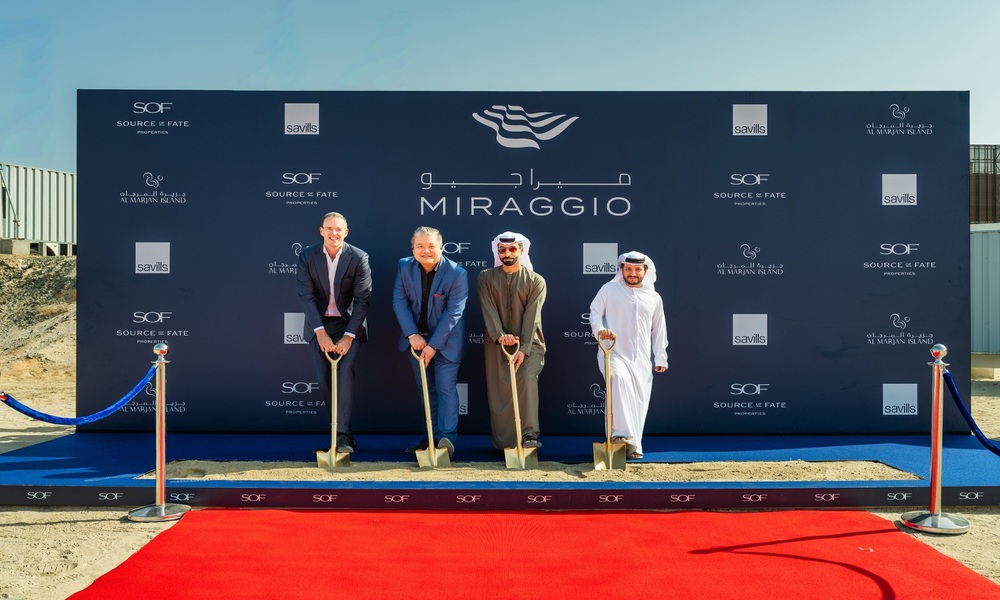
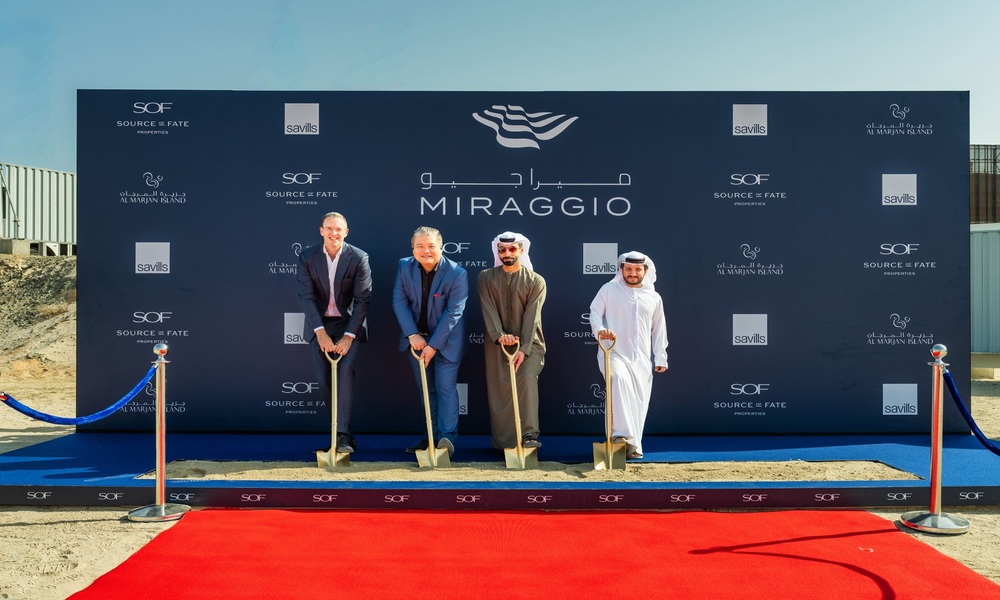
Pantheon Development has broken ground on VOXA, a US $217.84mn premium mixed-use development in Jumeirah Village Triangle (JVT). VOXA is a dynamic destination where work, life, and leisure will coexist in balance, introducing a new era of smart, connected, and experience driven living in Dubai, said the firm.

The groundbreaking ceremony was attended by Kalpesh Kinariwala, Founder, Pantheon Development, senior management, and key project partners, including Al Khawaja Engineering Consultants (KWEC) and the appointed contractor, IGS Foundation Contracting. The event marks a significant milestone in the company’s continued growth and diversification.

Kalpesh Kinariwala, Founder, Pantheon Development said, “VOXA is more than just a development; it is a statement of intent, as we enter the mixed-use space in Dubai, our vision is to deliver inspiring environments where work, wellness, and community coexist in perfect harmony. This project exemplifies our commitment to excellence, sustainability, and design innovation, continuing our legacy of affordable luxury into a new realm of commercial sophistication.”

“With VOXA, we are not only diversifying our portfolio but also empowering investors and enterprises with a future-ready opportunity that reflects Dubai’s dynamic growth and global appeal. We aim to contribute meaningfully toward the evolving real estate landscape of this city, where quality, connectivity, and lifestyle blend seamlessly,” he added.

“VOXA represents a landmark project where innovation meets functionality, and we are proud to contribute our expertise to bring this vision to life,” said Jamal Al Khawaja, Owner of Al Khawaja Engineering Consultants (KWEC).

Yasmin Salem, General Manager of IGS Foundation Contracting added, “Our team at IGS Foundation Contracting is dedicated to delivering VOXA to the highest standards, ensuring quality, safety, and timely execution.”

Scheduled to be completed in Q3 2028, VOXA is the first branded residence and mixed-use project by Pantheon Development, marking the expansion of the company into the premium commercial real estate sector of Dubai. Spanning over 450,000sqft, VOXA integrates premium commercial spaces, retail, and contemporary residences spread across 29 floors. Designed for modern enterprises and residents.

The project boasts contemporary architecture with functional spatial planning, including, spacious office layouts, over 24 amenities, including meeting lounges, cafés, wellness zones, a yoga deck, beach wave pool, outdoor cinema, pet-friendly parks, and leisure areas, smart building management systems that optimise energy consumption and enhance operational efficiency, eco-friendly materials and low-emission construction practices.

Reinforcing Pantheon’s dedication to sustainable development, the project offers smart home technology offering seamless control of key home automation features, integrated parking and enhanced accessibility, ensuring convenience and smooth mobility of both residents and professionals alike.

The post Pantheon Development breaks ground on VOXA appeared first on Middle East Construction News.


Source: ME Construction News


Aerospcace-1.jpg

November 20, 2025 foasummit0

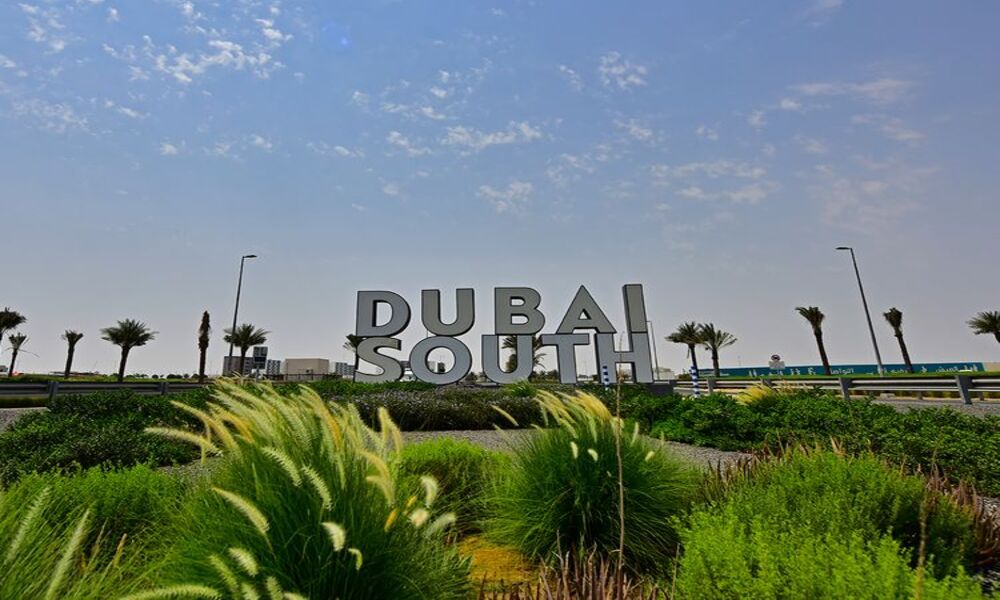
The Mohammed bin Rashid Aerospace Hub (MBRAH) in Dubai South has inaugurated Tim Aerospace’s new hangar. This facility is said to be one of the largest independent MRO hangars in the Middle East.

Built to the maximum permitted design dimensions, it can accommodate up to 12 narrow-body aircraft or five wide-body aircraft of any type, excluding the A-380.

The opening ceremony was attended by Khalifa Al Zaffin, Executive Chairman of Dubai Aviation City Corporation and Dubai South, Tahnoon Saif, Chief Executive Officer of Mohammed bin Rashid Aerospace Hub, and Timor Shah Shahab, Founder of TIM Aerospace. Senior executives from both organisations, as well as representatives from airlines across the sector, were also present. Their attendance underscores the strong industry support for this significant milestone.

The MBRAH’s new hangar will provide premium, cost-efficient aircraft base maintenance services for a diverse range of narrow and wide body commercial passenger and cargo aircraft. This expansion will further solidify Tim Aerospace’s growing presence in the global MRO market, said a statement.

Tahnoon Saif, CEO of Mohammed bin Rashid Aerospace Hub said, “The inauguration of Tim Aerospace’s new facility further strengthens Dubai’s position as a global aviation hub and a preferred destination for leading aerospace companies. At MBRAH, our mission is to create an integrated ecosystem that supports innovation, operational excellence, and sustainable growth across the aviation value chain.”

Timor Shah Shahab commented, “This milestone marks a new chapter in our journey to expand Tim Aerospace’s footprint and service capabilities in the Middle East. Our new facility at Dubai South is designed to set new standards in efficiency, safety, and reliability, while catering to the increasing demand for world-class MRO services.”

The post Mohammed Bin Rashid Aerospace Hub inaugurates TIM Aerospace’s new facility appeared first on Middle East Construction News.


Source: ME Construction News