Emaar-1.jpg

September 26, 2025 foasummit0

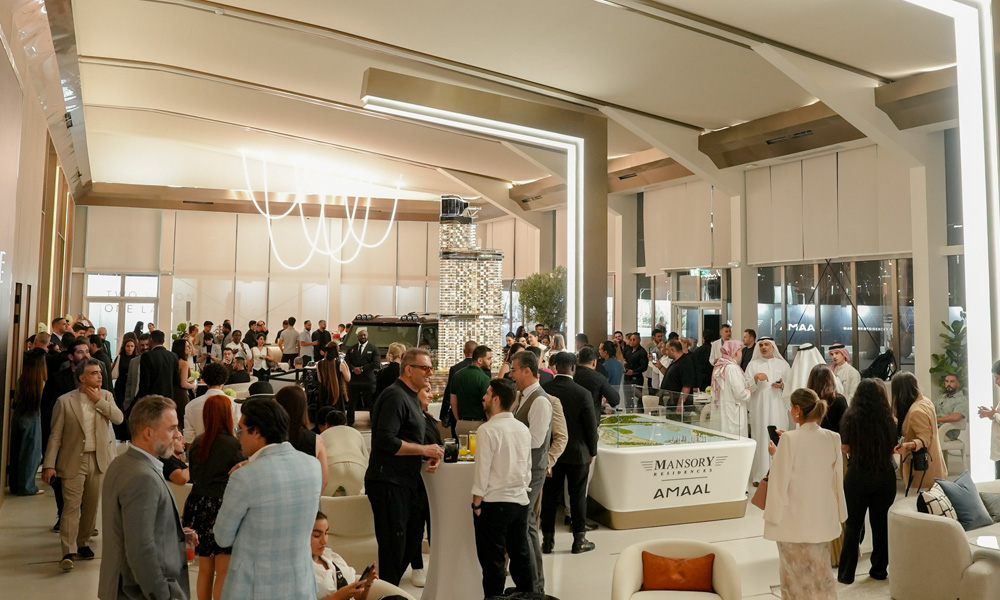
Emaar said it is about to unveil its most exclusive residential address to date, Dubai Mansions. The ultra-luxury community is designed exclusively for an elite global clientele.

Located adjacent to Dubai Hills Estate, Dubai Mansions boasts a limited collection of mansions. Each mansion offers spacious living areas ranging from 10,000 to 20,000sqft, embodying a blend of space and elegance. Inspired by sophistication and luxury benchmarks, the architecture and design of these mansions create an unparalleled living experience. Dubai Mansions is offering an unparalleled lifestyle experience tailored for those who appreciate the artistry of living well. This exclusive community is poised to become a new icon of living, built from the ground up for ultimate privacy, prestige, and perfection, said a statement.

“There’s a kind of luxury that isn’t loud. It doesn’t need validation or volume. It comes from authenticity, from knowing that what you’re creating is for people who understand value beyond price. That’s what this community represents,” says Mohamed Alabbar, Founder of Emaar.

Dubai Mansions, envisioned as a masterpiece in scale, craftsmanship, and experience, promises to redefine luxury living. From expansive plots and majestic façades to interiors and landscaping, each residence will embody Emaar’s commitment to creating spaces that harmonise legacy with innovation, the firm said.

Nestled within Dubai Hills Estate, the project offers proximity to a championship golf course, and healthcare, education, and retail destinations like Dubai Hills Mall. This prime location ensures residents have access to all the city’s essentials while providing the seclusion of a private sanctuary, Emaar stated.

Beyond being a residence, Dubai Mansions will emerge as a new destination that embodies the quality and emotional appeal of luxury brands. With attention to detail, the project will translate its architectural prowess, lighting, spatial arrangements, and proportions into a truly exceptional living experience.

While full details remain under wraps, Dubai Mansions has already generated hushed anticipation among those attuned to Dubai’s evolving luxury landscape. Its rare offering and exceptional location make it an ideal choice for experts of design-led living and those seeking the next landmark address in the city, the statement concluded.

The post Emaar to unveil exclusive ‘Dubai Mansions’ appeared first on Middle East Construction News.


Source: ME Construction News


muna-al-nahdi-1.jpg

September 26, 2025 foasummit0

UAE-based Farnek has launched Emirates Carbon, which is billed as a a free, open-access platform that offers carbon footprint calculations, direct access to quality offset programs, certified carbon credits, and International Renewable Energy Certificates (I-RECs).

Unlike complex enterprise systems, Emirates Carbon simplifies the process for individuals, small and medium-sized enterprises (SMEs), and events by providing a straightforward way to calculate Scope 1 and 2 emissions, as well as travel- and event-related footprints, the firm said in a statement.

For larger organisations, the platform integrates with CarbonTek, Farnek’s premium enterprise solution. CarbonTek tracks full Scope 1, 2, and 3 emissions across operations and supply chains, offering advanced dashboards, analytics, and compliance reporting. Additionally, the platform provides expert-backed carbon neutral pathways, guided by ESG and sustainability professionals, ensuring access to third-party verification and assurance for credibility and compliance, it added.

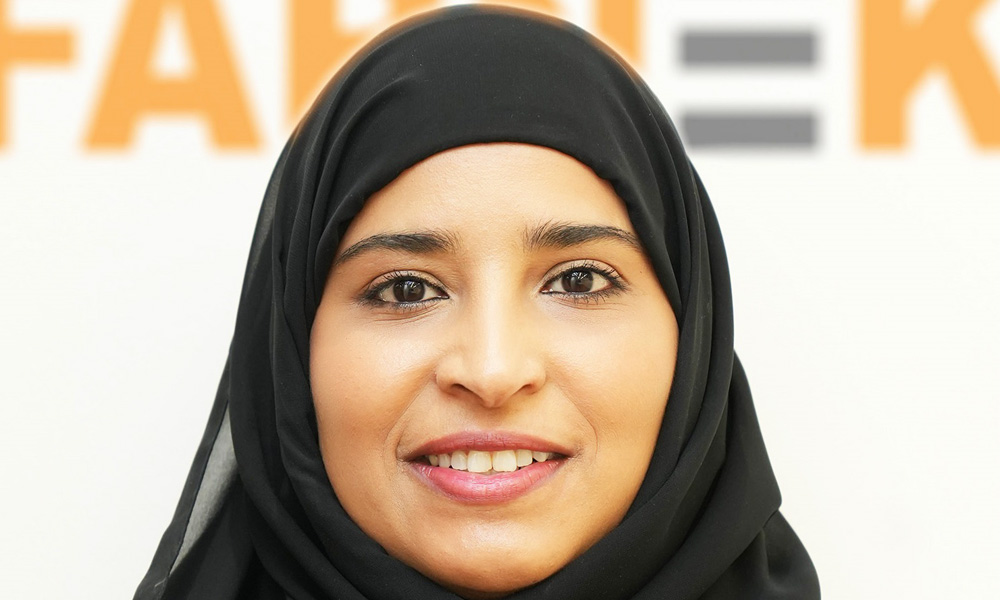
“Emirates Carbon empowers organisations to understand, manage and reduce their carbon emissions,” said Muna Al Nahdi, Director of Sustainability & Consultancy, Farnek. She added, “In partnership with Farnek, business leaders can make informed decisions that not only benefit their own companies, but also contribute to a cleaner, healthier environment. Moreover, Emirates Carbon can improve the efficiency of reporting emissions by up to 30%.”

“It supports carbon-neutral events, hotel stays, and travel, as well as hundreds of facilities, organisations, and individuals across the UAE and the wider Middle East. The platform scales across industries such as real estate, hospitality, aviation, and finance, accelerating corporate Net Zero pathways while underscoring the UAE’s reputation as a leader in sustainability and climate action,” she continued.

Emirates Carbon, delivered through a robust digital ecosystem, supports the UAE’s new Carbon Law and its upcoming national MRV (Measurement, Reporting, and Verification) framework. This platform empowers businesses to align with compliance requirements, while taking voluntary climate leadership steps. Emirates Carbon offers offsetting options that cover both internationally certified credits, such as Verra and Gold Standard, and, in the near future, locally generated credits once the UAE National Carbon Credit Registry is operational, the statement outlined.

Farnek said that it launched the platform to support the UAE government’s Net Zero 2050 strategy. By providing businesses and individuals with transparent tools to measure, manage, and offset their carbon footprint, Emirates Carbon helps corporations strengthen ESG performance and positions the UAE as a regional hub for certified carbon markets and sustainability innovation, it concluded.

The post Farnek launches Emirates Carbon appeared first on Middle East Construction News.


Source: ME Construction News


20250925_133838-1024x577-2.jpg

September 25, 2025 foasummit0

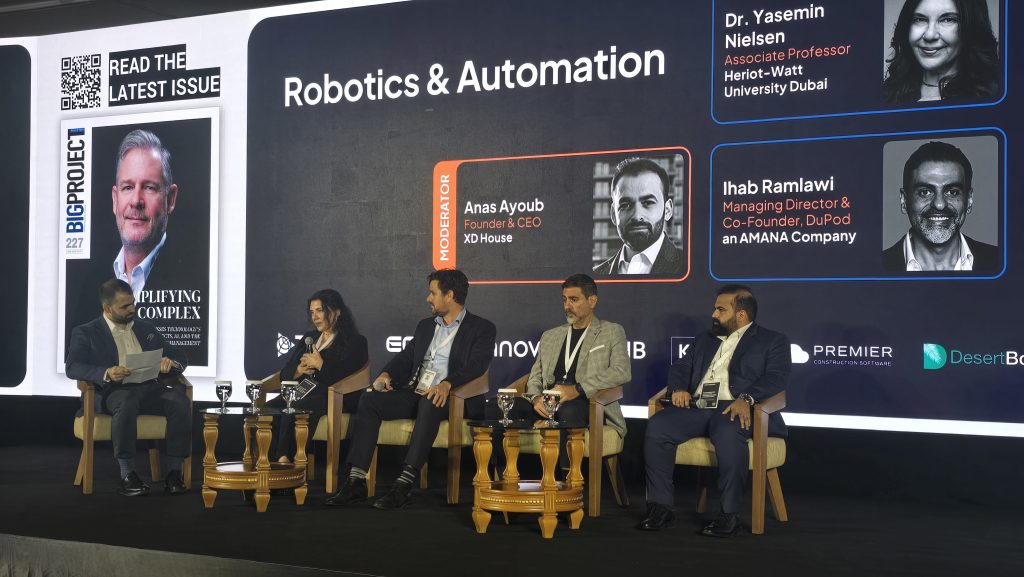
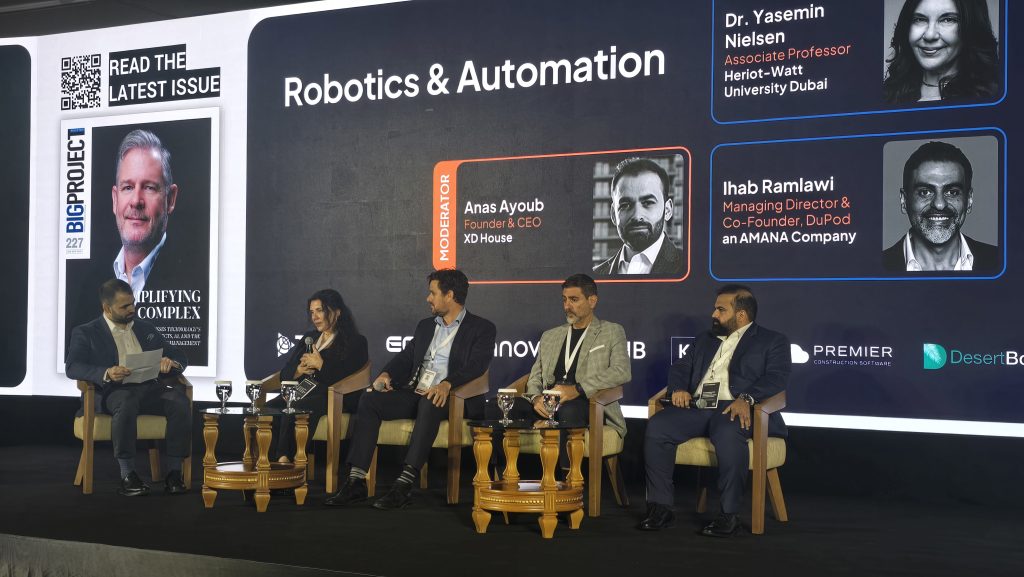
At the Digital Construction Summit, industry leaders questioned whether robotics and automation are ready to play a meaningful role in construction and manufacturing—or whether the sector still has fundamental barriers to overcome.

The panel brought together experts from academia, contracting, modular construction, and consultancy. Their observations revealed both the opportunities and limitations of applying robotics in an industry known for complexity, fragmented supply chains, and tight delivery schedules.

Douglas Zuzic, Chief Digital Officer at Innovo Group, argued that robotics should not be seen as a replacement for the workforce, but as a partner in delivering quality and safety. He cited a live project in Abu Dhabi where Innovo has been trialling a Chinese-made robot designed for floor tiling.

“We have a project in Abu Dhabi, Saadiyat Lagoons, where the robot doesn’t replace labour — it complements it,” Zuzic explained. “It can lay tiles at a pace and quality that helps us meet deadlines, while our workers focus on areas that require precision or adaptation. It’s not an either-or scenario. It’s about improving quality, timelines, and safety while still working with skilled trades.”

While early trials have shown promise, Zuzic stressed that automation will not solve every problem. Large open areas may benefit from robotics, but tight or intricate spaces still rely on human labour. “We are driven by time, cost, and quality. Technology is one way we can balance those pressures and keep our people safe on site,” he said.

Modular Construction as a Natural Fit

For Ihab Ramlawi, Managing Director and Co-Founder of DuPod, robotics finds its best use in controlled environments. Modular construction shifts activities from unpredictable job sites into factories where automation can be applied effectively.

“In modular, you can monitor efficiency like in a manufacturing plant,” Ramlawi said. “But before you invest in robotics, you need standardisation and simplicity. Our goal is to create design processes that machines can understand. Think of an IKEA manual—simple maps, standardised components, and barcoded instructions for machines to read.”

Ramlawi warned, however, that the supply chain remains a sticking point. Developers often resist standardisation, demanding unique components and custom designs that undermine efficiency. “Why do we need 50 different types of bathrooms in one tower?” he asked. “If we worked with clients earlier, we could standardise, optimise materials, and reduce costs. Without that mindset shift, robotics becomes harder to implement.”

Academia and Data Challenges

Dr. Yasemin Nielsen of Heriot-Watt University Dubai added that embedding research directly into industry partnerships can accelerate adoption. Her team is working with companies that sponsor researchers to explore emerging automation and AI tools while tackling real-world projects.

“The challenge is not just in the technology,” she said. “It is in how we collect, process, and use the data that comes from construction sites. In manufacturing, data flows are consistent. In construction, the variability of projects creates barriers to adopting robotics at scale.”

Consultant Pratik Dalai of TBH stressed that piecemeal adoption will not deliver the full benefits. Instead, the industry must build an ecosystem where all stakeholders — from consultants and contractors to subcontractors and clients — engage early and consistently.

“We need to find balance between innovation and application,” Dalai said. “Pilot projects can prove feasibility, but wider adoption requires acceptance and collaboration. Innovation should not be about buzzwords; it must solve problems of time, cost, quality, and safety. That means involving subcontractors and manufacturers earlier, and building capacity across the whole supply chain.”

He also noted that contractors are increasingly leading discussions on design and optimisation — roles traditionally held by consultants and architects. “It’s a drastic shift, but a positive one,” Dalai observed. “Contractors are now shaping how projects are designed, which opens doors for automation and robotics to be considered much earlier in the cycle.”

The panellists agreed that early-stage engagement with technology providers is becoming critical, particularly as developers in the UAE and Saudi Arabia show greater openness to modern methods. Ramlawi called it “an awakening” that has begun to reshape the market.

“If a project is badly designed, it’s almost impossible to add value later,” he said. “But when we are engaged from stage two instead of stage three, we can influence design, optimise costs, and integrate modern construction methods from the start. That is where robotics and automation can really add value.”

From Potential to Practicality

The debate underscored that robotics and automation are no longer futuristic ideas for construction—they are already being trialled in live projects. Yet the path to widespread adoption requires cultural change, supply chain cooperation, and an industry-wide willingness to standardise, simplify, and collaborate.

As Dalai concluded, “It’s about creating an ecosystem where innovation and application move in step. Without that balance, robotics will remain a buzzword. With it, the industry can finally start to deliver on the promise of smarter, safer, and faster construction.”

The post Robotics and Automation: If labour is so cheap in the GCC why do we need it? appeared first on Middle East Construction News.


Source: ME Construction News


20250925_120419-1024x577-2.jpg

September 25, 2025 foasummit0

Artificial intelligence (AI) is no longer a distant prospect for the construction industry. From reality capture to predictive analytics, AI promises transformative gains in safety, efficiency and productivity. Yet as panellists of the W’AI Forward at the Digital Construction Summit highlighted, the path forward is not without its challenges.

While AI can speed up repetitive or data-heavy tasks, the panel was clear that human oversight remains essential where safety and reliability are concerned. Paul Wallett, Regional Director at Trimble Solutions Middle East, pointed to tunnelling projects in the US where AI reduced analysis time from 30 minutes to just three. Yet he stressed that no contractor would — or should — let AI design or approve a structure without rigorous human verification: “If that structure collapses, it’s the contractor who is liable, not the algorithm.”

AI’s effectiveness depends on the quality of its data. Hamzeh Nawar of Mott MacDonald and Juan Alberto Tena Florez of KEO International Consultants emphasised the importance of accuracy, timeliness and governance. Many smaller stakeholders in the value chain see structured data collection as an extra burden, leading to silos and inconsistencies. Without standardisation, AI outputs risk being unreliable. As Wallett noted, “You don’t want it to be ‘kind of all right’—you need it to be accurate and sure.”

Trust emerged as a recurring theme. For Dr. Vitaly Berezka of PlanRadar, over-regulation, particularly in Europe, risks stifling innovation before AI can prove its worth. Others, like Nawar and Nizar Jegham of WSP, argued that clear internal governance—through company-level policies, contractual clauses and liability frameworks—is essential to control risks such as misuse of proprietary data, bias in algorithms, or unclear responsibility when systems fail.

AI adoption also hinges on people. Mandatory training programmes are already common in tech-driven firms, teaching staff about cybersecurity, data protection, and the risks of uploading sensitive project information into open-source platforms.

As Akhila, the panel moderator and construction lawyer, warned, firms must not only train their internal teams but also ensure external clients and contractors understand how systems work and who carries liability when things go wrong.

Despite these hurdles, the opportunities are substantial. AI is already delivering measurable gains in construction through image recognition, defect detection, predictive maintenance, and performance monitoring. With bias-aware models, improved regulation, and industry-wide data standards, AI could help contractors cut costs, reduce accidents, and complete projects faster.

As Jegham put it, the direction of travel is clear: “Employers are starting to ask contractors: what AI are you using? They have the right to know.” The industry now faces a choice—either treat AI as a compliance burden, or embrace it as a tool to build trust, transparency and efficiency into the next generation of construction.

The post In defence of the human intervention: The obstacles in the way of AI’s takeover of construction appeared first on Middle East Construction News.


Source: ME Construction News


20250925_110542-web-1.jpg

September 25, 2025 foasummit0

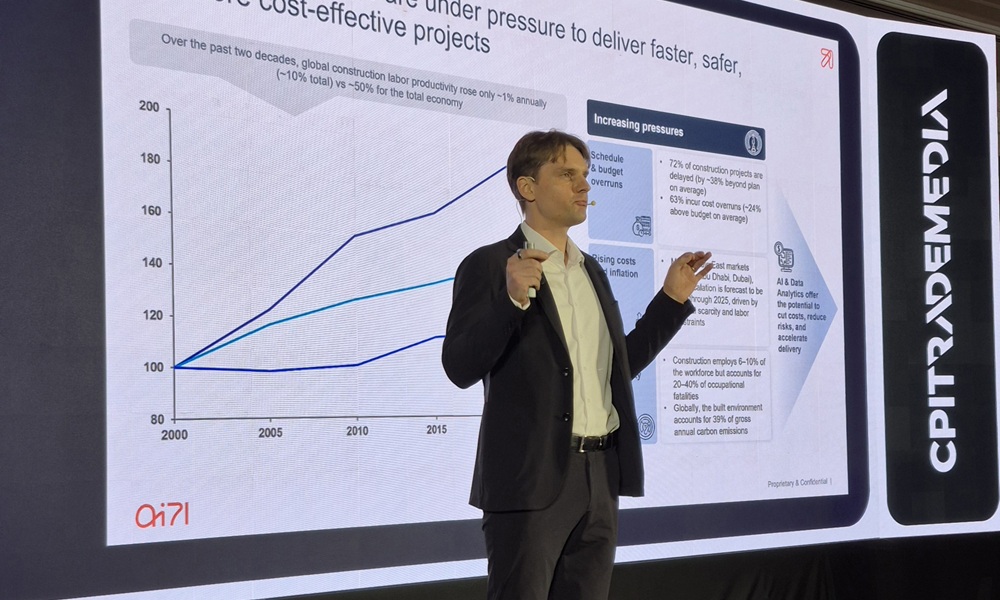
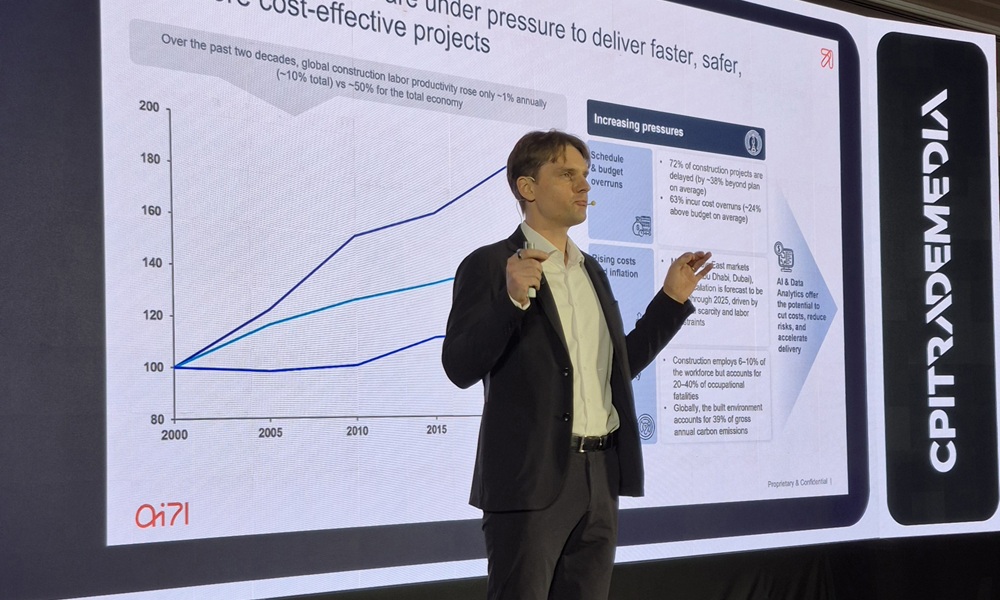
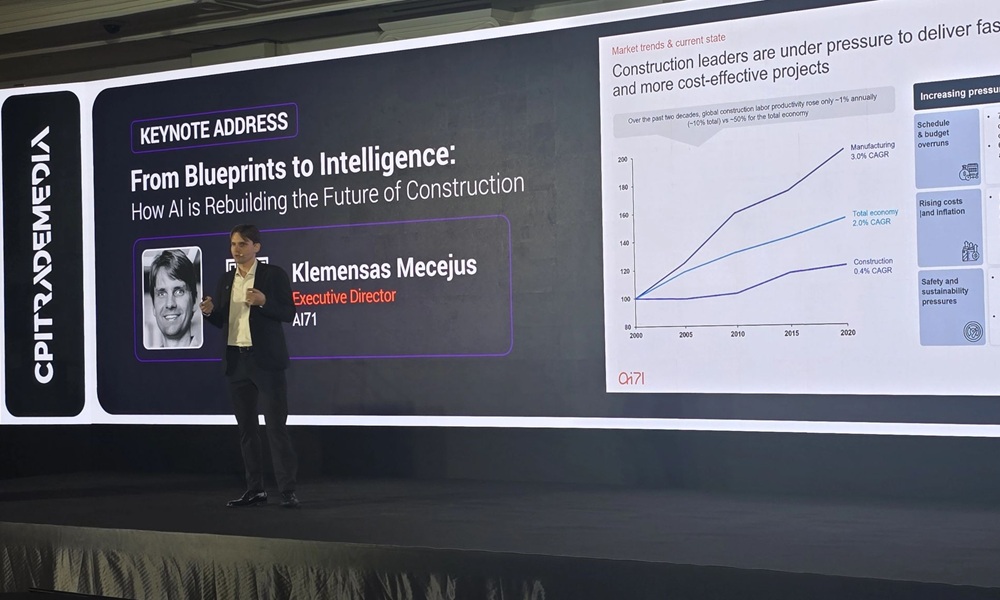
The construction industry has long been seen as conservative, asset-heavy, and slower to adopt digital transformation compared to other sectors. But according to Klemensas Mecejus, Executive Director of AI7, that perception is rapidly changing. In his keynote address at the Digital Construction Summuit, he set out why the industry is on the cusp of an AI-driven revolution — one that promises to transform design, planning, operations, and maintenance.

“Historically, the sector was very grounded,” Mecejus said, pointing to high capital expenditure, traditional engineering practices, and slow digital adoption. While industries such as finance and manufacturing raced ahead with IT and AI integration, construction lagged.

“Today, that’s no longer the case. We see advanced environments used in design and planning, IoT devices and wearables on sites, and even satellite analytics driving reconstruction flows,” he explained.

From RFID-tagged equipment to connected sensors and drone imagery, data streams are being unified at scale — laying the groundwork for the next leap forward: autonomy and generative AI.

The autonomous future

Among the biggest opportunities Mecejus identified is autonomy. He painted a picture of AI-equipped inspection vehicles roaming sites day and night, automatically scanning for deviations between plans and execution. “Imagine the overlay of what is being built versus what is supposed to be built, with instant signalling of risks and challenges — and at minimal cost,” he said.

Such applications, he stressed, would benefit regulators, municipalities, developers, and contractors alike, driving consistency and reducing risk across the entire construction value chain.
Generative AI and the design revolution

Another breakthrough lies in generative AI. In design and planning, where complex schedules, vast product databases, and multiple stakeholders once slowed progress to a crawl, AI is now able to simplify workflows.

“Previously, integrating all that into one system was almost impossible,” Mecejus admitted. “Now we can create unified data layers that power interactive AI.”

He cited permitting and compliance checks as an area already being transformed. AI can now interpret CAD files, identify walls, beams, and windows in natural language, apply regulatory maths, and cross-reference thousands of building codes — all in seconds. Even more striking is AI’s ability to then fix non-compliant designs automatically. “The user just reviews and approves. That’s it,” he said.

The gains, he claimed, are “thousands of percent” in efficiency, opening the door to faster creativity and safer, more compliant construction.

One particularly compelling use case lies in permitting. Mecejus described how AI systems can process both design drawings and regulatory codes simultaneously, marking compliant and non-compliant elements directly on the plans.

“This means municipalities and developers can move through approvals in hours instead of weeks,” he noted. “And every iteration of the design only takes minutes.” For the Gulf region, where rapid urban development often collides with lengthy approval processes, such solutions could prove game-changing.

Beyond design, AI is making inroads into site safety. Camera systems powered by AI can automatically check if workers are wearing protective equipment or whether site procedures are being followed.

“This is increasingly appearing on the dashboards of major developers,” Mecejus explained. “Safety and compliance are not just tick-boxes — they are areas where AI delivers measurable value.”

BIM and the single source of truth

Building Information Modelling (BIM) also featured strongly in Mecejus’ vision. While historically used in isolated phases, he sees BIM as central to a “single source of truth” spanning the full lifecycle of a project — from masterplanning through permitting, construction, operations, and eventual maintenance.

By embedding BIM into digital twin models, companies can layer analytics on top, ensuring greater stability, predictability, and insight. “It’s not just about files anymore — it’s about creating a unified decision-making brain for construction,” he argued.

 Once used primarily in design, BIM is evolving into a digital twin platform spanning a project’s full lifecycle.

“BIM offers a single source of truth — from pre-concept planning to construction and operations,” Mecejus said. “On top of that, you can build analytics and create what we call a unified decision-making brain.

That “brain” integrates satellite imagery, IoT sensors, contract details, and schedules to forecast risks such as project delays. For example, it can detect slowing progress in drone footage, cross-check contractor workloads, and flag where permitting issues could impact delivery.

Despite the enthusiasm, Mecejus was candid about the hurdles. Chief among them is proving return on investment. “It’s very difficult to link certain AI applications directly to bottom-line impact,” he warned.

High costs of compute power, data management, and agentic AI platforms demand significant upfront investment. Without clear evidence of scale, CFOs remain cautious. Yet, he believes technology maturity is improving rapidly, and those who lead early will reap the rewards.

His closing message to industry leaders was both practical and motivational. Adoption, he said, will not be linear. “Many things are new, untested, and risky. But leaders need to champion innovation, support their teams, and embrace risk appetite.”

He urged executives to “be bold, don’t be afraid, experiment, play, and be open to failure. Fail fast, adapt, and move forward. That’s what will make you a true leader in this transformation.”

For Mecejus, what excites him most is how quickly the landscape is evolving. “All of this wasn’t possible two years ago,” he reminded the audience. Advances in algorithms, compute power, and data quality now make once-impossible workflows achievable at scale.

His optimism is contagious: an industry long defined by slow-moving processes and heavy equipment is suddenly finding itself at the cutting edge of applied AI.

“Tomorrow,” he concluded, “we will be able to do much more. And that’s what’s truly exciting.”

The post AI in construction: Be bold, don’t be afraid, trust the technology, experiment with it. Play with it. appeared first on Middle East Construction News.


Source: ME Construction News


ACCIONA-ISTP1_1000x600-1.jpg

September 24, 2025 foasummit0

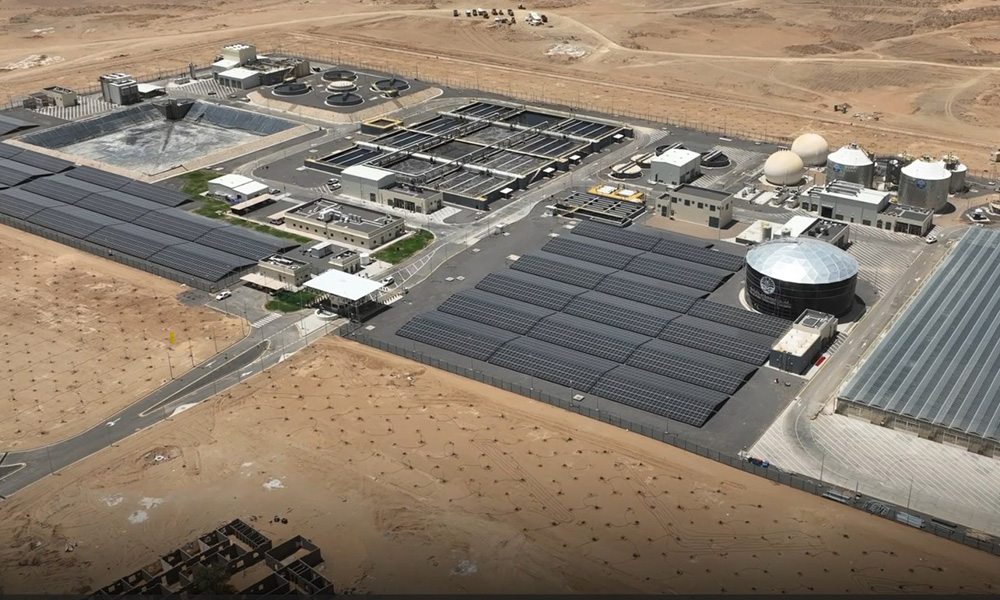
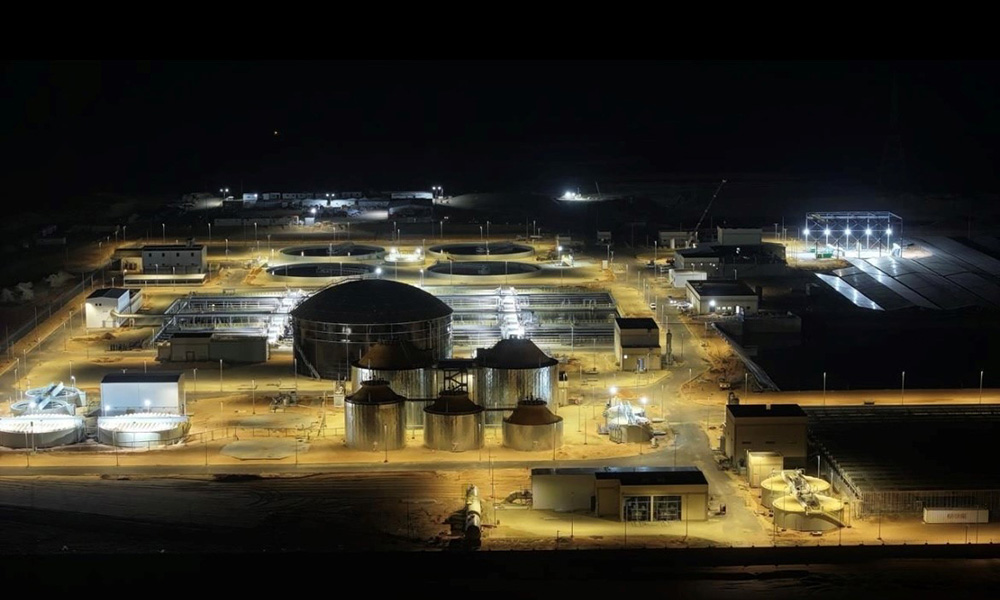
ACCIONA and its partners Tawzea and Tamasuk have announced the achievement of the Project Commercial Operation Date (PCOD) for three large-scale sewage treatment plants in Saudi Arabia: Madinah-3, Buraydah-2 and Tabuk-2.

The milestone marks the completion of construction works and the official handover to the client, confirming that all systems are operational and ready for service, said ACCIONA in a statement.

With the PCOD issued for all three plants, the facilities have formally entered commercial operation and are now fully managed by the Operations & Maintenance (O&M) consortium formed by ACCIONA, Tawzea and Tamasuk. The achievement follows the successful financial close in 2022, when ACCIONA’s water business secured its first green loan to support the development of the three projects under Saudi Arabia’s public-private partnership (PPP) model, the statement added.

According to ACCIONA, the three plants will collectively treat 440,000cu/m of wastewater per day, significantly boosting water reuse in the Kingdom. The treated water from these plants will be reused primarily for agricultural purposes, reducing pressure on scarce freshwater resources. Expected daily water savings amount to 190,000cu/m per day at Madinah-3; 142,500cu/m per day at Buraydah-2 and 85,500cu/m per day at Tabuk-2.

Madinah-3 will serve up to 1.5m people in the greater Madinah area and it will have an initial treatment capacity of 200,000cu/m per day. Buraydah-2 will serve around 600,000 inhabitants, including the nearby town of Ash Shimasiya, with a capacity of 150,000cu/m per day. Tabuk-2 will complement the existing Tabuk-1 ISTP, and will serve up to 350,000 people, with a treatment capacity of 90,000cu/m per day, ACCIONA explained.

In total, approximately 95% of the treated water will be allocated to agriculture, while the remaining 5% will be reused at the plant itself

This initiative is aligned with Saudi Arabia’s Vision 2030 and its strategic objectives to enhance water sustainability, increase resource efficiency, and expand public-private partnerships across critical infrastructure sectors, ACCIONA concluded.

The post ACCIONA begins commercial operations for three sewage treatment plants in KSA appeared first on Middle East Construction News.


Source: ME Construction News


Amaal-1.jpg

September 24, 2025 foasummit0

Developer Amaal has officially unveiled a dedicated experience centre for the world’s first MANSORY Residences. The residential project is billed as a landmark ultra-luxury project and is being developed in partnership with automotive design firm MANSORY.

The experience center, located along Ras Al Khor Road, is said to offer a curated journey into MANSORY Residences. Set against the backdrop of the Ras Al Khor Wildlife Sanctuary and the Downtown Dubai skyline, it immerses visitors in the brand’s design philosophy and the refined lifestyle that awaits within this development, said a statement.

Serving as the central hub for client engagement, media events, and unit sales, the experience centre sets a new benchmark for how premium real estate is presented in the region. The launch of this centre marks a key milestone in the progress of the US $490mn MANSORY Residences, scheduled for completion in Q4 2028.

“Amaal Experience Centre embodies the very essence of what we are building with MANSORY Residences,” said Abdulla Lahej, Chairman of Amaal. “It’s more than a space to preview a home; it’s a sensory experience of the craftsmanship, individuality, and audacity that define our vision. As Dubai continues to lead the world’s luxury property market, we are proud to offer potential residents and investors a tangible glimpse into the future of bespoke living.”

Kourosh Mansory, Founder and CEO of MANSORY commented, “The launch of this experience centre marks an exciting moment for MANSORY as we bring our design philosophy into a new dimension. It offers our future residents and partners an opportunity to experience, up close, the craftsmanship, individuality, and bold aesthetic that define our brand. Together with Amaal, we are redefining what it means to live with distinction by creating homes that are as unique and expressive as the vehicles that inspired them.”

The space features a 2.5m high scale model of the project, a fully built mock-up apartment, and an immersive VR room that enables visitors to explore all floor plans and unit types virtually. Open to both walk-in visitors and scheduled appointments, the experience centre is tailored to engage high-net-worth individuals (HNWIs), international buyers, and real estate brokers, offering them an in-depth, introduction to the project’s vision and value, AMAAL explained.

A curated selection of materials, finishes, and design elements from the actual tower will offer visitors a sense of the craftsmanship and interior palette. From flooring and wall treatments to key fixtures and textures, each detail reflects the quality of the final residences.

The unveiling of the experience centre comes as demand for branded residences and design-led developments in Dubai is emerging, driven by the city’s appeal among international buyers and its thriving economy. In Q1 of 2025 alone, Dubai recorded 111 transactions above $10mn, with total sales reaching $1.9bn, said the statement.

Located within the Meydan Horizon masterplan, MANSORY Residences will rise to 48 floors and encompass almost 142,800sqm of built-up area. Residences are complemented by a suite of amenities, from infinity pools and VIP lounges to a car elevator and showroom style parking for vehicles. The interiors, designed with Kourosh Mansory, offer a softer but bold take on the brand’s signature performance style. Each residence is crafted with layered lighting, upholstered accents, and precision detailing to create a sensory environment.

The experience centre is designed to evolve, with plans to showcase future development phases and other signature Amaal developments across the region, as well as potential international projects. This ensures the experience centre remains a relevant and engaging destination for returning clients and partners, continually reflecting Amaal’s dynamic portfolio, the statement concluded.

The post Amaal launches experience centre for MANSORY Residences in Dubai appeared first on Middle East Construction News.


Source: ME Construction News

Sajan-Simon-1.jpg

September 24, 2025 foasummit0

Developer IMKAN has partnered with source-to-pay and supplier collaboration specialist JAGGAER to execute a transformative procurement modernisation programme. Through the deployment of JAGGAER’s solutions, IMKAN said that it is enhancing procurement transparency, and strengthening supplier performance, thus accelerating its ability to deliver high-quality residential and mixed-use developments across the country.

With an anticipated handover of 120,000 units in 2026, up from the projected 90,000 units this year, developers are facing significant pressure to deliver on their promises to investors, homeowners, and regulators. IMKAN has recognised the importance of procurement modernisation in ensuring build quality, meeting delivery timelines, and optimising cost efficiency in the evolving regional landscape, the developer said in its statement.

Sajan Simon, Head of Procurement at IMKAN said, “Our procurement function is no longer just a back-office necessity, it’s a strategic advantage. In today’s environment, delivering projects on time and to the highest quality standards is an expectation. By partnering with JAGGAER, we’re setting a new benchmark in procurement that ensures our customers’ homes and communities are built with high-quality materials, sourced transparently, and delivered by the best partners every time.”

Hany Mosbeh, Senior Vice President, MEAPAC, JAGGAER added, “The UAE is the proving ground not just for world-class developments, but for delivery processes that set the global benchmark. We’re proud to collaborate with IMKAN, one of the region’s most visionary developers, in modernising a function as critical as procurement. Together, we’re showing that digital innovation, when applied with strategically, drives both commercial excellence and public trust.”

IMKAN will deploy four of JAGGAER’s key modules, enabling it to launch and manage sourcing events and reach the right suppliers faster. JAGGAER’s Supplier Management module streamlines the entire supplier lifecycle, from onboarding to performance reviews, ensuring that only vetted and reliable partners participate in tenders, the statement explained.

With JAGGAER’s Contract Management system, IMKAN centralises contract data, sets automated alerts for key deadlines, and reduces legal and financial risk by improving visibility and compliance. Additionally, JAGGAER’s Spend Analytics provides real-time insights into procurement trends, empowering smarter budgeting and faster decision-making. The impact of this modernisation is already being felt across the organisation, it added.

Procurement cycle times are expected to drop by 25%, enabling faster project mobilisation. Automation will reduce time spent on manual tasks by more than 40%, freeing staff to focus on strategic collaboration with suppliers. With contract visibility, IMKAN is better positioned to avoid cost overruns and identify early-stage savings opportunities. This translates to more predictable timelines, consistent build quality, and overall value for homeowners and community residents.

Beyond operational improvements, the JAGGAER platform also supports IMKAN’s sustainability and ESG commitments. This solution empowers developers to assess suppliers based on ESG criteria, monitor procurement-related sustainability KPIs, and ensure alignment with corporate and national environmental goals.

With enhanced visibility into the supplier landscape, IMKAN is better equipped to identify innovative, next-generation materials that can enhance energy efficiency, reduce emissions, or improve long-term maintenance outcomes, the platform facilitates local supplier collaboration, aiding IMKAN in aligning with national industrial strategies, such as the UAE’s ‘Make it in the Emirates’ initiative.

Looking ahead, IMKAN is already exploring additional JAGGAER modules, including eProcurement and Invoice Management, and integrating the platform with its ERP system for end-to-end automation. If adopted by IMKAN, these initiatives could further enhance supplier accountability, improve planning accuracy, and expand the visibility of project-related spend across the organisation.

The post IMKAN partners with JAGGAER to modernise procurement appeared first on Middle East Construction News.


Source: ME Construction News

Amin-Sarour_1000x600-1.jpg

September 23, 2025 foasummit0

LEVANTAR Consult has announced the appointment of Amin Sorour as Head of Business Operations. Sorour joins the leadership team alongside Ahmed Mahdi, Head of Commercial Services, as the company strengthens its operational and commercial capabilities across the UAE, Saudi Arabia and Egypt.

In his new role, Sorour will oversee the operational structure that underpins LEVANTAR’s project delivery capabilities, building frameworks that support clarity and decisive action for clients navigating complex construction projects. His focus will be on ensuring delivery teams have the visibility and operational support needed to maintain steady momentum and performance, said a statement from the firm.

The appointment comes at a strategic time for LEVANTAR Consult, as the company continues to establish itself as a trusted partner for project owners and investors seeking expert quantity surveying and commercial advisory services in the rapidly evolving Gulf construction market.

“Amin’s track record in project management and his ability to build frameworks that drive successful project execution aligns perfectly with our mission to provide intelligent commercial guidance to project owners and investors,” said Ahmed Mahdi, Head of Commercial Services at LEVANTAR. “His operational intelligence approach will be invaluable as we continue to serve high-value developments across KSA, Egypt and the UAE.”

Sorour boasts over 20 years of specialised experience in project management, controls and delivery across international markets. He most recently served as Director – Project Controls at Qiddiya Investment Company in Saudi Arabia from 2021 to 2025. His career spans major infrastructure and development projects across the Middle East, North America, and internationally, including landmark projects such as Hamad International Airport Development in Qatar, TransEd Metro line and the Eastern Alberta Transmission DC-Line in Canada.

July 10, 2023 – Riyadh, Saudi Arabia – Tower cranes working on a large project in downtown Riyadh, capital of Saudi Arabia

His appointment signals LEVANTAR’s commitment to operational excellence as the company continues to expand its quantity surveying and commercial advisory services throughout the region, said the statement from LEVANTAR Consult.

“Operational intelligence is about creating the right structure to support decisive action,” said Sorour. “At LEVANTAR, I’m focused on building systems that keep momentum steady and give our clients the clarity they need at every project stage. When delivery teams have proper operational support, performance becomes predictable, and projects stay on track.”

Sorour’s career trajectory includes senior project controls roles with globally recognised organisations, including Bechtel Civil Infrastructure, EllisDon, and Valard Construction LP. His international experience spans complex infrastructure developments from airport projects in Qatar to transmission line projects in Canada and the United States.

Sorour holds an MBA in Business Administration and Management from Robert Gordon University and a Bachelor of Science in Civil Engineering from Alexandria University, providing him with both the technical foundation and strategic business acumen essential for complex project delivery, the firm said.

With his proven track record across international markets and specific experience in the Saudi Arabian development sector, Sorour is well-positioned to lead LEVANTAR’s operational evolution as the company scales its service delivery across increasingly complex regional projects, the statement concluded.

The post LEVANTAR Consult appoints Amin Sorour as Head of Business Operations appeared first on Middle East Construction News.


Source: ME Construction News


SOL-1.jpg

September 23, 2025 foasummit0

SOL Properties has unveiled SOL LUXE which is billed as a mixed-use development that promises to redefine luxury living and working in Dubai. Taking shape on Sheikh Zayed Road in Dubai, this US $599mn project will boast a height of 280m across 62 floors, making it one of the tallest freehold towers on the road.

The project integrates premium residences, Grade A office spaces, and curated F&B retail outlets, and will feature a rooftop infinity-edge pool with panoramic views of the Burj Khalifa and Burj Al Arab, all designed to redefine luxury living and working on Dubai’s most prestigious boulevard, the developer said.

Located close to offices, schools, hospitals, restaurants, Dubai Mall, one minute walking distance to DIFC Metro Station and just 15 minutes away from Dubai International Airport, the development offers an exceptional lifestyle, it added.

Ajay Bhatia, Founder and CEO of SOL Properties said, “We are thrilled to introduce SOL LUXE on Sheikh Zayed Road, right in the heart of Dubai. Its prime location offers seamless connectivity to the city’s key areas and major attractions, which is perfect for professionals and anyone seeking a dynamic, cosmopolitan lifestyle. Inspired by our flagship developments such as Fairmont Residences Solara Tower and SOL Levante, the new SOL LUXE tower embodies our vision of setting a benchmark in timeless, zen-inspired luxury living.”

SOL LUXE will offer 288 premium residences in one-, two-, and three-bedroom layouts, including studios, catering to diverse lifestyle preferences. Levels one to 25 of the tower will house 66 expansive Grade A office units with a ceiling height of 3.7m, providing views of the Dubai skyline. The ground floor boasts a collection of F&B retail spaces with nine metre high frontages, three sided visibility, and direct access to Sheikh Zayed Road.

Sustainability, and smart technology intertwine in this project. The tower’s sculptural bronze and glass façade, featuring curved glass edges and horizontal bronze bands, exudes an elegant presence on the Dubai skyline. High-performance glazing, solar-control systems, water-saving technologies, and EV ready infrastructure contribute to its environmental friendliness. AI-powered smart systems throughout the tower enhance comfort and convenience, optimising air quality, predicting maintenance, and managing visitor access securely, it added.

Residents and tenants can indulge in a wide range of lifestyle and wellness amenities. These include an infinity edge pool, a kids’ pool, a jacuzzi, indoor-outdoor gym, a rooftop mini golf course, yoga decks, barbecue pavilions, multipurpose halls, and terrace lounges. Families will appreciate the children’s play areas and landscaped zones, creating a curated environment for wellness and leisure. Commercial office owners will also find a dedicated floor of similar amenities, including private meeting rooms and flexible indoor and outdoor event spaces for social gatherings, the developed noted.

Construction on the tower is currently underway, with the anticipated handover in Q4 2028.

The post SOL Properties launches new mixed-use development, SOL LUXE appeared first on Middle East Construction News.


Source: ME Construction News