Compass-Mastt1_1000x600-1.jpg

July 4, 2022 foasummit0

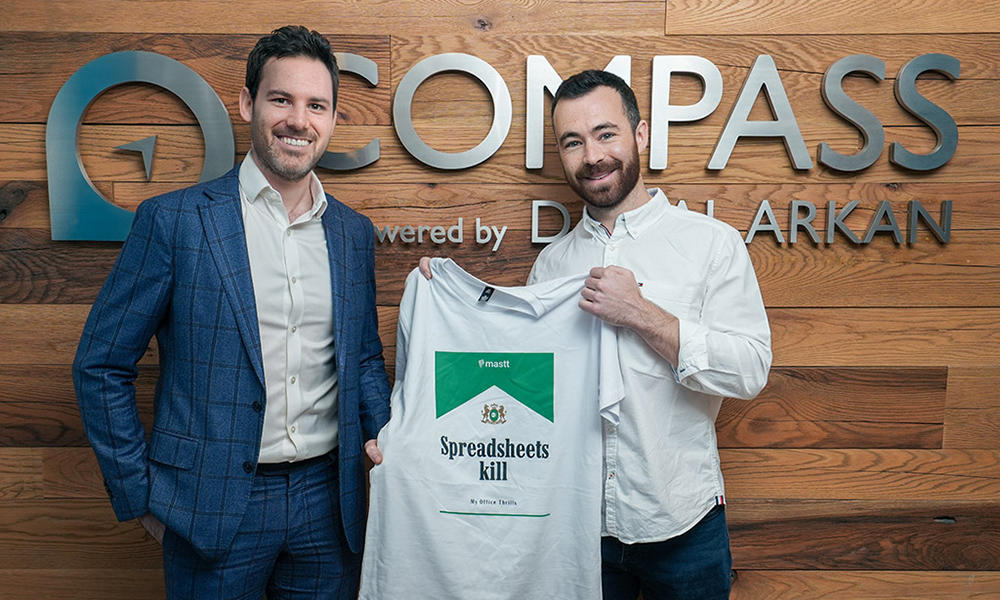
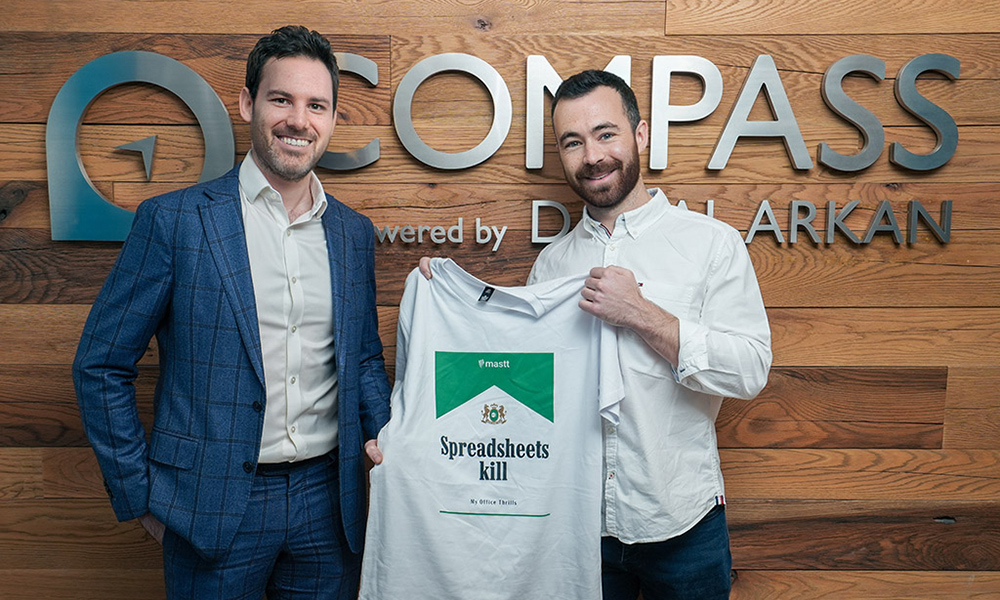
Speaking exclusively to Middle East Construction News (MECN), Compass Project Consulting has said it has inked a strategic partnership with technology provider Mastt. The deal sees Compass become the first professional user of Mastt’s software in the MENA region; the software provides machine-learning and data-driven insights, which is said to reinforce Compass’ project development capabilities.

“Having successfully trialed the software on a few of our portfolio clients, the advanced software has generated highly visible value and cost savings on our large contracts. Our team have been particularly impressed with the ability to generate real-time transparency on such wide-spanning programmes, along with pre-emptive risk control capabilities,” said Luke Somerville, Managing Director at Compass Project Consulting.

Mastt’s software is said to oversee and govern capital expenditure and risks across large asset development portfolios. Its platform provides capital asset owners with mission-critical real-time reporting and analysis across their portfolio and individual projects, which is said to enable immediate decisions to prevent cost and time blowouts.
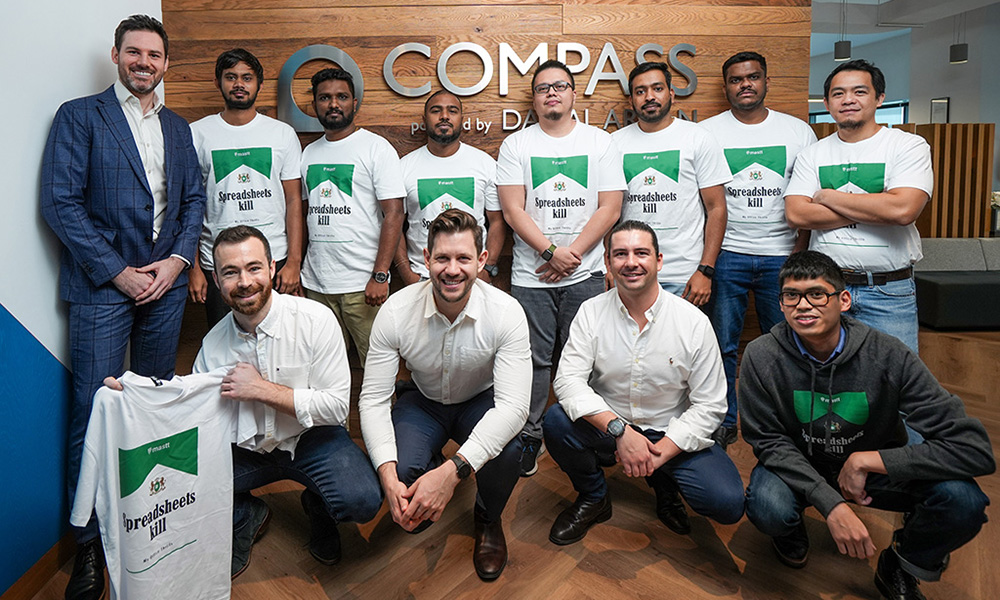
By integrating the technology, Compass says it has simplified its planning, reporting and analysis of project performance. With Mastt’s smart algorithms partly automating this process, Compass’ project development consultants have been able to drive faster, better projects and benchmark each project’s performance across major capital portfolios, the firm said.

Somerville added, “We are excited to formalise our relationship with Mastt, a company with similar goals and values. Together we can significantly accelerate the transformative power of construction technology to solve complex construction data challenges within our industry and client projects.’’

Mastt’s Co-founder and CEO, Doug Vincent remarked, “We want to help Compass capitalise on the huge potential our platform gives for predictive decision making across projects. The last 12 months showed we’re solving a real issue for consultants and portfolio owners.”

Construction technology will be the focus of Big Project Middle East’s Digital Construction Summit, which is scheduled to take place on 14 September in Dubai. The City of Paris recently announced the completion of an international design competition to update the Notre-Dame de Paris’ surroundings. The competition was underpinned by BIM technology. In the UAE, further highlighting the importance of technology in the built environment, the Dubai Municipality recently launched several technical activities relating to 3D printing technologies.

The post Compass announces partnership with technology provider Mastt appeared first on Middle East Construction News.


Source: ME Construction News

Sandvik_1000x600-1.jpg

July 4, 2022 foasummit0

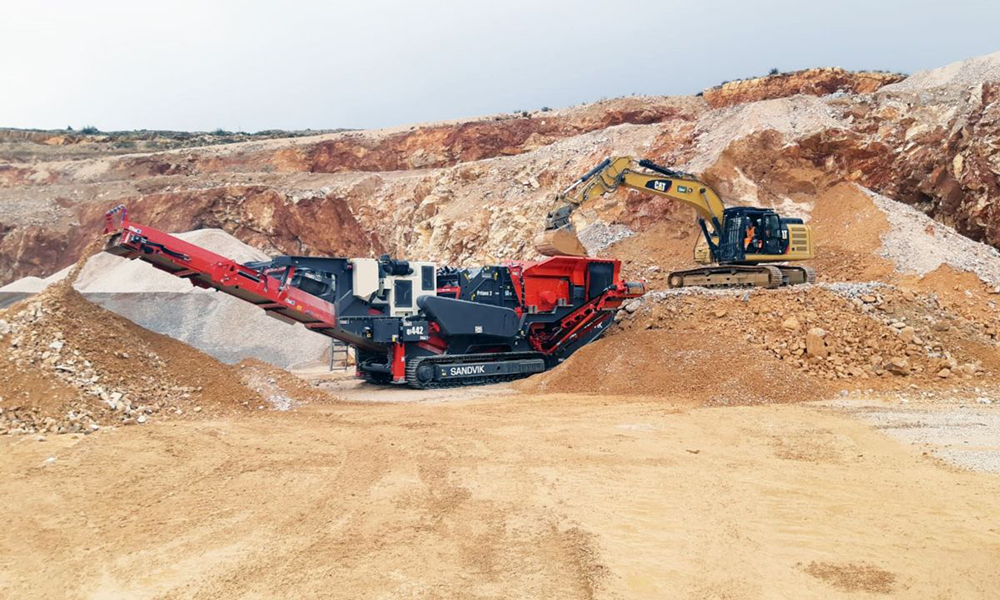
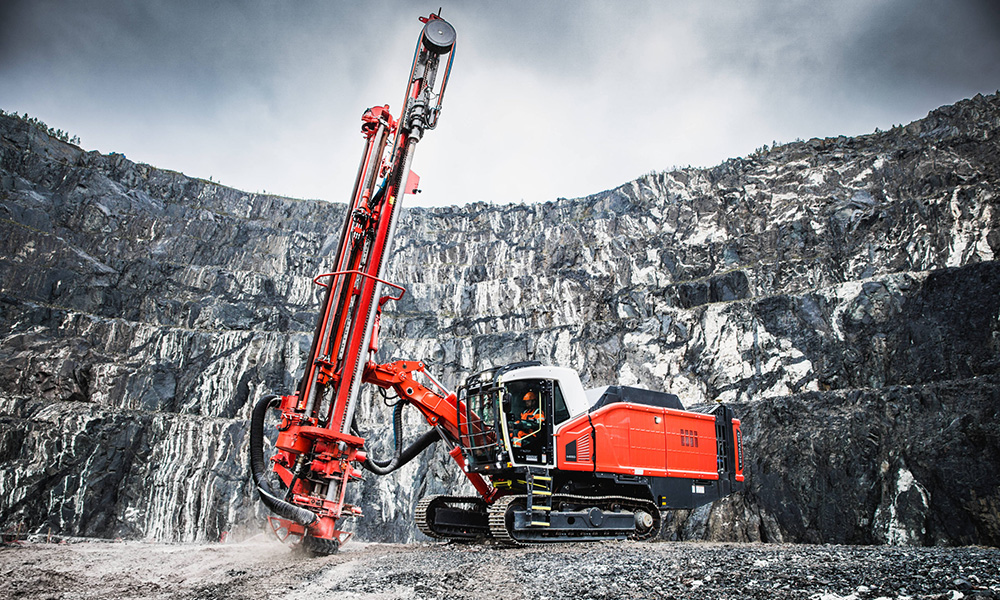
Commercial and industrial equipment supplier Sandvik has successfully completed testing on a range of Cat C-Series engines confirming that they can run on hydrotreated vegetable oil (HVO) fuel, without modifications to either the engines or the fuel tanks.

The Cat C-Series engines were supplied to Sandvik Mobile Crushers and Screeners to power its mining and construction equipment. It is expected to help Sandvik and their customers reduce net carbon dioxide (CO2) emissions by up to 90% compared with conventional diesel, said Caterpillar in a statement.

After deciding to invest in HVO as a renewable fuel, Sandvik Mobiles turned to Cat dealer Finning UK and Ireland to supply compatible engines. HVO is a form of renewable synthetic diesel, produced from certified waste fats and oils through hydro-processing. Its performance is similar to regular diesel but it reduces the carbon footprint associated with operating the engine and can lower nitrogen oxide (NOx) and particulate matter (PM) under certain conditions. Its chemical similarity to diesel means that the machine’s power output and uptime are not compromised when introducing HVO as an alternative, while it can also be blended with diesel.

“We are focused on developing our products and services to help our customers transition to a low-carbon economy and fulfill our company’s purpose to help build and power a better and more sustainable world,” said Steve Ferguson, Vice President of Caterpillar Industrial Power Systems.

He concluded, “Our Cat dealer Finning offered its expertise throughout the project, sharing its extensive knowledge on engines and fuels to provide Sandvik with all the information it needed. Our Cat C-Series engines give customers the flexibility to use HVO as both a replacement and addition to their conventional diesel fuel, depending on their requirements.”

In June 2022, Volvo said its Penta D16 engines running on HVO powered this year’s Sweden Rock Festival, while later in the month, Zahid Tractor said it had delivered Cat power solutions, which could run on conventional diesel, B100 biodiesel fuel and HVO, for for The Red Sea Project. Also in June, mobile crushing, screening equipment and stacker specialist Keestrack appointed a new Area Sales Manager for the Middle East and Africa to further develop its business.

The post Sandvik completes testing of Cat HVO capable engines on mining and construction equipment appeared first on Middle East Construction News.


Source: ME Construction News

Robot-Dog-Spot-1.jpg

July 4, 2022 foasummit0

Artificial Intelligence (AI) is today making a profound difference to our lives, even if we do not realise its overwhelming presence around us always. A lot of simple everyday actions that most of us take for granted now – from unlocking our smartphones with a single glance or touch, to summoning our favorite digital voice assistant to set a reminder, check the latest news or play songs – all have been made possible by advances in AI.

A similarly profound transformation is currently underway in several industries with a growing acceptance and use of AI-powered robots or software agents. AI was instrumental in faster development of COVID-19 vaccines – the first set of vaccines were already being tested within three months of the virus’ discovery – it would have otherwise taken several years just to get a vaccine ready. Many other industries are already heavily using AI for contact centre, factory or warehouse automation.

Even the construction industry – generally regarded as a laggard in adoption of cutting-edge technology – has surprisingly been quick to warm up to AI. The technology is particularly useful in planning and designing phases, where it allows for advanced generative design capabilities for BIM or 3D modeling. Under generative design, the computer generates several hundred-design options basis certain pre-determined goals or constraints.

The human designer is then free to choose the recommended design; or any of the others that best meet the project’s goals – and is essentially able to create the best design possible in a much shorter time. The net outcome is a higher quality design along with dramatic savings in designer’s time – which is then available for use in other projects.

When it comes to onsite construction, modern safety, monitoring, and maintenance systems are today using advanced AI capabilities to automatically predict and warn supervisors about adverse safety situations. In doing so, these systems minimise the role of human error in any adverse incident.

Suffolk, a major US-based construction company, has been developing a system which could potentially predict and therefore prevent accidents before they happen. The system incorporates a form of AI called deep learning and image-recognition software, along with cameras that routinely take shots of ongoing work throughout an active construction site. The AI-based system then analyses these images and compares what it ‘sees’ to how things ‘should or should not be’, using historic data collected over a decade. When put to work for monitoring a new construction site, it can quickly flag situations that seem likely to lead to an accident, such as workers not wearing safety equipment or working too close to a dangerous part of a machinery.

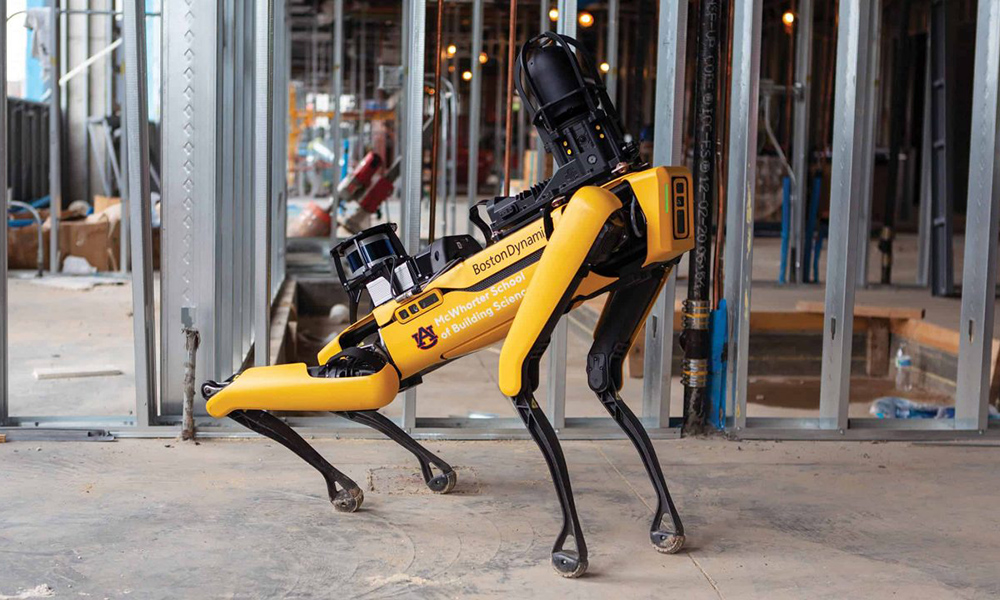
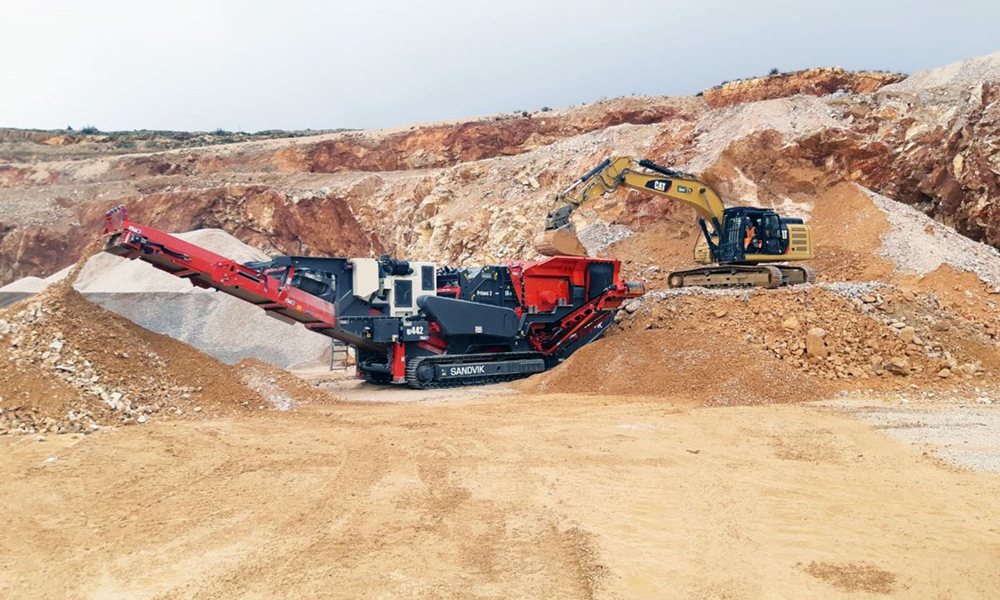
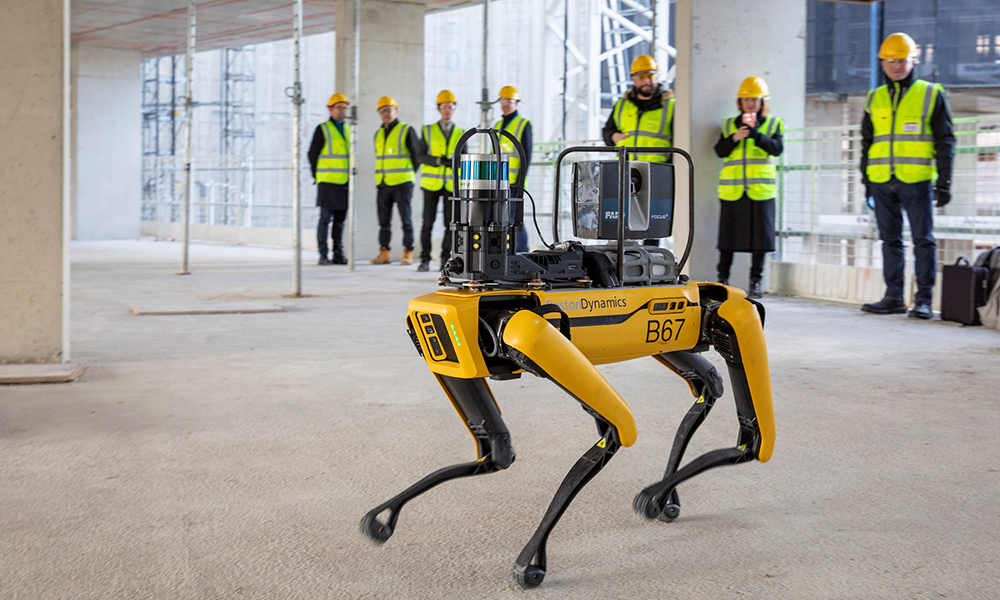
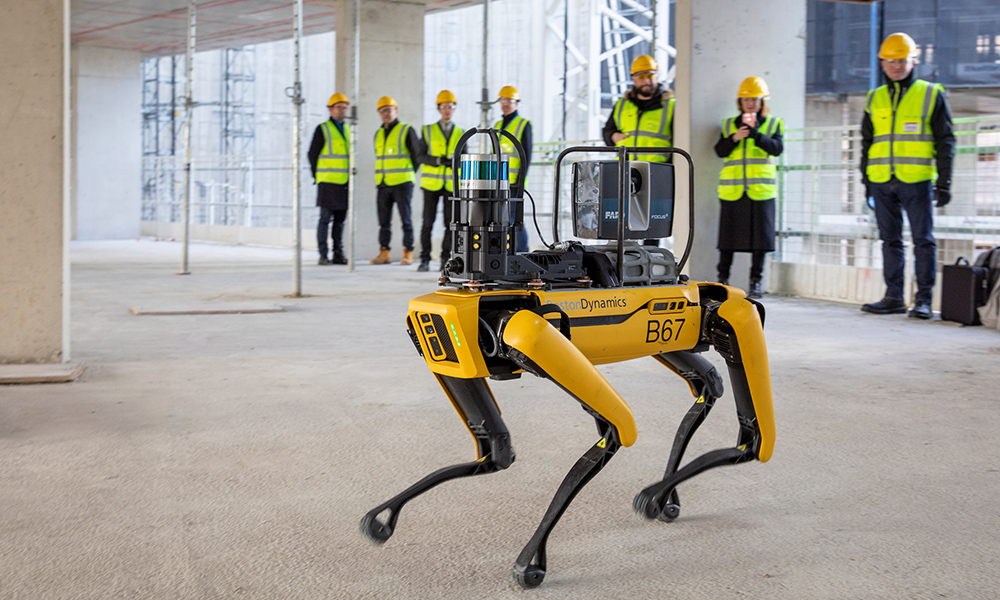
Similar tools incorporating AI are also able to track the real-time interactions of workers, machinery and other objects on the site, and can then alert supervisors or offsite managers of construction errors, productivity issues or willful ignorance of safety protocols. A couple of years back, Trimble announced a partnership with Hilti and Boston Dynamics to utilise robots for routine tasks in hazardous environments to improve safety, efficiency, and data capture consistency. This robot ‘Spot’ has proven to be truly disruptive for the global construction industry, with a number of companies using it on site.

With such a wide array of applications and use cases, AI is set to dramatically transform the engineering and construction industries in the months and years to come. A natural corollary of this transformation is the fear and concern over job losses – after all, the construction sector is the second largest employer in India after agriculture – and provides direct or indirect livelihood to nearly 100mn people.

To be fair, technology-driven societal changes like what we’re experiencing with AI and automation always engender concern and fear—and for good reason. Over 200 years ago, a group of textile workers started a movement to oppose any form of machinery or automation, based on their perceived fear of job loss. They came to be known as Luddites, and even today, any person who is afraid of or unwilling to use new technology is often called a luddite.

It is important here to point out that the fears of modern-day Luddites are not completely unfounded. A McKinsey report suggested that by 2030, intelligent agents and robots could replace as much as 30% of the world’s current human labor, and ‘automation will displace between 400 and 800mn jobs by 2030’. However, it is also an undeniable truth that every major technological shift has ended up creating more jobs than what were destroyed. This is because jobs or livelihoods never get obsolete; only specific skills get obsolete and are no longer sufficient to earn a livelihood. In the 1800s, the handloom weaver was no longer needed in the modern textile factory but he could get trained on a power loom and still earn his livelihood.

Particularly in the context of construction, AI’s impact on improving workplace safety and productivity is likely to be several orders of magnitude larger than its potential impact on job losses. For perspective, let’s consider that 38 construction site deaths are reported every day in India; which is 20 times higher than in Britain. India also has the world’s highest accident rate among construction workers, according to a recent study by the International Labour Organization (ILO). Even in a developed country like the United States, the construction industry regularly records five times as many fatal accidents than any other industry, despite safety protocols and mandatory usage of protective equipment.

Construction remains one of the most dangerous jobs out there – and majority of incidents have human error to blame. Tools such as Trimble CrewSight can ensure that only those workers who are trained, qualified, and properly equipped for a given task are allowed to enter a jobsite. Embedded with AI and video-based monitoring, such tools can cut out the role of human error altogether in safety incidents, creating a win-win for all stakeholders.

Ultimately, despite widespread concerns, AI or robots are unlikely to replace humans altogether on construction sites in the near future. On the other hand, it will definitely help reduce worksite injuries and accidents, or expensive errors, and also make operations far more efficient. Leaders at construction companies should prioritise investment based on areas where AI can have the maximum impact on their company’s operations. We believe that early movers will not only generate tremendous business value for themselves both in short and long term but will also set the direction of the industry for a complete AI-led transformation.

Read more:


The post AI in construction won’t be taking jobs, it will save lives appeared first on Middle East Construction News.


Source: ME Construction News

The-Red-Sea-Project-Shura-Island-1.jpg

July 4, 2022 foasummit0

A US $400mn joint venture (JV) agreement has been signed by The Red Sea Development Company (TRSDC) and Almutlaq Real Estate Investment Co, a subsidiary of the Al Mutlaq Group. As per the terms of the deal, the JV will develop the Jumeirah Red Sea, which is billed as a 159-key luxury resort situated on The Red Sea destination’s hub island, Shura.

Shura forms part of the first phase of development, and will comprise 11 luxury, premium and lifestyle hotels and resorts, residential units, a championship golf course, 118 berth marina, and a comprehensive retail, dining, and entertainment offering. The island is currently under construction and expected to open in early 2024.

“This joint venture investment reinforces the private sector’s alignment with our commitment to regenerative tourism and sustainable development. Our project naturally lends itself to promising business opportunities, with the ability to leverage the Kingdom’s key strategic assets, and drive economic growth and diversification as outlined by Vision 2030,” said John Pagano, CEO of TRSDC.

Tariq Almutlaq, chairman of AREIC added, “We are extremely pleased to partner with TRSDC and its best-in-class management team on this exciting and compelling project. We have been studying the giga-projects for some time, and the Red Sea is achieving its vision. The destination is coming to life, and we look forward to welcoming our first guests in 2024.”

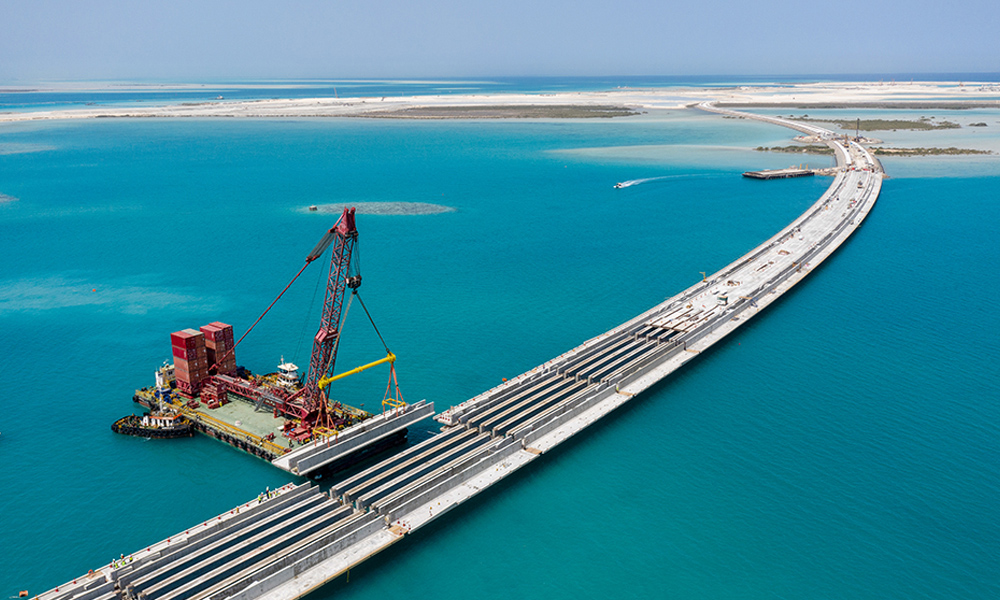
In May 2022, Marriott and TRSDC inked a deal to debut the Ritz-Carlton Reserve brand in the region at The Red Sea project. Big Project Middle East also went behind the scenes with Grankraft who are building the Sheybarah Hotel’s overwater villas for TRSDC. In June, TRSDC and ARCHIRODON said they completed the installation of the last connecting piece for the crucial Shura Bridge project.

According to a report by Arab News, TRSDC is currently in discussions with several other investors under a similar framework to invest in The Red Sea Project’s commercial assets, including hotels and resorts, leisure, and retail and dining experiences. Moreover, AMAALA and additional soon-to-be-announced projects in the developers’ expanding portfolio bring with them additional opportunities for investors, the report said.

Jay Rosen, Chief Financial Officer at TRSDC noted, “We are attracting an abundance of third-party investment interest, particularly those focused on ESG who are confident that this is an exciting opportunity and one that they do not want to miss out on.”

The announcement follows TRSDC achieving financial close on its $3.76bn green financing earlier this year with four Saudi banks – Banque Saudi Fransi, Riyad Bank, Saudi British Bank, and Saudi National Bank.

The Red Sea Project has achieved significant progress on the ground, with Phase 1 now more than 50% complete and several key assets already fully operational, including a four-star management hotel, on-site offices, and the largest landscape nursery in the region. TRSDC and AMAALA are said to have awarded over 1,000 contracts worth in excess of $6.67bn. Work is on track to welcome the first guests in early 2023, when the first hotels will open, with the balance of phase one set to complete by early 2024, the report concluded.

The post TRSDC inks first strategic partnership deal with Almutlaq Real Estate Investment appeared first on Middle East Construction News.


Source: ME Construction News

Nathan-Doughty_1000x600-1.jpg

July 4, 2022 foasummit0

Smart cities. Construction technology. Digital tools. Cloud computing. These are all revolutionising the way the construction industry operates in the Middle East. Powering it all is technology. According to the International Data Company (IDC), total cloud spending by public and private entities in the region will reach $2.5bn by 2025—a phenomenal growth trajectory.

This is not surprising given the region’s digital dominance. It is a hub for some of the most exciting and innovative projects globally in the construction industry, such as Neom in Saudi Arabia,and the upcoming Qatar FIFA World Cup Qatar 2022.

This digital charge is most notable in the United Arab Emirates (UAE) and the Kingdom of Saudi Arabia (KSA), where growth is spurred on by multiple significant digital-led initiatives, including the ambitious  Dubai 2040 Urban Master Plan and Saudi Arabia’s Vision 2030.

Accompanying the rise of these digital solutions is the powerful data it generates. But how and where is project data stored? How do you harness and manage the data for maximum sustainability and efficiency?

Managing and Protecting Your Construction Data

Let’s look at data centres. They are physical facilities equipped with computing and networking infrastructure to securely store, process, and access large amounts of data. As such, data centres host the critical data for construction organisations in the cloud. For this reason, the concepts of data sovereignty, data localisation, and data availability are huge topics of concern for construction organisations across the Middle East.

While the three concepts are all different, all three refer to the geographical location of where an organisation’s data is stored and the laws surrounding it.

Ultimately, for most businesses in the Middle East region, ensuring their project data is protected is the highest priority. For many, this simply boils down to ensuring their data stays in its country of origin. For example, UAE project information remains in the UAE. Many companies—most notably government projects—are hesitant to move to the cloud due to concerns about their data being stored outside the region.

As part of its continued investment in the Middle East and supporting infrastructure and capital projects in the region, Asite operates two data centres.

Asite Middle East Data Centres

Asite is the world’s leading data platform for the built environment, helping organisations come together, plan, design, and build with seamless information sharing across the entire supply chain.

In line with Asite’s operating model—a global platform of cloud services delivering for businesses worldwide—Asite works tirelessly to ensure the needs of all clients in all regions are met.

To deliver on this, Asite holds server grids globally in each of its key operating locations to ensure optimum data management processes that meet local requirements. Unlike many of its competitors, Asite has two data centres in the Middle East, one in the United Arab Emirates and a second in the Kingdom of Saudi Arabia.

Speaking about the data centres, Devendra Gera, Asite Chief Technology Officer, said, “Our decision to expand Asite’s data centres is in line with our commitment to ensuring that the data and intellectual property of our clients are stored securely and in accordance with local regulations.”

In the UAE, the data centre maintains stringent compliance standards with the following certifications: ISO 9001, ISO 27001, ISO 22301, ISO 20000, ISO 14001, OHSAS 18001, PCI DSS, and ISAE3402/SSAE16 Type 2. While in KSA, the data centre maintains stringent compliance standards with the following certifications: ISO 9001, ISO 27001, ISO 14001, ISO 18001, ISO/IEC 27017:2015, and ISO/IEC 27018:2014. These certifications reflect the quality of operations and excellence of the Asite service.

The opening of both data centres in 2020 was a move by Asite to strengthen its presence in the Middle East and ensure project information for UAE and KSA projects, respectively, stay in their region.

Why is this important? The move is a huge step forward in expanding the digital engineering capacity of the local industry. It helps improve the performance of data management processes for projects in the region, providing the fastest possible response times when completing day-to-day project tasks.

In fact, a number of organisations in the Middle East, including a leading property developer in UAE, trust Asite with their project portfolio. They are seeing the benefits and security of the guarantee that their data remains in the region.

With Asite, our data centres command a world-class disaster recovery service model. Here, they deliver failovers in the event of an unplanned incident, natural or human-induced, by seamlessly transferring operations to a reliable backup and ensuring the seamless recovery of data.

As Asite continues to grow and develop its capabilities, the security of our users will remain at the forefront. All customers can expect their data to be handled and processed with a high level of protection, regardless of the quantity or sensitivity level.

For more information, please visit asite.com.

The post How Asite is ensuring data sovereignty for construction projects in the Middle East appeared first on Middle East Construction News.


Source: ME Construction News

Madinah_1000x600-1.jpg

July 1, 2022 foasummit0

BATIC Investments and Logistics Company has announced that its subsidiary, BATIC Real Estate, has signed an agreement with Al Mqr Development Company, the investment arm of Madinah Municipality, for the development of a key residential neighbourhood community project in the Saudi city.

The project will be developed on a 229,000sqm area near the Prophet’s Mosque in Madinah, a BATIC filing on the Saudi bourse, Tadawul, said. The Al Khuzama project will provide a model residential neighbourhood community offering, with the latest amenities and lifestyle facilities within the scope of smart cities, it added.

Work on the project will begin soon, with it due to be completed by 2024. It will be developed in line with the objectives of the Kingdom’s Vision 2030.

The agreement for the Al Khuzama neighbourhood scheme was signed in the presence of Mayor of Madinah Engineer Fahd bin Muhammad Al Bulahishi. It was attended by senior BATIC Real Estate Company officials including CEO Mohammed bin Saleh Al Mazyad and Managing Director Engineer Mohammed bin Saud Al Zamil along with Al Mqr Development Company CEO Majid bin Muhammad Al Shalhoub and other officials.

BATIC Real Estate added that the launch of the project brought the real estate investment portfolio managed by the company to nearly $133mn.

It is also the latest among qualitative projects at the level of the province in order to achieve development of the city and enhance the quality of life for residents and visitors in Madinah, the filing concluded.

In November 2021, Makkah and Madinah real estate was opened to foreign investment, while in March 2022, ACCIONA and its local partners closed green loans worth $480m for three ISTPs in KSA. In May, SNC-Lavalin won a four-year contract for a $1.8bn Saudi-Egypt power project.

The post BATIC Real Estate Company and Al Mqr Development Company launch residential neighbourhood community project appeared first on Middle East Construction News.


Source: ME Construction News