Samar-Hussein-Gensler_1000x600-1.jpg

June 21, 2022 foasummit0

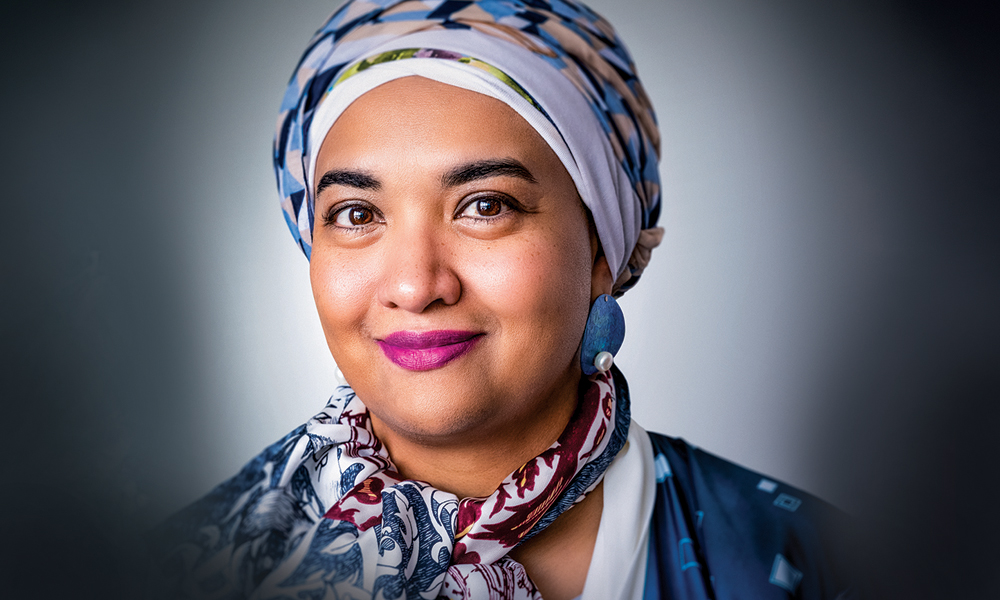
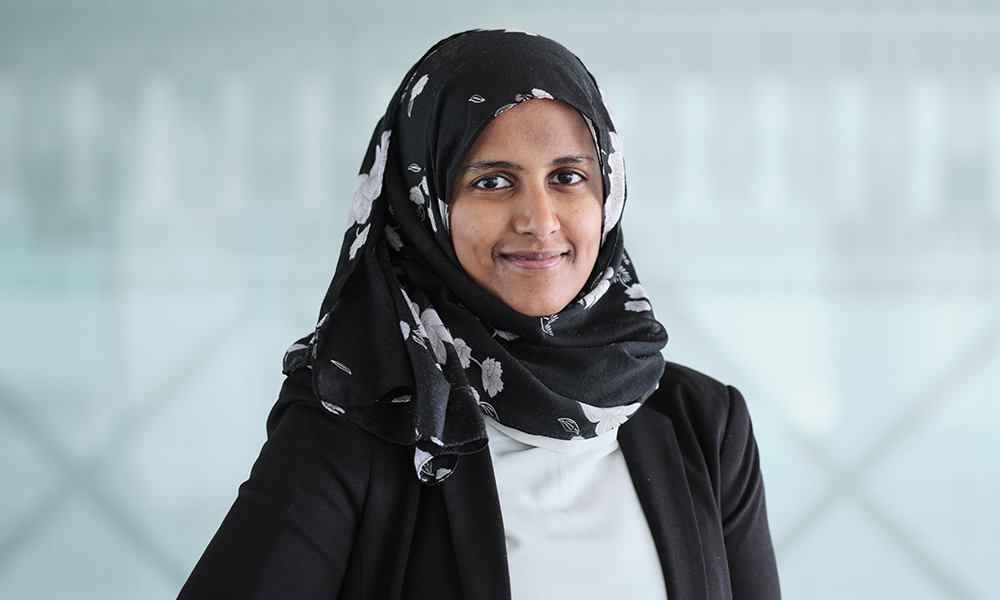
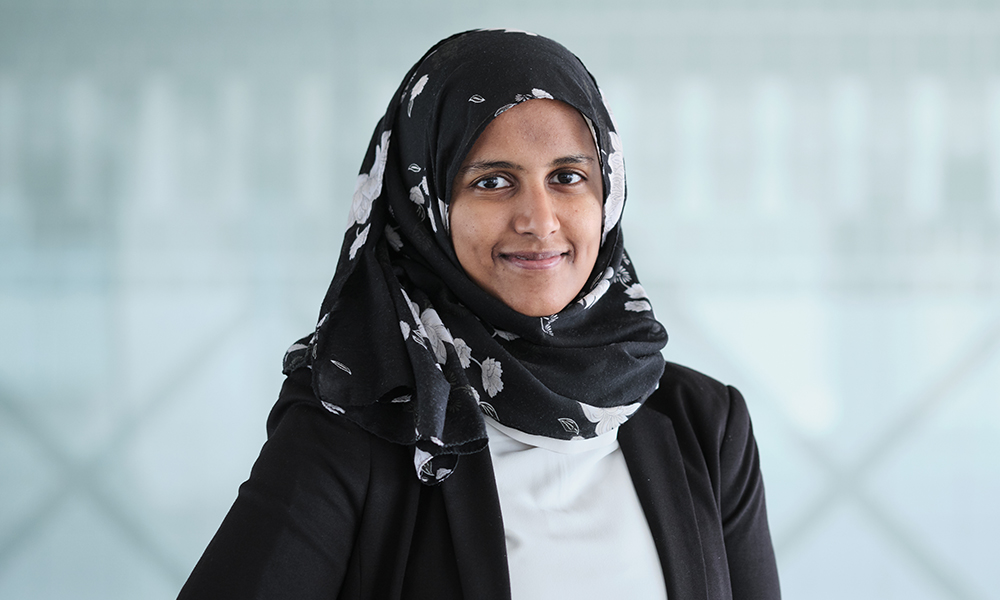
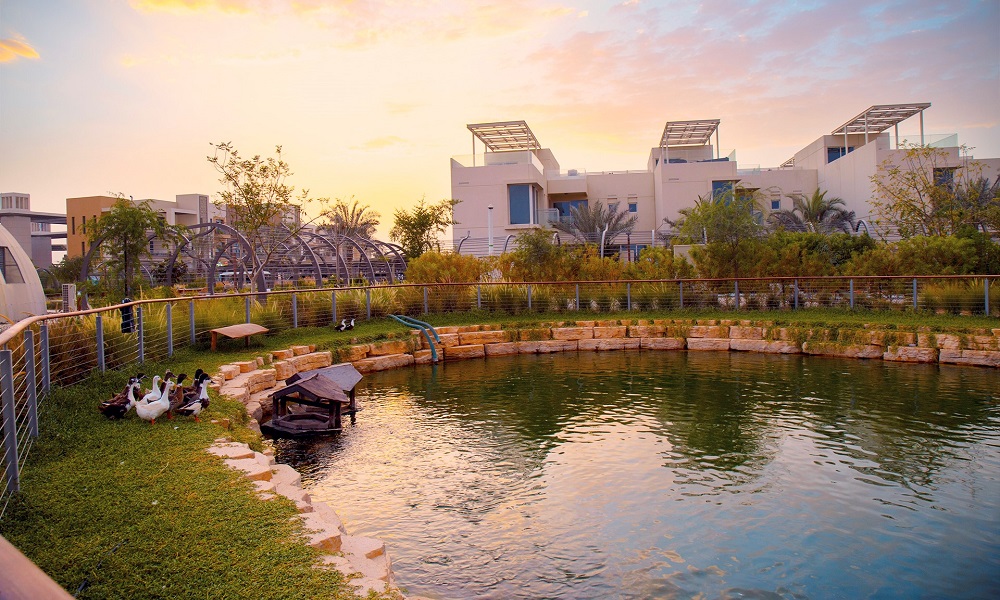
“The recent MWO announcement is a major concern, not just for the built environment but for society. That said, we still have the opportunity to use this information as a hook to drive change and positively influence the industry,” said Samar Hussein, Associate, Gensler Middle East in an exclusive conversation with Middle East Construction News (MECN).

MECN sat down with Hussein following an announcement by the World Meteorological Organisation (WMO), which said there is a 50:50 chance of the annual average global temperature temporarily reaching 1.5C above pre-industrial levels for at least one of the next five years.

Commenting further, she noted, “I think the biggest benefit of this, is that it shifts the common perspective from ‘potential future impact’ to a ‘next year probability’. One of the major reasons why change is still slow, is that we keep looking at this as a future issue, while in fact, change needs to happen now and the implications of past and current behaviour, is happening now.”

“If this negative projection reflects in reality, we will witness significant changes in weather patterns with higher temperatures in a lot of urban areas. Specifically, coastal cities will suffer greatly from sea level rise. We are already starting to witness some of this in the region with a hotter climate, desertification and sandstorms. All of this would change city livability statuses and the relationship we have with our built environment,” she cautioned.
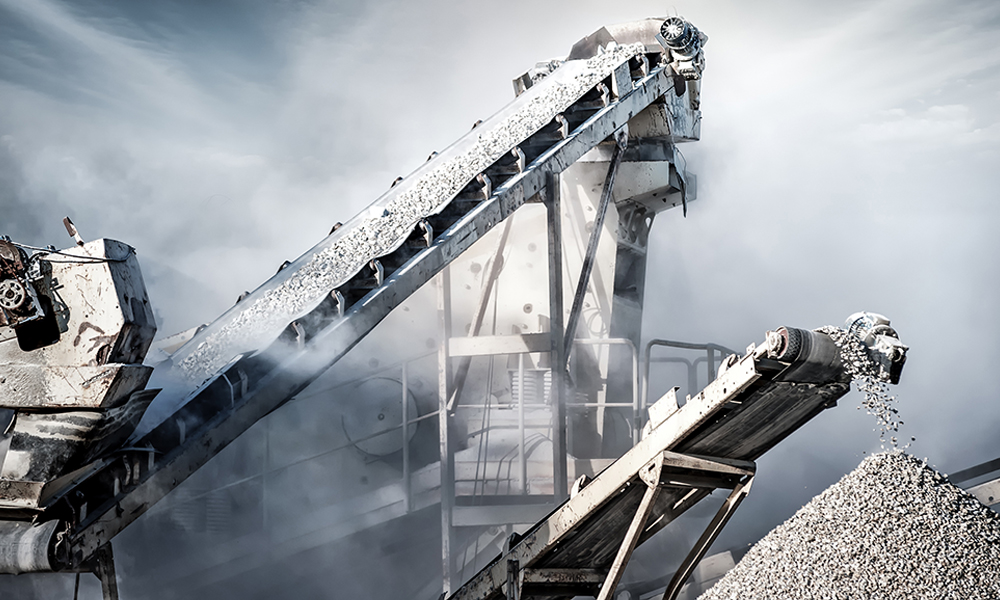
The MWO’s announcement is significant as the Paris Agreement, which was adopted by 196 Parties at COP 21 in Paris, on 12 December 2015 and entered into force on 4 November 2016, set out to limit global warming to well below 2C, preferably to 1.5C, compared to pre-industrial levels. According to the World Green Building Council (WorldGBC), the construction industry is responsible for almost 40% of global carbon emissions, with 10% from embodied carbon from materials and construction processes.

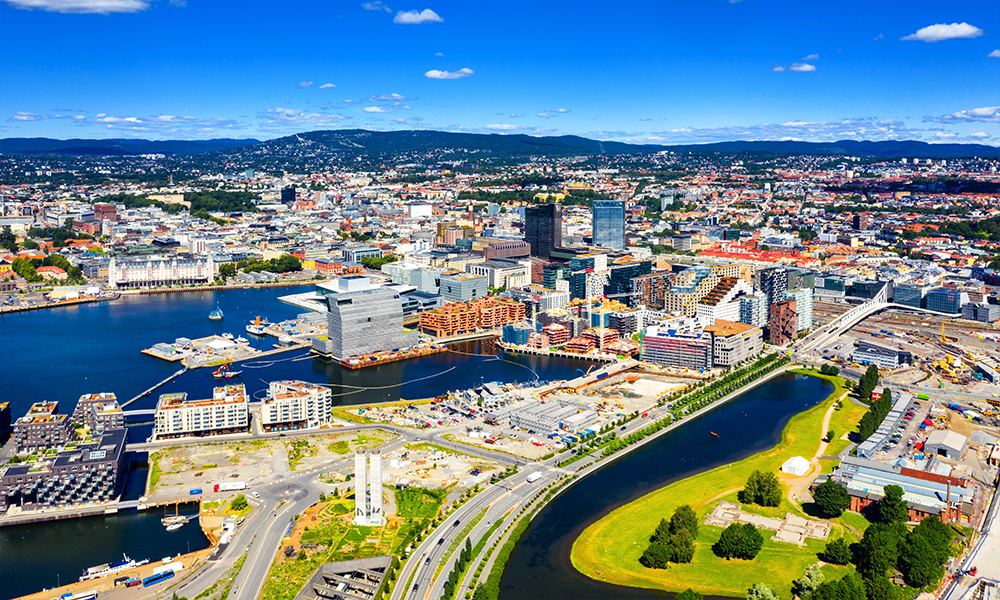
In the 2022 edition of Arcadis’ Sustainable Cities Index (SCI), which ranks 100 global cities on three different pillars of sustainability, Oslo ranked first overall, while other European cities and one in Asia also made the top five overall list.

Explaining why GHG output continues to rise despite global efforts to cut them, she explained, “With increasing urbanism and accelerated construction developments, particularly in size, it is not shocking that GHG emissions are still rising. It is estimated by 2050, two thirds of the world population will live in urban areas, couple that with world population growth projections and global construction activities will need to continue to expand. It is up to us to direct this expansion along the right path.”

“Unless we make drastic changes to how we manage and operate our cities and communities, it is unrealistic to assume a noticeable reduction in emissions. Many countries are still struggling to meet their climate commitment targets, and it is currently a learning process for all on the required policies and processes to tackle this.”
She urged, “The construction industry needs to move from a reactive mode to a frontline lead position and help drive climate targets.”

Discussing whether there’s enough awareness in the built environment with regards to its impact on global GHG emissions, Hussein stated that while there is awareness, it may not be comprehensive enough to capture the true extent of the industry’s contributions to climate change, and the effective ways to curb emissions within each individual capacity and in different project settings.

“We need to be more vocal and concise in our messaging about the risks and impacts of increased emissions as well as measures to reduce them. Addressing climate change is the moral and business imperative of our time,” she stated emphatically.

Commenting on Gensler’s approach to climate change, she remarked, “Our portfolio is already designed to save over 17mn metric tons of CO2 from being emitted on a yearly basis. But there’s still so much more work to do — and it can’t be done without the help of our clients, colleagues and industry. At Gensler, our mission is to transform the built environment for a Net Zero future with every project, in every location, and for every person by 2030.”
“This is where more investment in R&D will support greatly. Gensler’s commitment to carbon neutrality is supported by our continuous focus on research and community impact to explore ways in which individuals, communities, businesses and systems can leverage design to adapt and grow in light of climate change. The more companies applying this same level of commitment, the better the result,” she concluded.

Sustainable development is a key topic within the regional construction industry and was discussed at length at Middle East Consultant’s second Future of Architecture Summit, and Big Project Middle East’s inaugural Energy & Sustainability Summit.

With the now concluded EXPO 2020 Dubai, sustainability was also a key topic, with the event organiser announcing that 121 buildings were LEED certified at the mega eventTerra – The Sustainability Pavilion at EXPO 2020 Dubai, which served as an anchor of the Sustainability Zone was also profiled by Big Project Middle East.

The post “The industry needs to move from reactive to frontline lead and drive climate targets” appeared first on Middle East Construction News.


Source: ME Construction News

Jewel-of-the-Creek1_1000x600-1.jpg

June 21, 2022 foasummit0

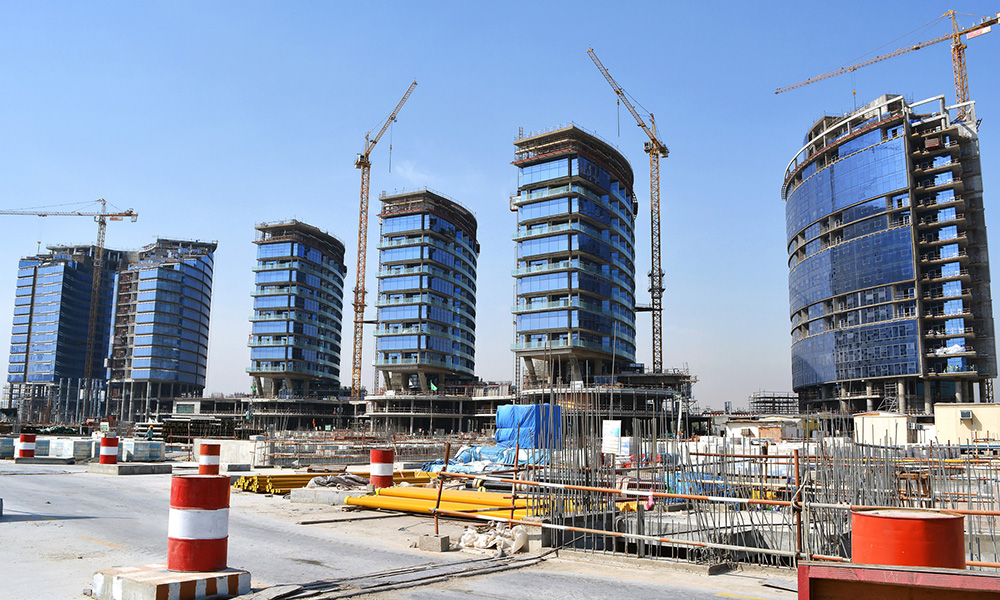
General Construction Company (GCC) has been using an array of Terex Luffing Jib Tower Cranes, including the CTL140-10 and CTL260-18 models, for the Jewel of the Creek development at the north shore of the Dubai Creek.

GCC is building the complex with the help of a total of 16 Terex Tower Cranes, said Terex in a statement. All the cranes are said to be of luffing jib type, from CTL 140-10 with its 10-tonne capacity, to the CTL 260-18 with its 18-tonne capacity.

According to Emam Al Sayed, Head of Mechanical Dept at GCC, “They are the ideal solution thanks to their high strength capacity, short counterjib, and versatility which allows them to be assembled in a small area which was necessary on this site with such cramped areas of operation.”

As well as the humid and hot climate of Dubai another challenge was the jobsite location. For part of this project the basement areas had to be constructed, which proved difficult, as cranes had to be moved from place to place in confined spaces, the statement noted.

“These cranes are very versatile and with quite light components so you can use a small crane for installation. They have a short counterjib helping in maneuverability. To manage the activity of so many cranes in a restricted area, the anti-collision system AMCS installed on the cranes helps to control the movement of each crane in relation with the others,” added Al Sayed.

The project is a one million sqm mixed use development in the Port Saeed area of Deira, incorporating a mix of residential, commercial, hospitality and recreational facilities. It is being developed by Dubai International Real Estate and designed by Kling Consult, in a joint venture with another German architecture firm, Kieferle & Partner.

Seventeen high-rise buildings hosting apartments, hotels and offices are being developed as part of the project. There will also be a large space for leisure with event halls, ports and recreation centre, and the longest swimming pool in Dubai.

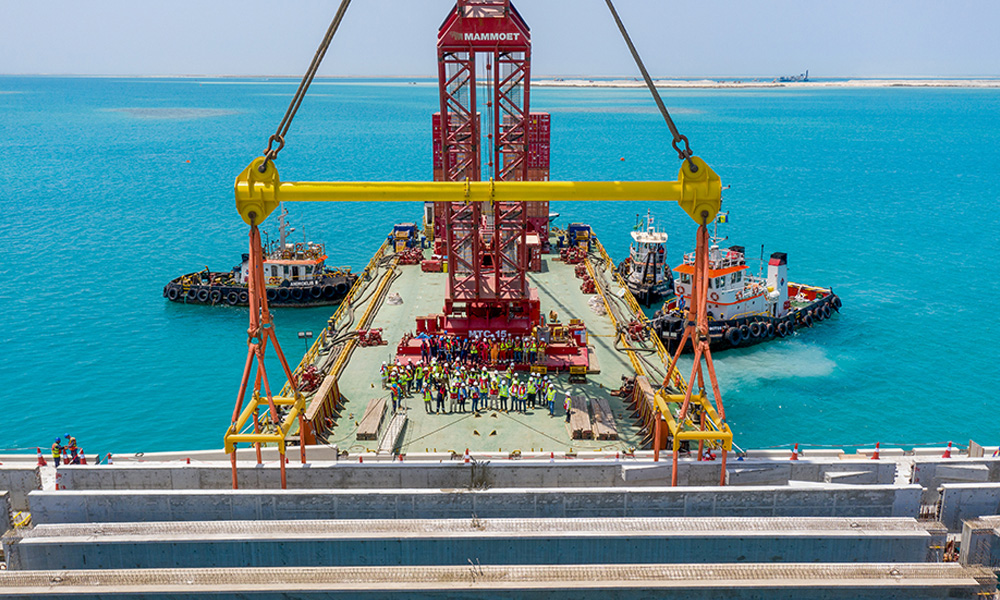
In June 2020, XCMG introduced its super-scale tower crane for mega-scale bridge projectsMammoet used its MTC 15 crane on a barge to install bridge components for The Red Sea Project, and Tadano said that it was harmonising its telescopic boom crawler line.

The post General Construction Company uses Terex Cranes for Dubai Creek development appeared first on Middle East Construction News.


Source: ME Construction News

TRSDC-Bridge1_1000x600-1-1.jpg

June 20, 2022 foasummit0

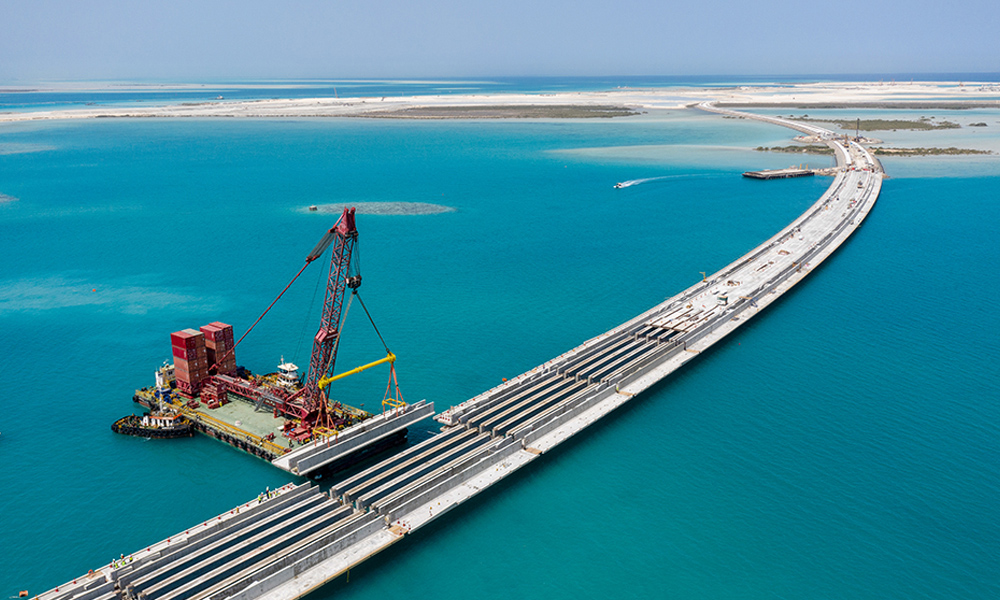
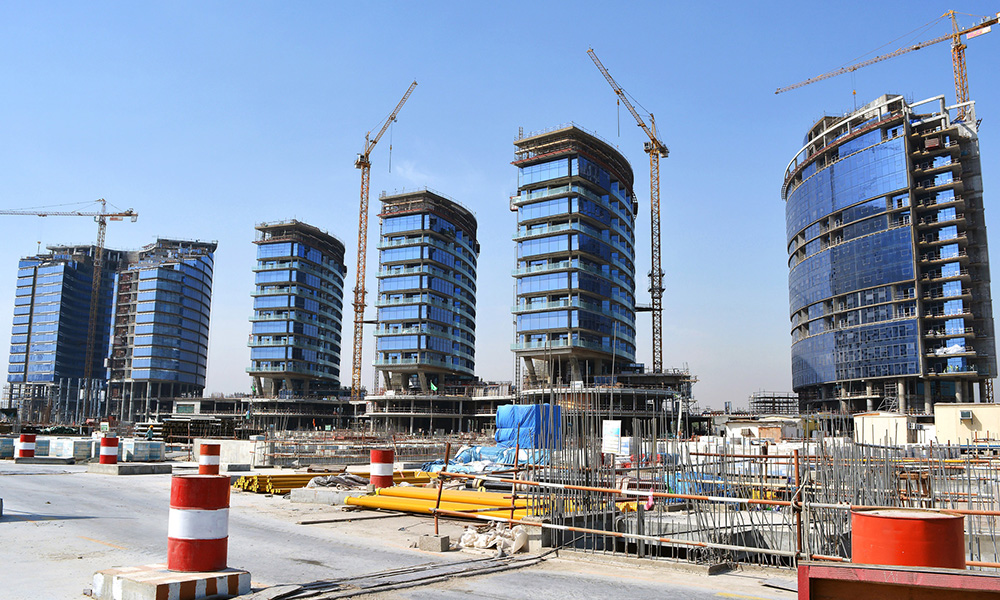
The Red Sea Development Company (TRSDC) has said the last connecting piece of Shura Bridge has been installed, creating a 1.2km connection from the project’s hub island, Shura, to the mainland across the Al Wajh lagoon.

TRSDC said the bridge has been designed and built with sustainability in mind, with near zero drainage discharge into the lagoon during the build. Multiple monitoring buoys were strategically sited to alert any breakthrough from surface booms to prevent sediment movement from piling activities, the firm said in a statement.

Furthermore, the contractor ensured the reuse of temporary materials, such as causeway rock armour, to minimise wastage, while over 90% of the concrete was precast, minimising the likelihood of in-situ concreting environmental issues. Cement replacement was used throughout, it added.

Keeping in mind the marine ecosystem around the site, TRSDC and ARCHIRODON, the global EPC group that provided Engineering, Procurement and Construction support to complete the building of the bridge, said that the bridge location was optimised to minimise dredging and the need for coral relocation.

In addition, the bridge will have two small 36m sections at each end of the crossing, to allow for the movement of marine mammals. Part of the beautification plans for the causeway will include species selected for conversation, such as mangroves.

Speaking to Middle East Construction News, Ian Williamson, Chief Projects Delivery Officer at The Red Sea Development Company said, “We took an early decision during master planning in 2018 that our ‘hub’ island, Shura, should have an umbilical connection to the coast that would enable us to route our guests, utilities and logistics. We established a route with the lowest environmental impact and used causeways in shallow water then a 1km bridge section over waters of 3m and deeper.”

He added, “We also have two small bridges, one at either end of the causeway section, that are only for marine movement and to prevent longshore drift.”

He added, “ARCHIRODON has completed both causeway sections, the bridges and the utilities corridor, and our next layer of work is to make the bridge pedestrian friendly with a garden corridor.”

The Shura Bridge is a key piece of infrastructure being delivered as part of Phase One of The Red Sea Project. The project has demonstrated significant progress on the ground, with Phase One now more than 50% complete and several key assets already fully operational, including a four-star management hotel, on-site offices, and the largest landscape nursery in the region.

Over 800 contracts have been awarded, worth in excess of USD$5.32 billion.  When combined with AMAALA contracts, circa $7.99 billion worth of contracts are in the marketplace. Work is on track to welcome the first guests in early 2023, when the first hotels will open, the developer added.

Upon completion in 2030, The Red Sea Project will comprise of 50 resorts, offering up to 8,000 hotel rooms and more than 1,000 residential properties across 22 islands and six inland sites. The destination will also include an international airport, luxury marinas, golf courses, entertainment, and leisure facilities.

Earlier this month, Mammoet said that it had begun the installation of 60 pre-cast bridge-beam and edge-beam segments on piers, using a floating crane in the latest phase of the Shura bridge project.

The company proposed the method after being contacted by marine contracting specialist, ARCHIRODAN who initially wanted to install the bridge using SPMTs on a barge and suspension cylinders to lift and lower segments.

The alternative method allows the contractor to build the bridge faster by installing one section a day instead of one in two days, while providing increased flexibility and accuracy, the company said.


The post TRSDC and ARCHIRODON complete installation of last connecting piece for crucial Shura Bridge project appeared first on Middle East Construction News.


Source: ME Construction News

Farah-Naz-AECOM_1000x600-1.jpg

June 20, 2022 foasummit0

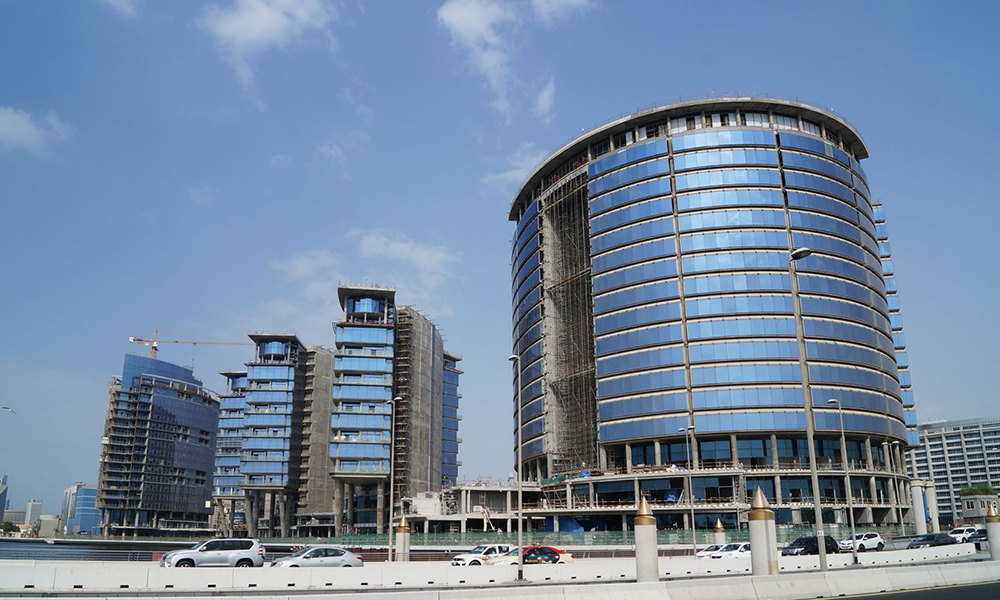
“For the Energy & Sustainability Summit, what I’d personally like to achieve is a collaborative effort towards a Net Zero implementation plan for the UAE,” said Farah Naz, Head of Innovation and ESG at AECOM Middle East and Africa.

Naz made the comments ahead of participating as moderator of the ‘Achieving Net Zero’ panel discussion at the inaugural Energy & Sustainability Summit, which is being organised by Big Project Middle East. Naz’s comments echo those made by Ioannis Spanos, Director Sustainability & Environmental Services at KEO, who told Middle East Construction News (MECN) that a coordinated approach is essential to reducing GHG emissions.

Abdullatif Albitawi, Director of Emirates Green Building Council (Emirates GBC), will headline the Summit, with a keynote presentation focusing on the work the council is doing to support the local market transformation towards total sector decarbonisation.

The event is set to be held at St Regis The Palm on the Palm Jumeirah; over 25 of the region’s leading thought-leaders and decision makers will come together to share their insights and knowledge about the crucial issues facing the real estate and construction industries, as they look to help the MENA region achieve its sustainability and energy transition ambitions.

Naz remarked, “It’s a very important target for this region and we would really like to create a green, equitable future for this region, and globally, for everyone else in the world.” Naz has been a vocal advocate for change and recently also joined four regional experts in discussing the region’s Net Zero journey with Middle East Consultant in May 2022.

The event will see doors open at 9am on 21 June 2022, with the Summit scheduled to kick off at 10am. The E&S Summit is free to attend for construction professionals and the day will comprise of four high-level panel discussions: Driving the Net Zero Agenda for the GCC, Facilitating the Energy Transition, Project Development in the Age of Sustainability, and Achieving Net-Zero – Carbon Neutrality as a Construction Company.

In addition, the Summit will feature presentations from Emirates Green Building Council, The Red Sea Development Company, Engineering Contracting Company (ECC) and Saif Air Tech – A Fakhruddin Holding company.

The summit’s partners include Gold Sponsor: The SNC-Lavalin Group; Bronze Sponsors: AECOM; ECC; KEO; Saif Air Technologies; Supporting Partners: Acciona; Bainona Engineering Consultancy; JLL; Knowledge Partner: Heriot-Watt University and MESIA.

In Arcadis’ recent Sustainable Cities Index (SCI), Oslo came out in first place overall in the index which ranks 100 global cities on three different pillars of sustainability. Key Middle Eastern cities are yet to be covered on the SCI list, however sustainability is a hot topic in the region, with key projects making sustainable development a priority.

In Saudi Arabia, WSP & TRSDC recently announced their focus on decarbonised mobility solutions at transformational The Red Sea Project. In the June issue of Big Project Middle East, Majid Al Futtaim’s Chief Sustainability Officer Ibrahim Al-Zu’bi talks to Gavin Davids about why sustainability is the only way forward for the real estate sector.

With EXPO 2020 Dubai, sustainability was also a key topic, with the event organiser announcing that 121 buildings were LEED certified at the mega eventTerra – The Sustainability Pavilion at EXPO 2020 Dubai, which served as an anchor of the Sustainability Zone was also profiled by Big Project Middle East.

The post Collaborative efforts to Net Zero implementation essential says AECOM’s Farah Naz appeared first on Middle East Construction News.


Source: ME Construction News


Tadano-GTC-1800EX_1000x600-1.jpg

June 20, 2022 foasummit0

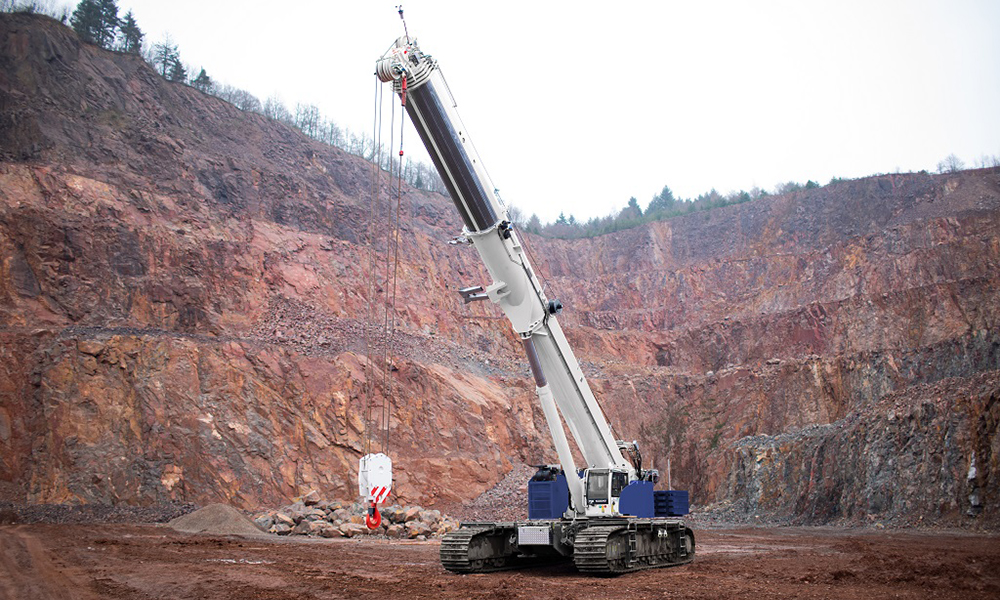
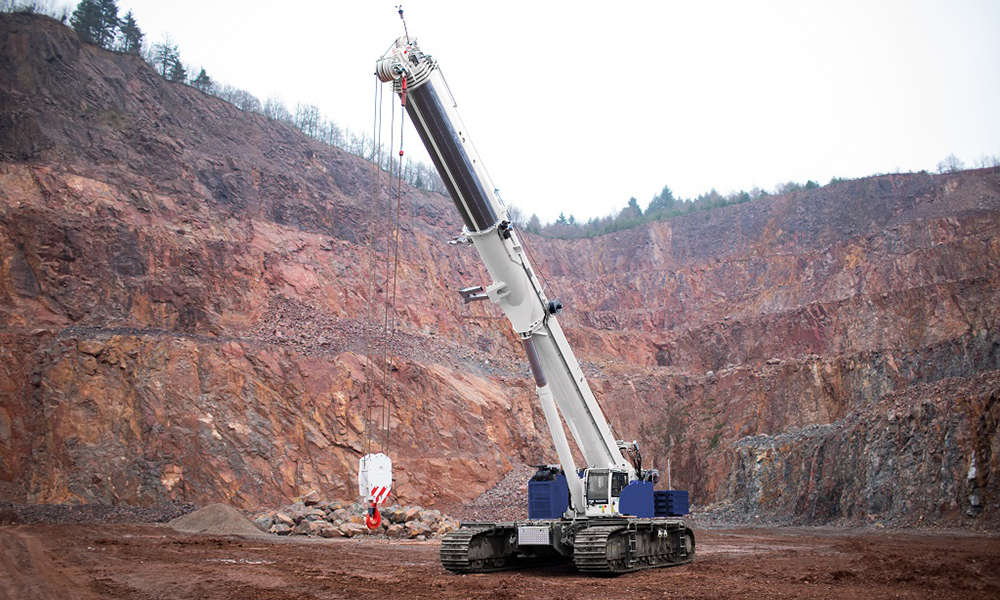
Tadano has harmonised its telescopic boom crawler line as the GTC range, continuing its global ‘OneTadano’ strategy. It follows the decision to bring all mobile cranes under the one brand by attributing its all-terrain cranes as ‘ACs’ and its lattice boom crawlers as ‘CCs’. The GTC line will not change in the United States where it is already being used.

The following name changes for products sold outside the American market will take place later this year: the GTC-350EX will change to GTC-350; GTC-500EX to GTC-550; GTC-600EX to GTC-700; the GTC-800EX to GTC-900; the GTC-1200EX to GTC-1300; the GTC-1800EX to GTC-2000, all with immediate effect.

At the 2022 Construction Machinery Awards, Tadano was shortlisted in the ‘Crane of the Year’ and ‘Outstanding Manufacturer of the Year’ categories. In April 2022, the brand said it planned to launch the world’s first electric rough-terrain crane in 2023, while in March 2021, it launched two truck-mounted cranes.

Coinciding with the renaming of the GTC-1800EX Tadano is upgrading the crane to the 200-tonne class which offers the lifting capacity of 200-metric tonne class cranes in multiple configurations, the company said.

“Customers kept telling us that their experience in the field showed that in several configurations, the GTC‑1800EX had a performance potential that far exceeded its class,” said product manager, Vincent Stenger. “Therefore, we are renaming the model to the GTC-2000 for all markets to better align with the crane’s lifting capacities.”

The post Tadano harmonises telescopic boom crawler line appeared first on Middle East Construction News.


Source: ME Construction News


Jekko-minipicker_1000x600-1.jpg

June 20, 2022 foasummit0

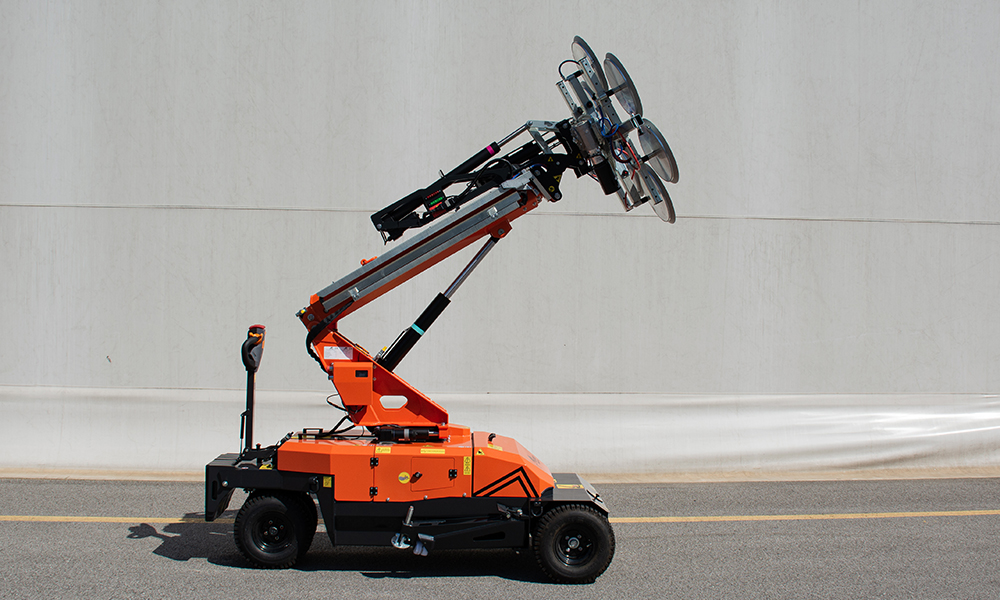
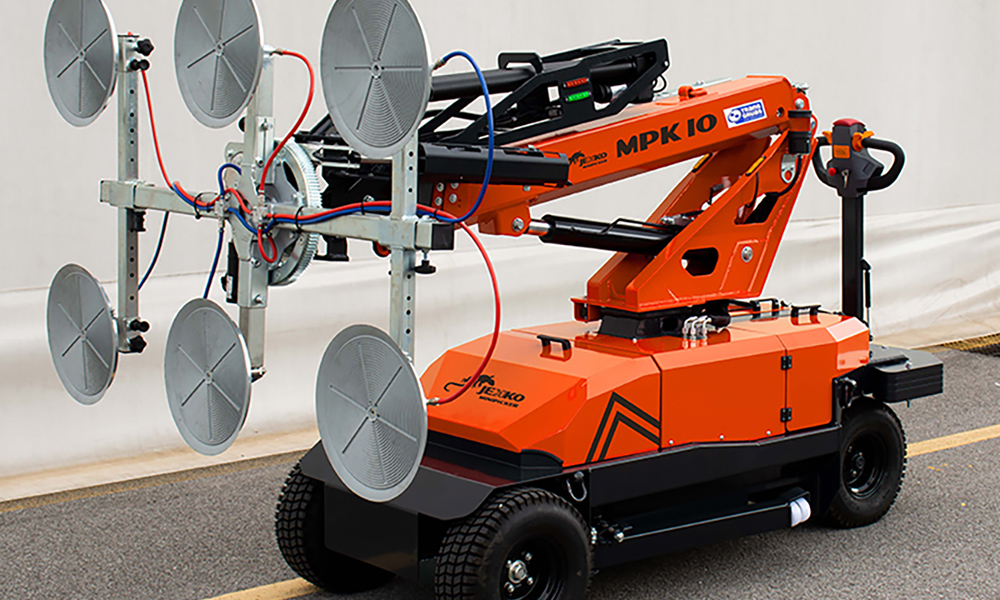
Jekko has updated its minipicker range with the 990kg MPK10, which features the same design as the MPK06 but boasting a higher capacity, the company has said.

The latest model can be applied to different fields including glazed pane handling, industrial maintenance, and any sector where a compact and performing solution is needed.

The MPK10 has four 24V-155Ah rechargeable batteries that power the electrohydraulic unit controlling the crane handling, the electrical actuators for the manipulator and the electric rotation motors for travel. It also uses noiseless zero-emissions motor when working indoors.

According to Jekko, the most important asset of the MPK10 is the +9°/-9° slewing of the turret. In addition, to the manipulator that has a 360° continuous rotation performing three movements, this function makes it easier to drive the machine through narrow places.

“The MPK10, as well as the brand new MPK20R to be unveiled at the Bauma exhibition, are part of Jekko’s next generation of products in the minipicker range destined to meet the requirements of a vast customer base asking for user-friendly, simple, safe and reliable machines to be used in small or large lifting works,” said Alberto Franceschini, Sales Director at Jekko.

In September 2020, the firm celebrated the 20th year of its mini crane with the delivery of its 2000th unit. Later in the year it launched its JF545 V-Max spider crane. In June 2021, the firm launched its lithium-powered SPX1280 mini crane.

The post Jekko introduces 990kg minipicker appeared first on Middle East Construction News.


Source: ME Construction News

AW2_Ashar-Tented-Resort_1_1000x600-1.jpg

June 17, 2022 foasummit0

AlUla is billed as a cultural oasis and open-air living museum. The location is home to the Ashar valley, which has been chosen by the Royal Commission of AlUla (RCU), as one of the sites to develop the Kingdom into a world class tourist destination.

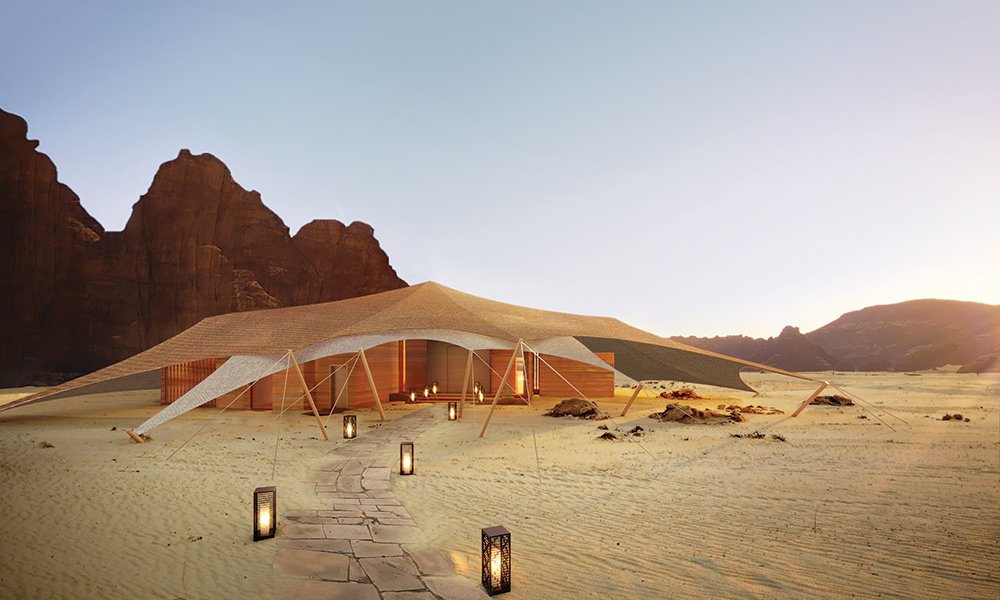
Architecture and interior design studio AW² was selected by the RCU in partnership with the French Agency for AlUla Development (AFALULA), to design a luxury tented resort on an untouched site within the valley. The resort will be located 15km from the Kingdom’s first UNESCO World Heritage Site, Hegra.

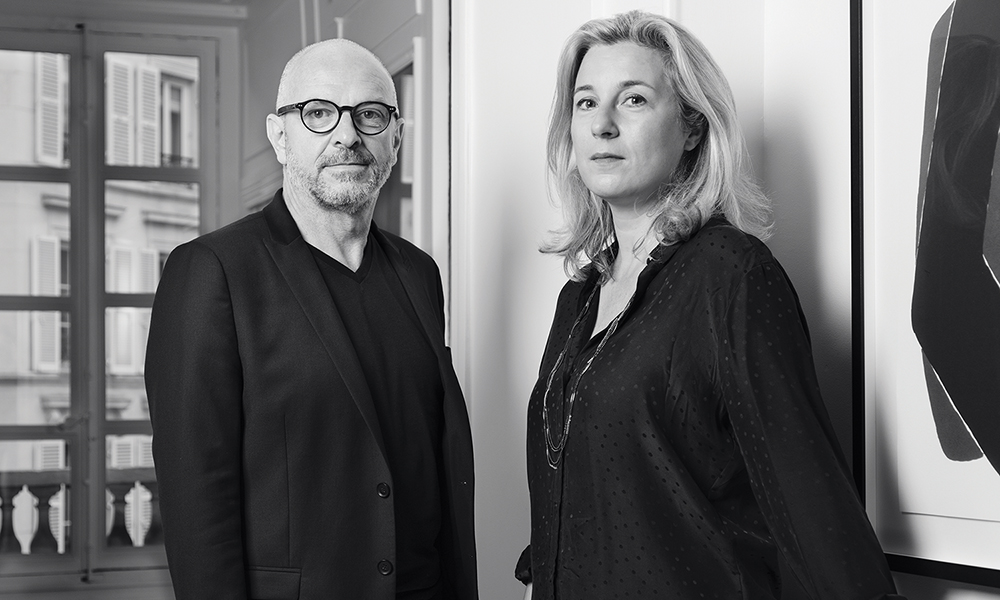
Accor, under the Banyan Tree brand, will operate the Ashar Tented Resort with 47 new high-end suites in addition to 35 renovated suites positioned on a neighbouring site, bringing the total number of units up to 82. Here, Middle East Consultant speaks to Stéphanie Ledoux and Reda Amalou, partner architects at AW² Architecture Workshop about the design and delivery of the hospitality project.

How did AW2 come to work on the Ashar project? Why was your firm selected over other studios?

We were selected to participate in a competition for the Royal Commission for AlUla. During the competition, both our design approach and our competences in hospitality projects were appreciated and led to us being invited to tender for Ashar Tented Resort, a project that the RCU was developing with AFALULA, the French Agency for AlUla’s Development.

Our contextual approach was favoured by the client, as a way to create a hospitality destination based on authenticity and heritage, and the RCU and AFALULA knew our successful track record to deliver this type of project.

What did the client want to achieve with Ashar? What was the brief?

The resort was conceived following the client’s request for an extraordinary place to stay in the heart of the AlUla region.

The main goal for this design was to create a communication bridge with the rest of the world, attracting visitors and allowing the world to experience the beauty of an exceptional natural environment. The brief was very much linked to this, as the first major hospitality destination in the AlUla valley in a very environmentally sensitive site: Ashar. The main idea was that the project should be inserted into the site using a tented resort structure, connecting the project to the local Bedouin heritage.

What did AW2 look to for inspiration on this project and how were these elements incorporated into its design?

The key was incorporating the history and culture of the Kingdom into accommodation that would attract visitors from around the world. As a result, the stunning suites take inspiration from traditional Bedouin tents, acting as an expression of the region’s past and enabling all to discover the rich cultural, natural and historic assets. At AW2 we also look to find inspiration from understanding the essence of local places, through the discovery of local know-how and traditions, and through talking to the local people.

What are some of the project’s unique features in terms of architecture/design?

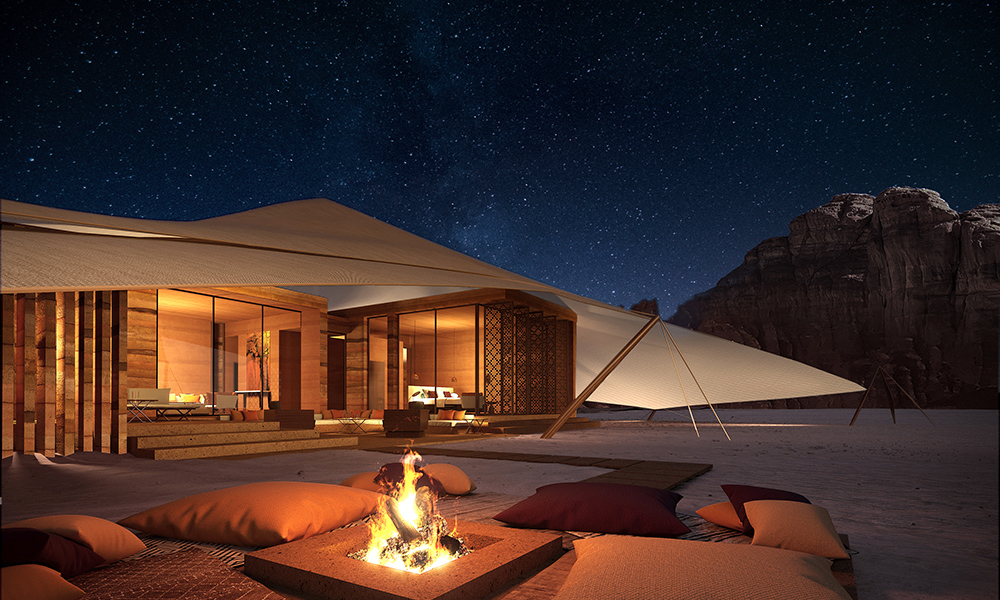
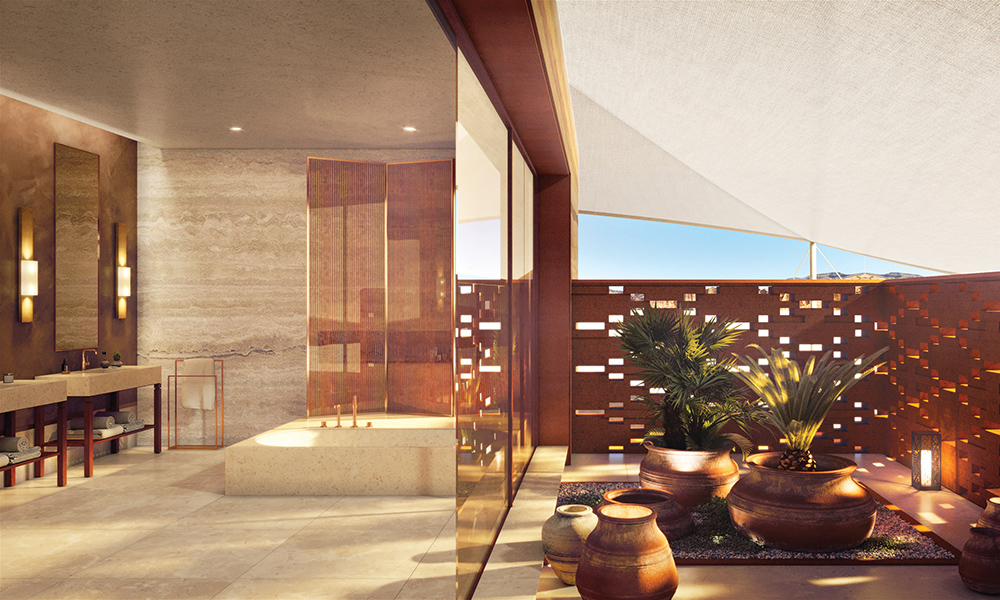
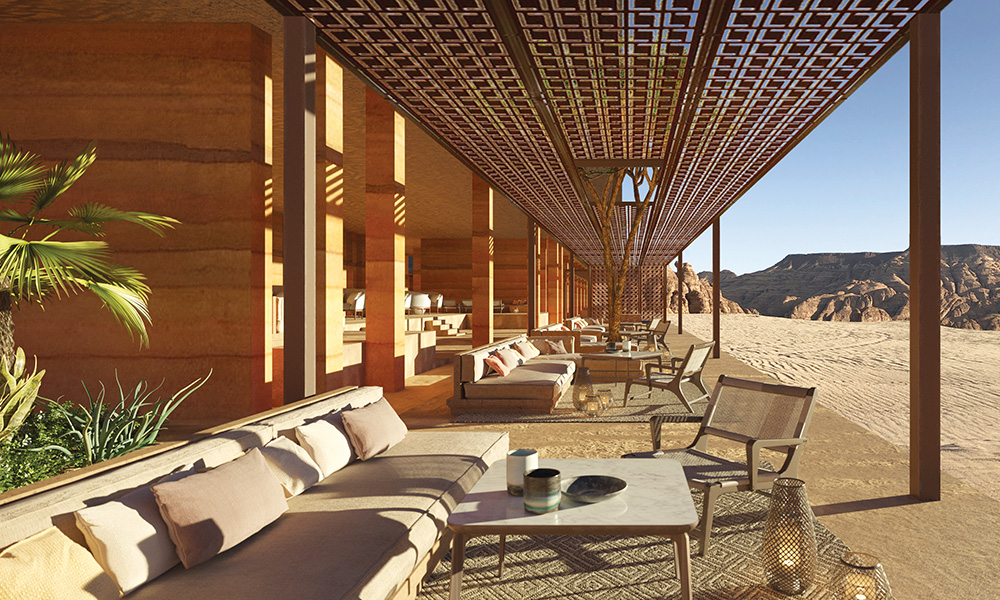
The 47 tented suites have been designed in relation to the coves created by rock formations, situated to give extended views across the desertscape while providing maximum privacy for guests. The resort blends seamlessly into the natural scenery of the Ashar Valley, while pedestrian trails through a landscape dominated with sand dunes creates an intimate experience, reinforcing the camping mindset of the location.

What learnings from its other projects around the world did AW2 incorporate into the Ashar project? What learnings has AW2 taken away from this project?

Like with all our projects around the world, we focused on the qualities of the site to propose architecture integrated in a meaningful way. Our understanding of scale is another learning that we incorporated into the Ashar Tented Resort project – the ability to take into account the enormity of the site and create architecture that merges with the surroundings. This is something we have learnt over the years and through all the different contexts we have worked in: how to design a project that aims not to modify the site.

We have also learnt through our work across the globe that a close relationship with the client is essential for understanding the ambitions for the future of the project, and that these are aligned with the process right the way through from conception, to design and ultimately construction. Our projects are always formulated as they develop as opposed to starting by describing the outcome, each of our projects is a testament to this design approach.

In terms of what we have taken away from this project, we have a great deal of respect, humility even, for the beauty of this site. The use of local resources and reinterpreting a traditional desert structure have been learning experiences that have allowed us to get closer to the heritage and traditions of the region.

What were some of the challenges the firm had to contend with while working on this project and how were they overcome?

As AlUla is currently in the development phase, the construction resources on the ground are still growing and so we have adapted to the local availability. The desert climate has also been a major consideration. We have studied the material choices to make sure the architecture is adapted to the heat. Most importantly, the design challenge has been to make sure that the project integrates into the site and doesn’t take away from it.

What impact did COVID-19 have on the design/delivery of this project? How did the firm overcome these challenges?

Due to the outbreak of the COVID-19 pandemic, it has unfortunately not been possible to travel to visit the construction site as much as our team would have been able to do under normal circumstances. This means we have had to find new and innovative ways to remain involved, even if we can’t be on the ground. In response, we have created a partnership with a local firm, so an architect is able to follow the construction on site for us and bridge the distance that the pandemic has created.

How is this project being delivered; are the contractors using modular construction/3D printing technology/offsite manufacturing etc?

Ashar Tented Resort is being delivered through a low environmental impact approach, composed of a simple platform and solid structure protected from the sun by a canvas covering. This three-tiered design is made up of a natural colour palette, allowing the tented suites to disappear into the site, the main construction material will be compressed earth bricks – a local and natural resource. In this way, the architecture respects the desertscape, making sure the stunning scenery remains the centre stage.

What role did technology play in the design/delivery of this project? Was any new ground broken?

Due to the nature of the project, technology was less of a key factor as the design is linked to a traditional form of architecture. Technology mainly played a role in connecting us to the construction site at a distance when we were unable to physically travel.

What are some of the project’s unique sustainable and smart features and what impact will they have once the hospitality project is up and running?

At AW2, over the last 25 years we have developed a bioclimatic approach to design which is now a given on every one of our projects. This approach plays an integral role in all our concepts, from the scale of the masterplan down to the smallest interior details. For example, we used local materials and incorporated sun protection, natural ventilation, and limited energy use into the design at Ashar.

Sustainability is critical to how travelers interact and enjoy a place, within the hospitality sector we are particularly keen to offer guests the option of sustainable tourism.

Read more:

The post A Jewel in the Desert, a behind the scenes look at the Ashar Tented Resort appeared first on Middle East Construction News.


Source: ME Construction News

Dewan-Competition1_1000x600-1.jpg

June 17, 2022 foasummit0

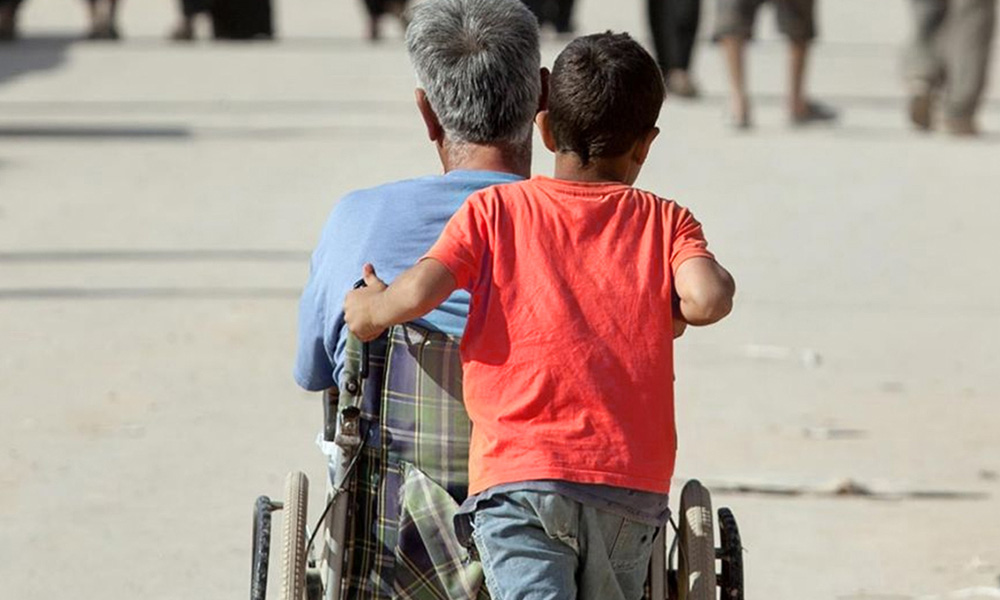
Dewan Architects + Engineers has invited architects and engineers from around the globe to submit building design proposals for a rehabilitation centre for terror victims in Iraq. The firm said the first prize would be six months of fully paid employment or a cash alternative of US $6,000.

According to a statement, the rehabilitation centre is part of the Tamayouz Excellence Award programme, which champions and celebrates the best architecture in Iraq and worldwide. It focuses on designs that respond to the local challenges in Iraq. The annual open-ideas architectural competition was founded to empower young architects worldwide, and provide crucial guidance to excel in the industry.

The statement explained that the first prize of six-months employment at Dewan is renewable up to one year with a salary of $2,720 month or a cash alternative of $6,000. The second prize is $3,000 plus a certificate of award and the third is $1,000, plus a certificate of award.

Commenting on the eligibility criteria, Dewan said architects, students, engineers, and designers can take part in the competition. It can be either as individuals or a team (maximum of six members). The deadline for submitting the entries has been set at October 1.

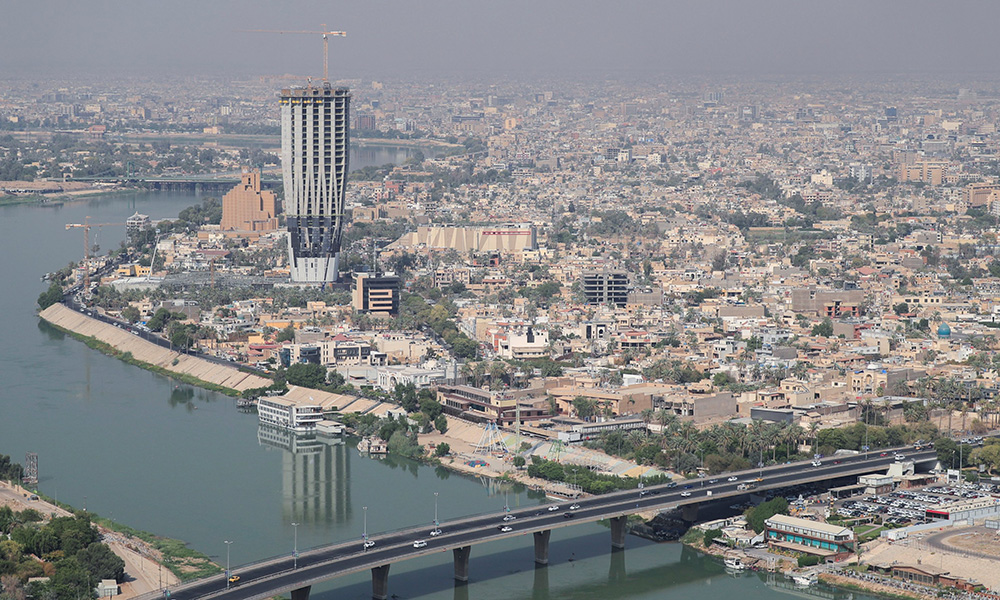
The criteria for the rehabilitation centre is that it should provide a safe and comfortable space for patients and have the facilities to support their health, psychological and physical needs. It will be developed on a 50,337sqm site in the Zayouna area of Baghdad, which is located on the Al Rusafa side of the Iraqi capital, with the Army Canal on its north side, and the Mohammed Al Qassim Expressway on the south.

The area is considered wealthy, and the communities are home to senior officers of the Iraqi military. The Tuesday Central Market, public and private schools, the teacher’s training institute, and the Al-Firdaws family swimming pool are within the residential community, stated Dewan.

The company added that the centre will be strictly for rehabilitation and not medical treatment. Specialists at these units will work positively with injured people allowing them to reach their full potential and help them from coping mechanisms for the memories formed around the traumatic experiences.

The centre will help people develop their skills and confidence to rejoin society and the job market. Each facility will contain indoor and outdoor spaces for social interaction, sporting activities and learning, it stated.

Mohamed Al Assam, the founder and chairman of Dewan, was involved with the Tamayouz Excellence Award for many years as a supporter, member of the Advisory Board and jury member for various competitions. Tamayouz is a collection of awards that celebrate the best architecture worldwide and the achievements of individuals who have made significant contributions to humanity.

Ammar Al Assam, CEO of Dewan, said the exciting international award will focus on designs that respond to the local challenges in Iraq. The award submissions must include facilities for each of the five pillars of the rehabilitation centre, health, safety and privacy, hope, psychological rehabilitation, training and capacity building, he said, adding that through this award scheme, Dewan was encouraging the participation of multidisciplinary teams.

Judges of the single-stage competition will identify the most appropriate proposal that best translates and satisfies the award’s objectives. Besides Mohamed Al Assam, the Founder of Dewan Architects + Engineers, the other award jury members include regional players such as Prof Jala Makhzoumi (Beirut – UNIT 44); Prof Wendy Pullan (Cambridge University); Prof Shaban Taha (Cairo – Shoubra University); Nadia Habash (Ramallah – Head Engineering Association in Palestine); Dr Davide Ponzini (Milan – Politecnico di Milano); Lucinda Anis (London – Kommune Studio); Kathy Basheva (London – Studio Basheva); Ahmed Al-Azzawi (Milton Keynes – Dewan Award coordinator of Tamayouz); Ahmed Al Mallak (Founding Director – Tamayouz Excellence Award).

The judges will shortlist the entries in October and the finalists will be announced the following month, and the winner will be announced at the annual Tamayouz Excellence Award Ceremony to be held by the end of 2022.

In June 2021, the architecture and engineering firm announced its intent to expand into Saudi Arabia. In March 2022, the firm said it plans to elevate Egypt as a premier destination, and, in May 2022, it was appointed as the lead design consultant for the Qiddiya Water Theme Park.

The post Dewan launches design competition for rehab centre for Iraqi terror victims appeared first on Middle East Construction News.


Source: ME Construction News

Acciona-Inauguration-SH3_1000x600-1.jpg

June 17, 2022 foasummit0

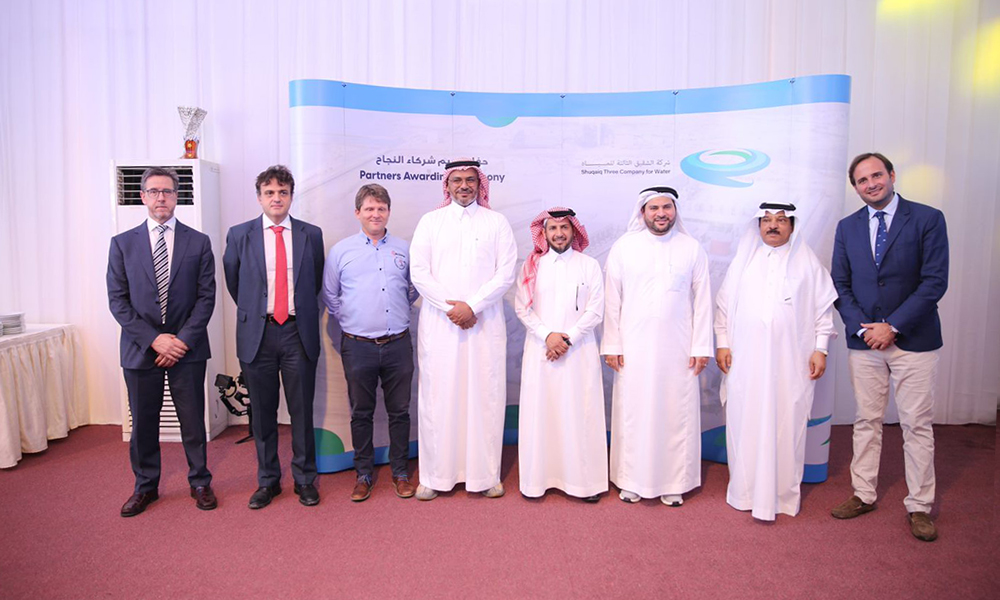
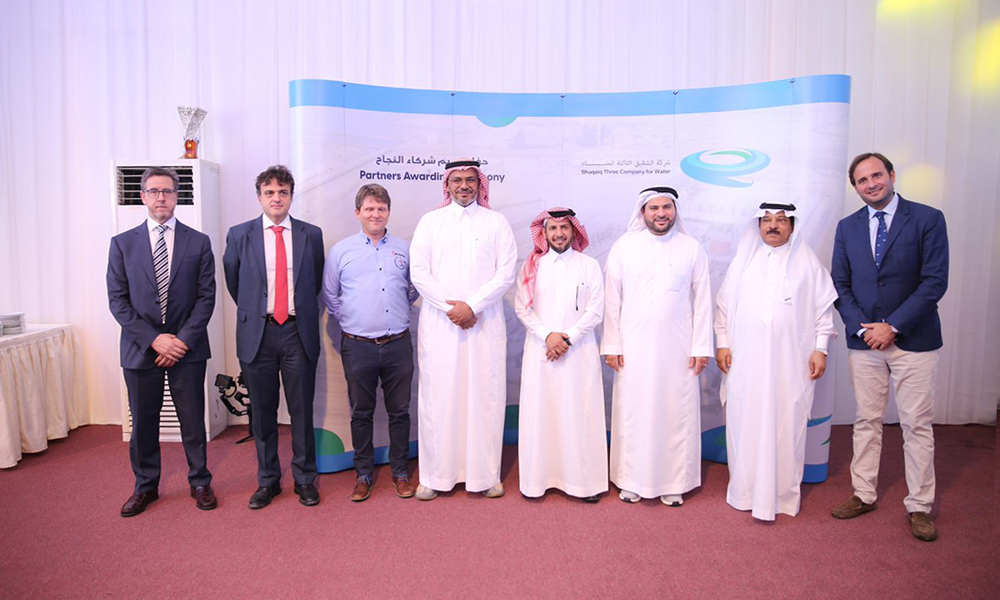
ACCIONA has begun operations and maintenance of Saudi Water Partnership Company’s (SWPC) Shuqaiq 3 desalination plant, which is said to be one of the largest in the Kingdom.

In a statement, ACCIONA said that the O&M contract has been awarded for 25 years. It added that the Independent Water Project (IWP) uses Sea Water Reverse Osmosis (SWRO) technology, which is more energy efficient than conventional thermal desalination. The technology emits 6.5 times fewer greenhouse gases than conventional thermal desalination processes.

Shuqaiq 3 is a key project in the modernisation of the water sector that is being carried out by the SWPC. It will provide water to some two million inhabitants of the regions of Asir and Jizan, an extremely dry region near the border with Yemen.

The announcement follows SWPC commemorating the completion of the construction of Shuqaiq 3 with an opening ceremony. This event was attended by H.E. Eng. Khaled Al Qureshi, CEO of SWPC, Fumio Iwai, Japan’s Ambassador to the Kingdom of Saudi Arabia, as well as representatives of ACCIONA and Abdul Latif Jameel (ALJ), both co-developers.

ACCIONA was the Engineering, Procurement & Construction (EPC) contractor for Shuqaiq 3 IWP desalination plant, which will produce 450,000cu/m of potable water per day. The project also includes the EPC of a large Electrical Special Facility (ESF) to feed the plant with power and some other additional installations from the existing power plants in the vicinity, the statement said.

With a population of 33mn, Saudi Arabia is the third largest consumer of water per capita in the world after the United States and Canada.

ACCIONA is currently building four more desalination plants in the Saudi Arabia. The plants employ reverse osmosis, an efficient and sustainable technology for extracting potable water from seawater. Once all are completed, the company will be producing 2.5mn cu/m of drinking water a day, enough to supply more than eight million people, almost one-quarter of the population of the country.

In recent years, the Kindgom has invested heavily in energy and water infrastructure. In January of this year, Acciona handed over a 450,000cu/m water desalination plant to Saudi Water Partnership Company (SWPC), while, in March, over 60 water projects worth $9.33bn were announced, while in May, an Engie-led consortium broke ground on a sustainable desalination plant.

The post ACCIONA begins 25-year O&M contract at SWPC’s Shuqaiq 3 desalination plant appeared first on Middle East Construction News.


Source: ME Construction News